Mentioned:No public companies identified
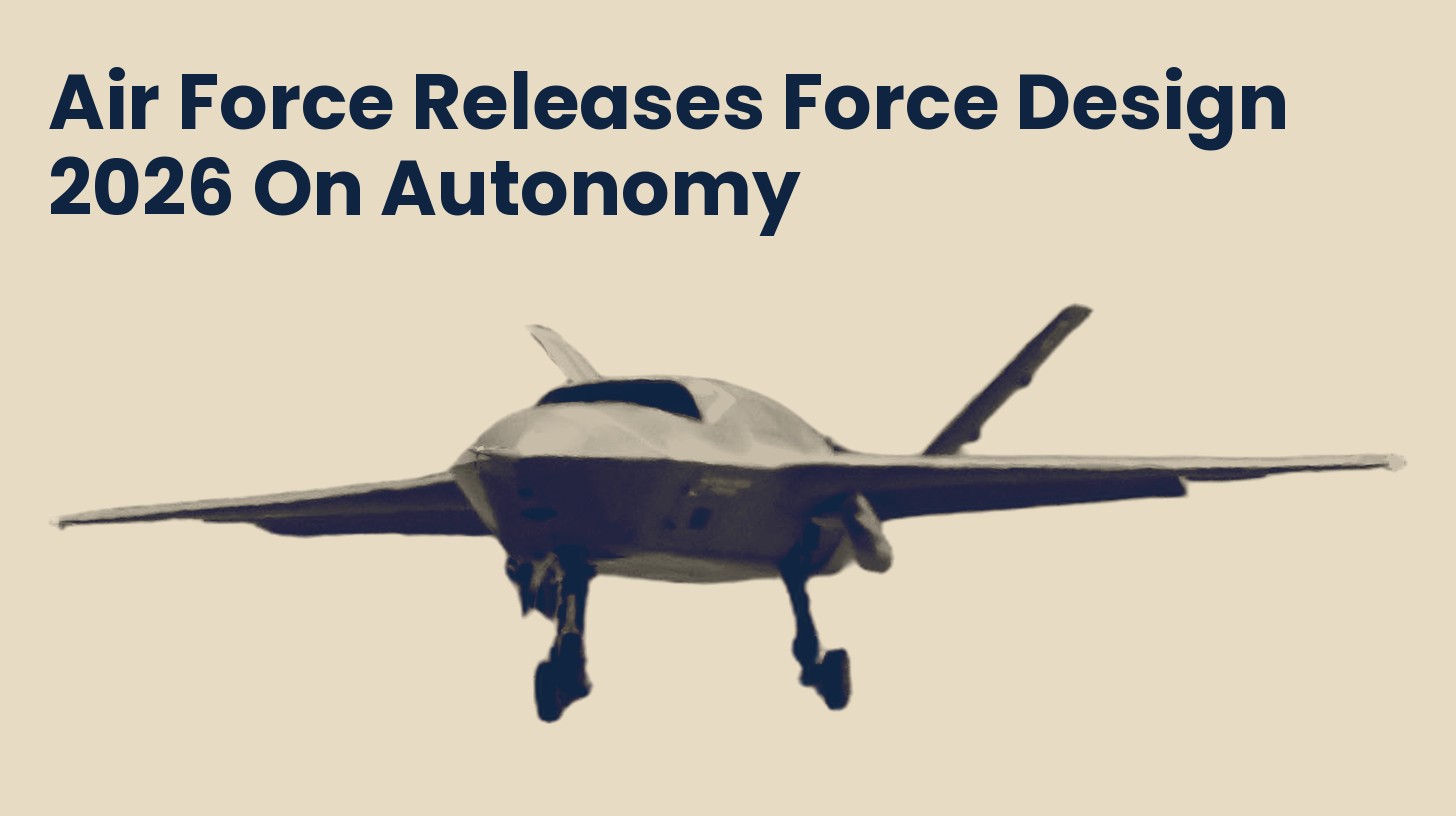
The Air Force announced Nov. 10 that it has finished an updated Force Design 2026 plan, a classified strategic document that signals a fundamental shift in how the service will generate and employ airpower. The plan emphasizes technology, autonomy, and integration as central to preparing for high-end conflict against capable adversaries.
What's happening
- The Air Force released Force Design 2026, a classified successor to the 2024 force design plan, with no public unclassified version available.
- The new plan prioritizes autonomy, AI, sensing, networking, unmanned systems, long-range weapons and electronic warfare as drivers of future combat capability.
- Air Force Chief of Staff Gen. Kenneth Wilsbach characterized the plan as a fundamental shift in how the service approaches future challenges and delivers combat power.
- The plan shifts focus from individual platforms to integrated systems connecting aircraft, sensors, weapons and command and control.
Why it matters
- The force design directly shapes procurement priorities and capability development for defense contractors across autonomous systems, AI, sensing and electronic warfare domains.
- Emphasis on autonomous drones reflects the Air Force's expanding plans to field hundreds of unmanned systems in coming years, signaling sustained demand for autonomous vehicle developers.
- The integration-focused approach signals that future air dominance depends on networked systems rather than individual platforms, changing acquisition strategy and integration requirements.
- Contractors must now align product roadmaps to support sensing, networking and AI capabilities as core to Air Force modernization rather than ancillary functions.
Going deeper
- The 2024 Force Design 2024 released an unclassified summary focused on survivability in contested airspace and standoff weapon systems, but Force Design 2026 elevates autonomy explicitly.
- Rapid technological advances in AI, unmanned systems and electronic warfare are changing the speed, scale and complexity of warfare, forcing the Air Force to rethink how it generates airpower.
- Lt. Gen. Chris Niemi, the Air Force's chief modernization officer, acknowledged that new technologies enable previously unimaginable capabilities but also threaten legacy approaches to airpower generation.
The intrigue
- The full Force Design 2026 plan remains classified with no unclassified version released, limiting transparency on which specific weapons, platforms and acquisition timelines the Air Force prioritizes.
- The explicit mention of autonomy in Force Design 2026 versus its absence in the 2024 unclassified summary suggests the classified portions contained significant autonomous system guidance that the service chose not to disclose.
Source: airandspaceforces.com · Nov 10, 2026 · Drafted with Claude, reviewed by Industrial Base Alpha.