Mentioned:Elbit Systems$235M · Contract Award
Elbit Systems won a $235 million contract to supply PULS rocket launchers and EXTRA-MR guided rockets to an unnamed European country. The deal includes additional platforms and integrated logistics support but omits customer identity, launcher count and delivery timeline.
What's happening
- Elbit Systems received a $235 million contract for PULS launchers and EXTRA-MR precision-guided rockets from an undisclosed European NATO member.
- EXTRA-MR is designed to strike high-value targets at ranges up to 80 kilometers and integrates with existing army command-and-control systems.
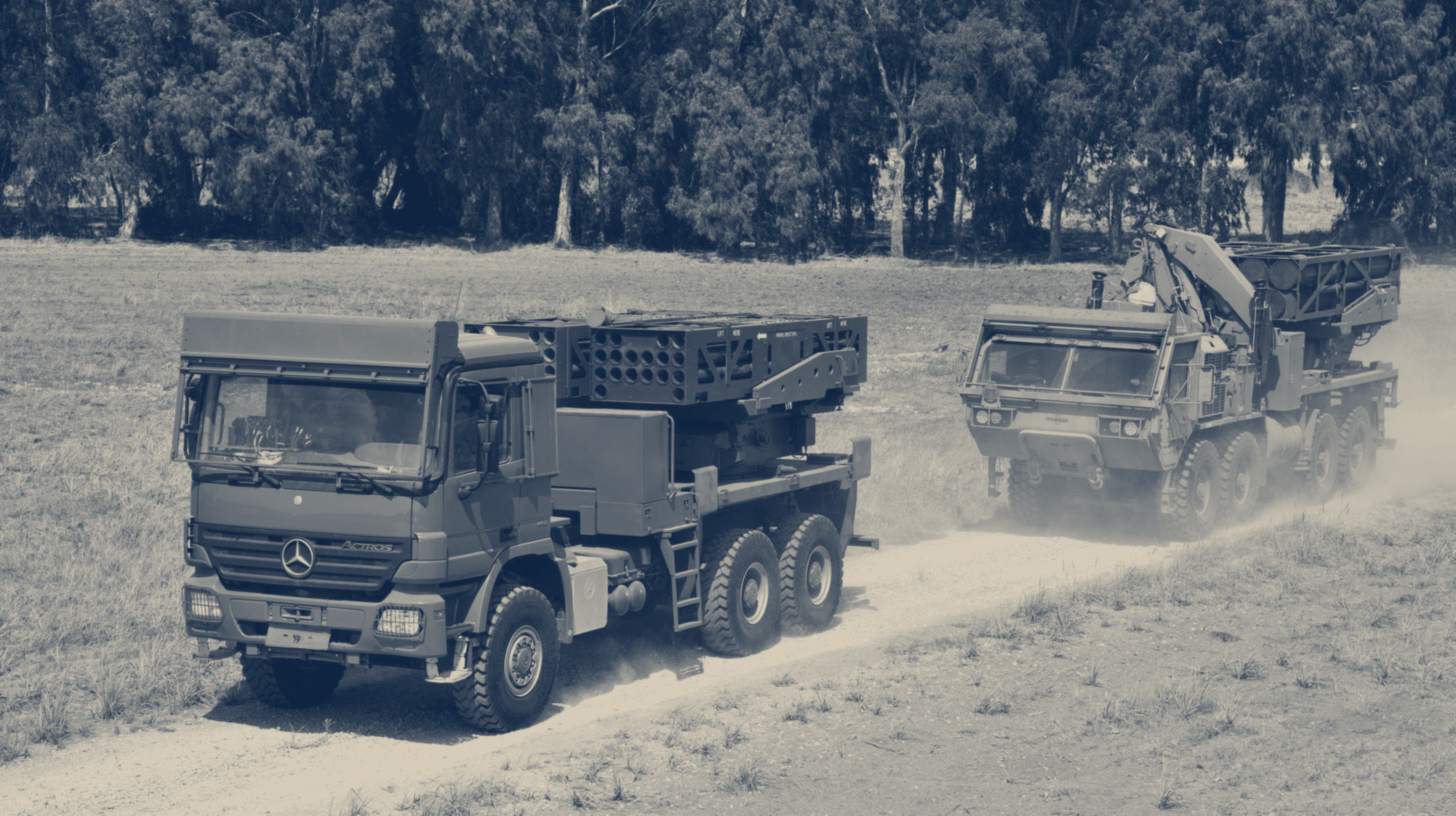
- PULS is a truck-mounted dual-pod launcher capable of firing 122 mm and 160 mm rockets to 35-40 km, full-size EXTRA rockets to 150 km, or Predator Hawk missiles to 300 km.
- The contract includes additional rocket artillery platforms and integrated logistics support, though customer identity, launcher quantity and delivery schedule remain undisclosed.
Why it matters
- PULS competes directly with the U.S. HIMARS as a primary European rocket artillery platform, with recent major NATO orders from the Netherlands ($305 million for 20 launchers), Germany ($57 million for EuroPULS version), Denmark (8 launchers in 2023) and Greece ($750 million in April 2026).
- Elbit has demonstrated ability to secure repeat contracts with European operators; a $130 million deal in 2025 supplied training and precision-guided munitions to an unnamed existing PULS customer.
- The contract expands Israeli defense industry access to European procurement and reinforces Elbit's position as a primary supplier to NATO members seeking non-U.S. artillery solutions.
Going deeper
- PULS flexibility allows mounting on wheeled and tracked platforms already in service, reducing integration costs for European armies transitioning from older systems.
- Israel's ground forces have operated PULS since 2020 under the designation Lahav, mounted on U.S.-made HEMTT trucks, validating the system's operational maturity.
Financial impact
- Elbit will recognize $235 million in contract revenue over the period of performance; the announcement does not disclose obligated funds, ceiling value or delivery schedule, so timing of revenue recognition is not disclosed.
- The contract adds to Elbit's backlog of European munitions and launcher orders, which now includes confirmed deals with the Netherlands, Denmark, Germany, Greece and Serbia, totaling more than $1.4 billion in known NATO and non-NATO PULS-related contracts since 2023.
The intrigue
- Elbit has kept this customer identity confidential, following its practice with a prior $130 million munitions contract to an unnamed PULS operator in 2025, suggesting either political sensitivity or competitive sensitivity around the procurement.
The fine print
- Customer identity, launcher and munition quantities, and delivery schedule are not disclosed.
- Contract ceiling value and obligated funds are not separately stated; the $235 million figure is the total contract award.
Source: defence-blog.com · Oct 19, 2026 · Drafted with Claude, reviewed by Industrial Base Alpha.