Mentioned:KNDSKrauss-Maffei WegmannNexter
Germany's Federal Cabinet has agreed to acquire 50% of KNDS shares from private owners, becoming an equal state partner with France. The deal represents Germany's largest state stake in its defense industrial base.
What's happening
- Germany purchased 50% of KNDS shares held by the Bode-Wegmann family through their holding company Wegmann & Co.
- France retained its existing 50% stake, making KNDS a fully joint-venture enterprise between the two governments.
- The transaction replaced a planned initial public offering of 20% that was canceled due to unfavorable market conditions.
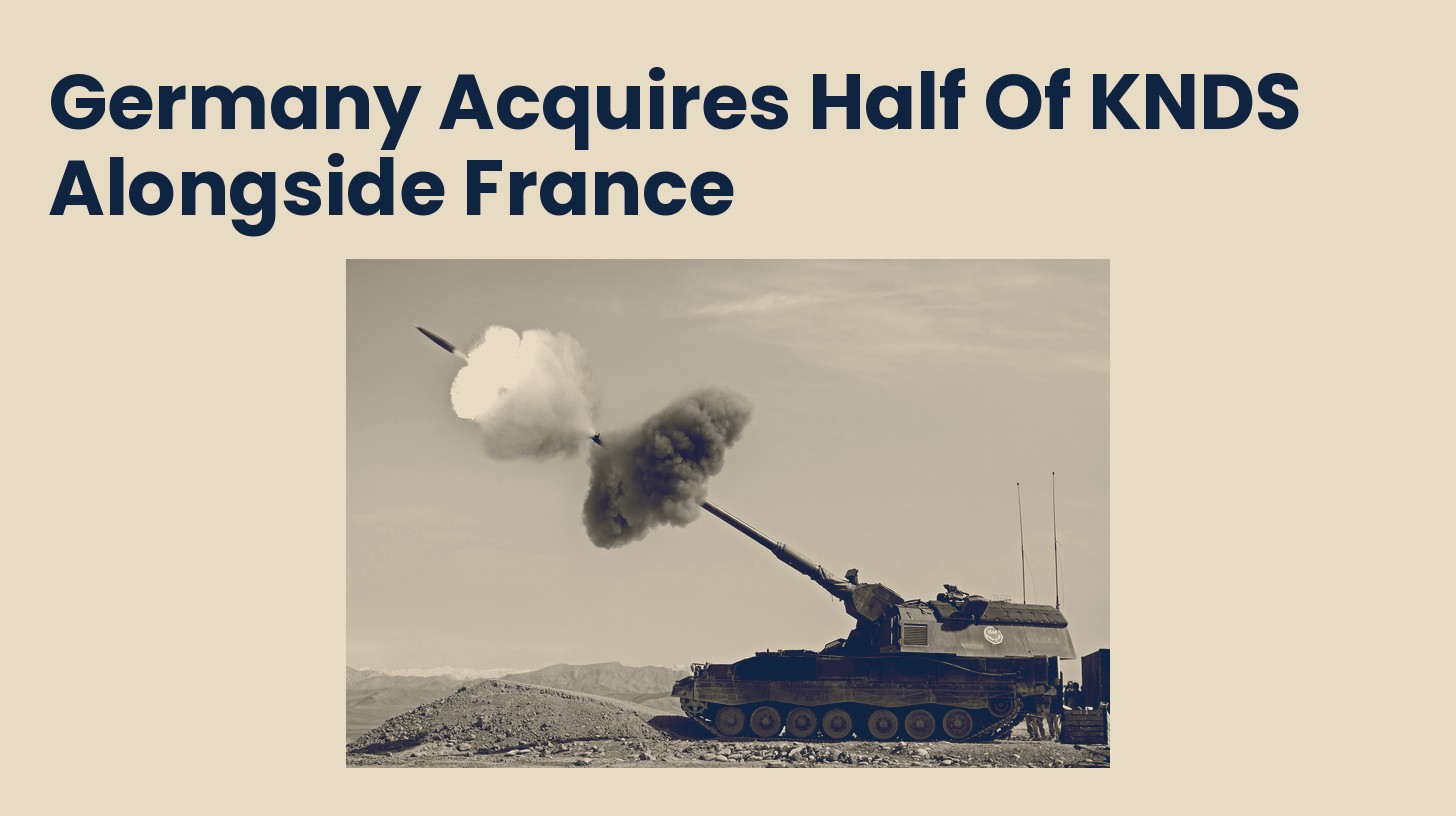
- KNDS manufactures Leopard 2 main battle tanks, PzH 2000 self-propelled artillery, and Boxer armored personnel carriers on the German side.
Why it matters
- Germany secures direct control over production of its primary tank and artillery platforms, eliminating private ownership risk to critical land systems capacity.
- State ownership consolidates German influence over the continent's largest defense conglomerate and ensures continuity of supply to allied nations including Norway and others operating Leopard 2 variants.
- The transaction signals Germany's strategic commitment to defense industrial sovereignty after canceling the IPO, reversing a path toward public market exposure.
Going deeper
- KNDS was formed in 2015 through merger of Krauss-Maffei Wegmann and French state-owned Nexter, creating a binational platform for European armored vehicle and artillery development.
- The company's German division produces heavy tanks and self-propelled artillery, while its French division manufactures Leclerc tanks and CAESAR wheeled artillery systems.
- Boxer production occurs in cooperation with Rheinmetall, creating a supply chain dependency across multiple German defense contractors.
Financial impact
- Purchase price and valuation remain undisclosed; financial statements will show acquisition on German government balance sheet when transaction closes, likely as goodwill or equity investment.
- No change to KNDS revenue recognition or operating model; the company remains jointly controlled by two state owners with equal voting stakes.
- German defense budget will absorb the acquisition cost in fiscal 2026 or 2027 depending on closing timing; impact to cash flow statement timing not disclosed.
The intrigue
- The cancelled IPO suggests German and French governments decided state control over tank and artillery production outweighed benefits of capital market diversification or partial privatization.
The fine print
- Deal value undisclosed; regulatory or parliamentary approvals not mentioned in source material.
- Closing conditions and timing not disclosed.
Source: militarnyi.com · Nov 6, 2026 · Drafted with Claude, reviewed by Industrial Base Alpha.