Mentioned:ICONBaillie GiffordBlackRock$200M · Other
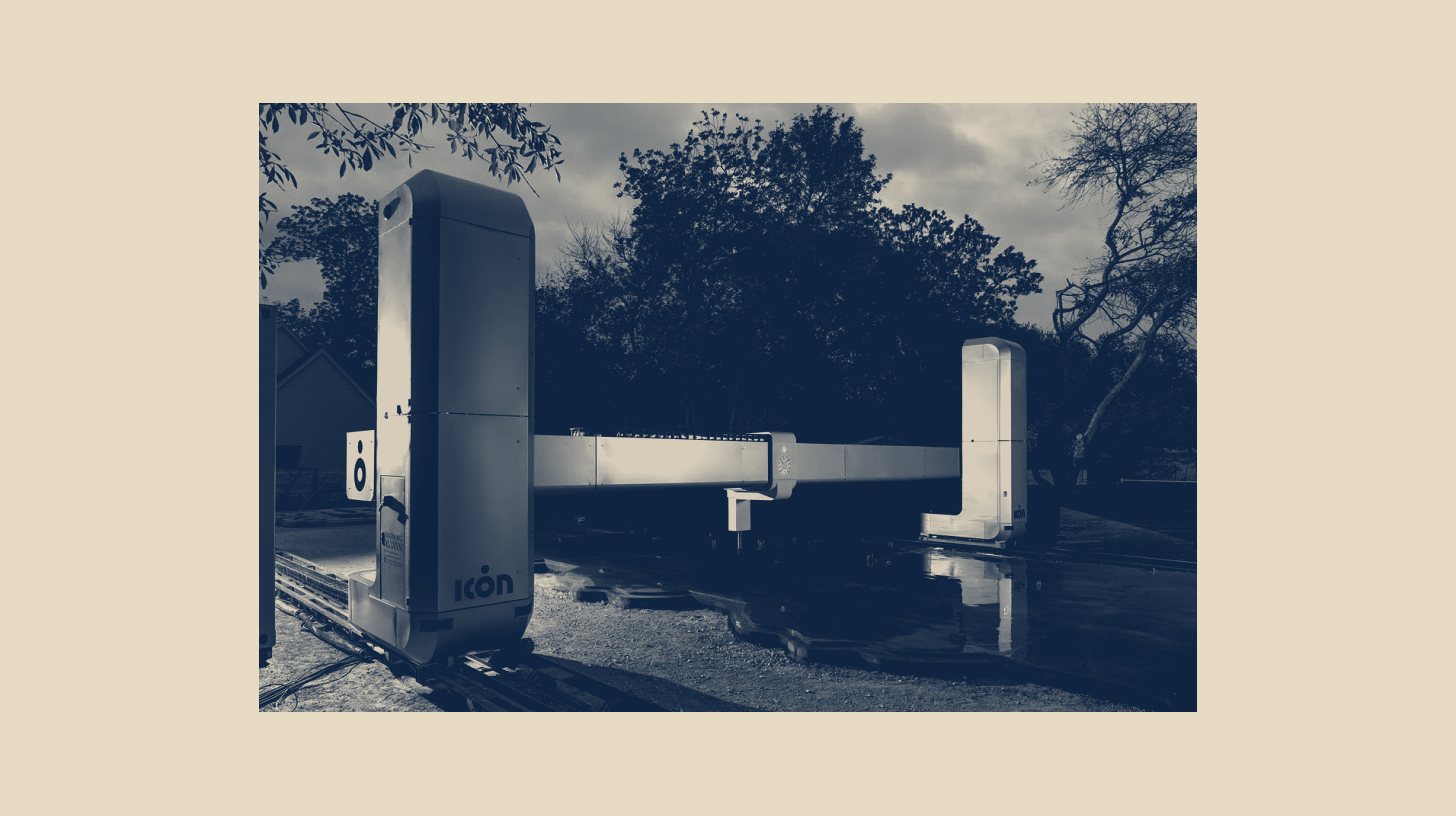
Robotic construction startup ICON raised $200M in Series D funding co-led by Baillie Gifford and BlackRock to accelerate its military and public sector business. The company has already delivered 10 barracks at Fort Bliss in 58 days, achieving 4x faster construction than traditional Army benchmarks.
What's happening
- ICON secured $200M Series D from Baillie Gifford and BlackRock to expand ICON Prime, its military and public sector division launched in April 2026.
- The company has won $360M+ in government contracts including a $62.8M Fort Bliss project delivering 10 barracks for 560 soldiers in 58 days with 9.3% lower cost per square foot.
- Fort Polk contract with initial $67M OTA and $201M potential value will comprise 96 structures with first occupancy expected summer 2027.
- ICON is developing expeditionary robots for field deployment in contested regions and advancing space-based construction systems under a $60M NASA contract for lunar operations.
Why it matters
- Military barracks construction velocity directly impacts force readiness and base infrastructure capacity, with ICON demonstrating 4x acceleration over legacy Army methods.
- Expeditionary construction robots reduce logistics burden and supply chain vulnerability by enabling use of local materials in forward-deployed locations.
- Replicating the Fort Bliss model across Army, Air Force, Marines and Navy creates a distributed manufacturing approach to military real estate that bypasses traditional construction bottlenecks.
- Lunar construction capability establishes a new industrial base category for space infrastructure, critical for sustained military presence beyond Earth orbit.
Going deeper
- Fort Bliss barracks were completed in 58 days for full delivery; Fort Polk's 96-structure program targets initial occupancy of 8 structures by summer 2027.
- NASA's $60M lunar contract requires ICON to develop robots that can process lunar regolith into ceramic shielding material with twice the strength of concrete.
- ICON Prime President Will Hurd emphasized interoperability: robots must deploy to contested areas like the first island chain to construct landing pads, roads, communications depots and shelters using local materials.
Financial impact
- Series D funding adds $200M to cash and extends runway for product development and manufacturing scale-up; ownership dilution not disclosed.
- Fort Bliss contract ($62.8M) and Fort Polk OTA ($67M) with $201M ceiling represent near-term revenue recognition; timing of full Fort Polk execution spans into 2027 and beyond.
- $360M+ government contract backlog as of April 2026 provides deferred revenue pipeline for ICON Prime operations across fiscal 2026-2027 and forward.
- NASA's $60M lunar contract contributes to long-term R&D revenue stream; structure and milestone-based payments not disclosed.
The intrigue
- ICON's shift from civilian housing to military expeditionary robotics raises questions about production prioritization and dual-use capacity constraints as civilian and defense demand compete.
- Lunar construction capability creates first-mover advantage in space infrastructure, but deployment timeline and operational readiness remain undefined.
The fine print
- Fort Polk contract ceiling of $201M exceeds the initial $67M OTA; funding drawdown contingent on performance milestones and occupancy targets.
- NASA lunar contract is development-focused with ground-based demonstration complete; space-based testing and operational deployment timing not disclosed.
- Series D terms, valuation and investor ownership stakes are undisclosed.
Source: tectonicdefense.com · Oct 19, 2026 · Drafted with Claude, reviewed by Industrial Base Alpha.