Mentioned:No public companies identified
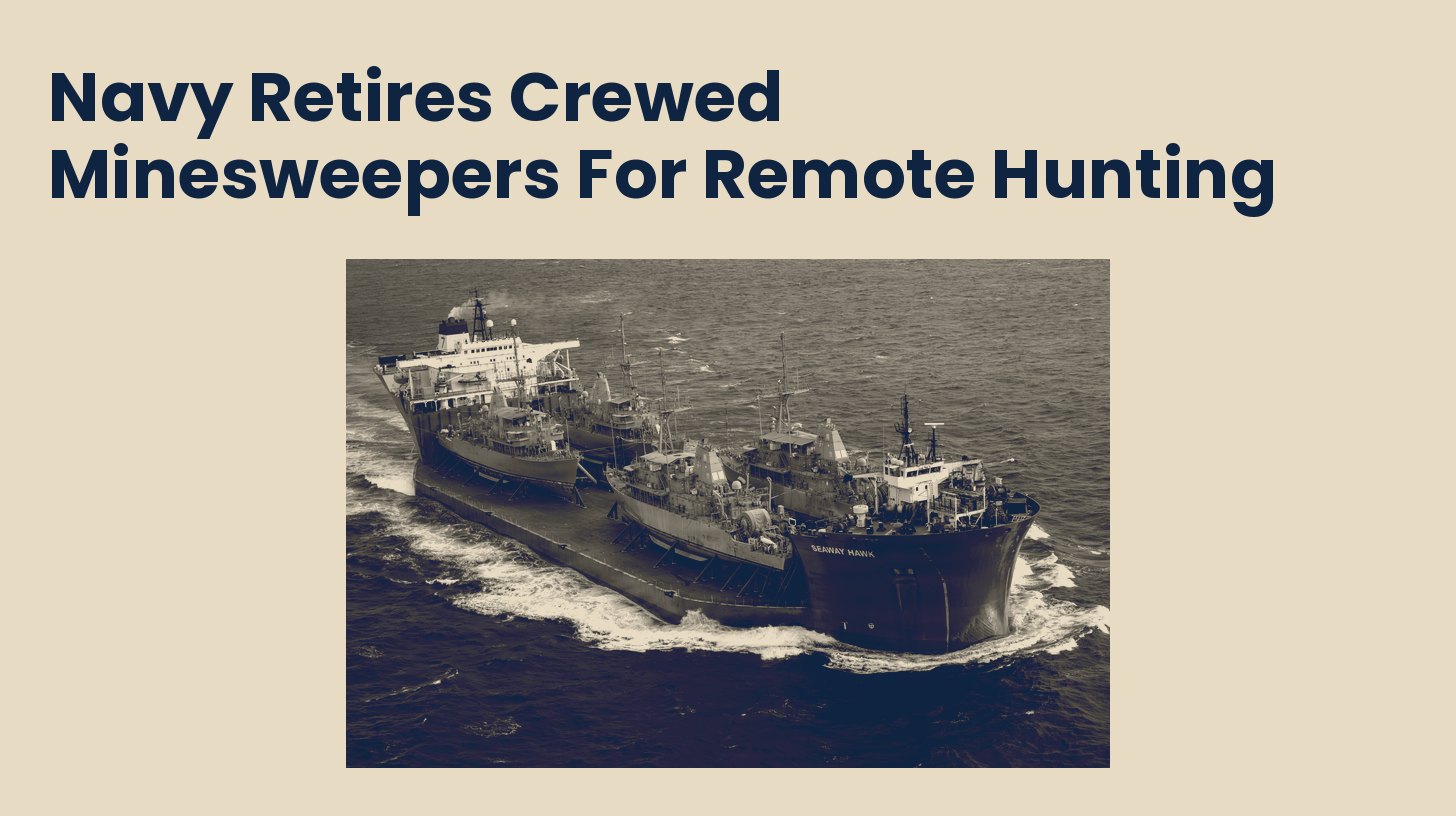
The U.S. Navy is shifting from traditional crewed minesweeping vessels to unmanned remote mine-hunting platforms equipped with AI-powered classification systems. The transition prioritizes lower-cost deployable autonomous systems that reduce risk to personnel while expanding operational coverage in critical chokepoints like the Strait of Hormuz.
What's happening
- Navy and allied navies are replacing retired crewed minesweepers with unmanned remote systems paired with AI-powered classification tools for mine identification and neutralization.
- Towed arrays mounted on uncrewed vessels collect seabed data and transmit it to human operators or autonomous AI systems for target classification.
- Operational doctrine now pairs one or two minesweepers with multiple robotic platforms to achieve greater area coverage in shorter timeframes than crewed vessels alone.
- Unmanned systems can be airlifted into theaters and stored until needed, enabling faster response and scalable capacity expansion without permanent crew commitments.
Why it matters
- Autonomous mine-hunting systems lower operational costs per unit and allow navies to field larger fleets without proportional increases in personnel or infrastructure.
- Removing crewed vessels from direct mine-hunting operations reduces casualty risk in high-threat environments like the Strait of Hormuz where maritime mines threaten military and commercial transit.
- AI-powered classification accelerates the find-fix-finish kill chain by automating preliminary target evaluation and reducing dwell time on individual seabed contacts in heavily trafficked waterways.
- Remote systems enable rapid deployment and surge capacity during contingencies by avoiding the construction, crewing and sustainment timelines required for traditional minesweeping ships.
Going deeper
- Traditional minesweeping vessels built from wood or fiberglass with sonar sensor arrays are being phased out due to fleet age and retirement across multiple allied navies.
- The find-fix-finish tactic requires identifying seabed objects, differentiating actual mines from debris and terrain, classifying remaining contacts, and neutralizing confirmed threats while protecting operators.
- Mixed-fleet operations allow unmanned systems to conduct persistent surveillance and data collection while manned vessels provide command, control and final engagement authority.
- Unmanned platforms reduce logistical burden and allow storage until operational need, contrasting with manned ships that require continuous crew rotations and shore infrastructure.
The intrigue
- Transition success depends on AI classification tool reliability in distinguishing mines from clutter on complex seabeds, particularly in highly trafficked straits where false positives could halt commercial traffic for extended periods.
Source: Breaking Defense · Nov 10, 2026 · Drafted with Claude, reviewed by Industrial Base Alpha.