Mentioned:Project Omega$80M · Series A
Project Omega closed an $80M Series A led by B Capital to accelerate development of radioisotope batteries made from recycled spent nuclear fuel for defense platforms. The startup is working with DARPA, Idaho National Laboratory, and Pacific Northwest National Laboratory under a $3.37M contract to mature long-duration power systems for satellites, unmanned undersea vehicles, and forward operating bases.
What's happening
- Project Omega raised $80M Series A from B Capital, 645 Capital, Starship Ventures, Mantis Ventures, Decisive Point, and Washington Harbour Partners to scale nuclear fuel recycling and expeditionary power systems.
- The startup converts spent nuclear fuel using molten salt recycling into radioisotope batteries rated for 30-year operation in satellites, UUVs, autonomous vehicles, and edge computing nodes.
- Project Omega holds a $3.37M DARPA Rads to Watts contract with Idaho National Laboratory and Pacific Northwest National Laboratory and is conducting field tests with PACOM in Hawaii this month.
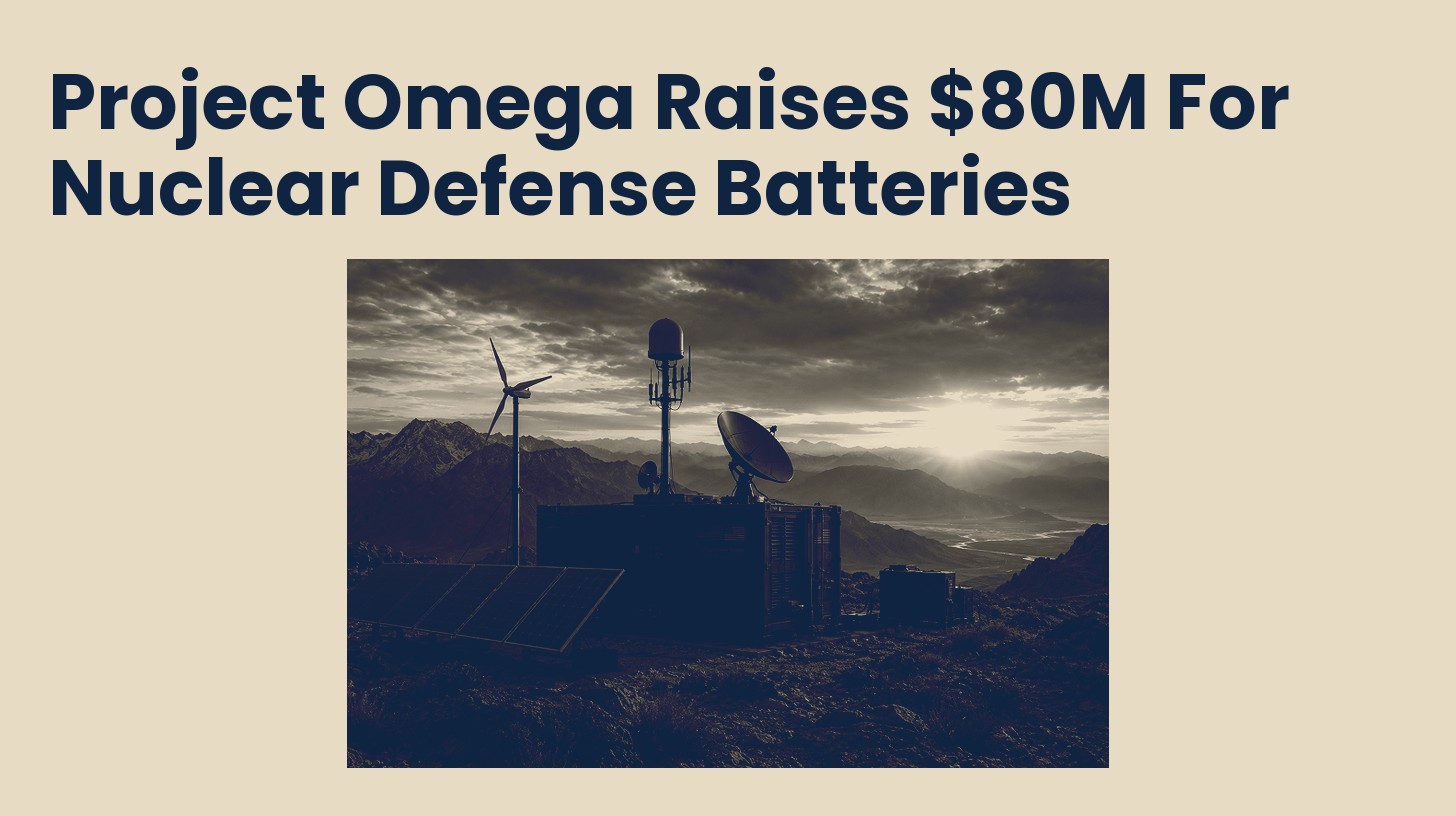
- The company is launching the X Series family of modular power systems that combine radioisotope, solar, and wind energy to replace diesel generators and standard batteries at forward operating bases.
Why it matters
- Long-duration power eliminates resupply logistics for remote defense platforms in denied areas where conventional fuel and standard batteries fail, extending operational persistence for satellites and undersea systems.
- Radioisotope batteries address a critical constraint in autonomous systems: power density and duration limit mission endurance for drones, sensors, and edge compute in forward theaters.
- The molten salt recycling process recovers more isotopes and reduces stored nuclear waste volume by up to 90 percent, addressing national inventory management of 100,000 tons of spent fuel at 100 U.S. sites.
- Operational compatibility with existing microreactor programs, including Project Janus, positions radioisotope batteries as part of a broader Pentagon power architecture for expeditionary and space operations.
Going deeper
- Project Omega uses safer alpha and beta radiation instead of gamma radiation, reducing hazard classification and expanding deployment options across military platforms.
- The X Series power router enables warfighters to select energy sources by demand priority, critical for unpredictable operational environments where individual energy sources are unreliable.
- The startup emerged from stealth in February 2026 with $12M seed funding, placing this Series A at roughly 6.7x the seed round after nine months of development and DARPA engagement.
Financial impact
- Series A funding increases cash and runway to move from prototype systems to commercial production and fielding within FY 2026-2027, with parallel development of the recycling facility.
- Revenue recognition will begin when X Series units and radioisotope power systems ship to defense customers, likely in phases aligned with DARPA contract milestones and field test completion.
- Ownership structure post-Series A is not disclosed; the $80M raises total funding to $92M before any dilution from future equity rounds.
The intrigue
- Project Omega's success depends on regulatory approval for handling and transporting radioisotope materials across military supply chains and to operational zones, a process not yet detailed publicly.
- Competition from alternative long-duration power technologies (solid-state batteries, fuel cells, microreactors) will determine whether radioisotope systems become the Pentagon's preferred expeditionary solution or a niche capability.
- The startup's claim of 30-year battery life is untested in field operations; Hawaii testing results this month will signal technical maturity and readiness for production scale.
The fine print
- The $3.37M DARPA contract ceiling and obligated funds split are not disclosed; total contract value and period of performance are also undisclosed.
- Commercialization timeline states the company will sell X Series and radioisotope systems while the recycling facility is built, implying early units may use third-party recycled isotope sources.
- Field testing with PACOM is described as the first operational test; full integration into satellite and UUV programs remains subject to military qualification and procurement processes.
Source: tectonicdefense.com · Nov 9, 2026 · Drafted with Claude, reviewed by Industrial Base Alpha.