Mentioned:NOC Northrop Grumman
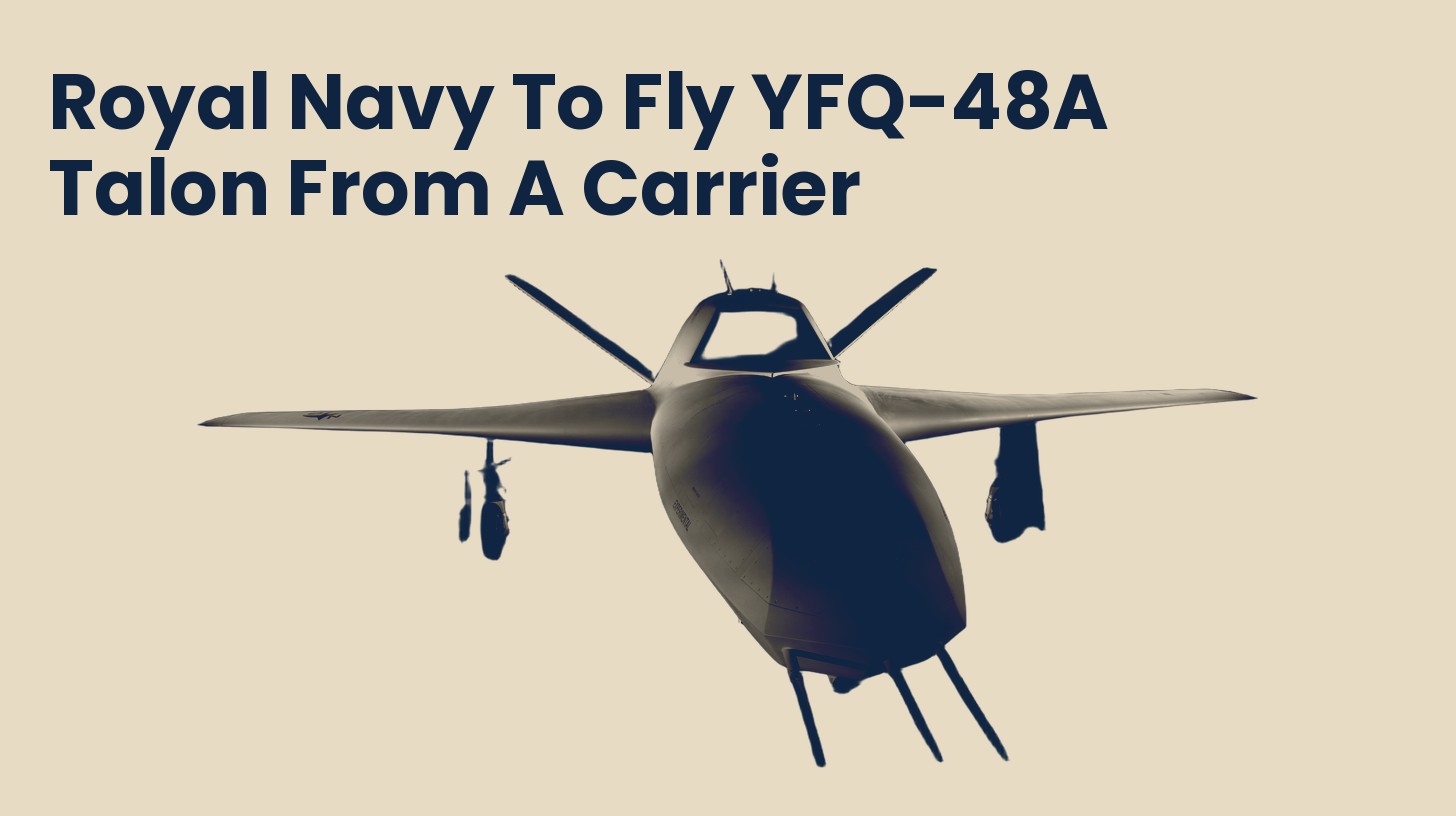
The Royal Navy plans to launch Northrop Grumman's YFQ-48A Talon Blue autonomous combat aircraft from HMS Prince of Wales in 2027 as part of Project VANQUISH. The First Sea Lord will sign a Statement of Intent with Northrop Grumman on November 12, 2026, to conduct trials demonstrating how jet-powered uncrewed aircraft can operate alongside crewed platforms.
What's happening
- Royal Navy announced demonstration of YFQ-48A Talon from HMS Prince of Wales, a Queen Elizabeth-class aircraft carrier, in 2027 under Project VANQUISH.
- First Sea Lord General Sir Gwyn Jenkins will sign Statement of Intent with Northrop Grumman on November 12, 2026, to prepare the aircraft for trials in UK waters.
- YFQ-48A is a single turbofan jet-powered autonomous platform with low-observable characteristics, designed to operate from carriers without catapults or arresting gear.
- Aircraft completed its first fully autonomous flight in October 2026 at Mojave Air and Space Port, including taxi, takeoff, maneuvers and landing.
Why it matters
- Demonstration informs Royal Navy requirements for integrating autonomous combat aircraft into future Hybrid Air Wing alongside F-35B Lightning II and helicopter fleets.
- Validates jet-powered autonomous carrier operations on STOVL-configured Queen Elizabeth-class ships without catapults or arresting wires, expanding UK carrier air wing options.
- Trial results will guide progressive integration of crewed and uncrewed platforms into the Fleet Air Arm as part of Maritime Aviation Transformation program.
- Provides practical evidence of autonomous platform safety and effectiveness operating alongside existing carrier air wing assets.
Going deeper
- YFQ-48A uses commercial Pratt & Whitney PW500 turbofan engine subjected to extensive testing to expand operational limits for collaborative combat missions.
- Talon features shovel-shaped nose, long slender fuselage, low aspect ratio lambda wing planform, and canted twin tails optimized for high performance and agility.
- Project VANQUISH originated from Royal Navy 2025 initiative seeking high-subsonic, short take-off and landing autonomous platform with credible endurance and payload capacity.
- Platform was originally sought for intelligence, surveillance and reconnaissance, strike, and air-to-air refueling mission areas per Ministry of Defence Request for Information.
The intrigue
- Unclear whether 2027 demonstration will include actual carrier recovery or focus primarily on launching from flight deck, as YFQ-48A landing gear not designed for demanding operations.
- Recovery aboard STOVL carrier without arresting wires presents significant technical challenge not yet resolved for autonomous platform integration.
- Demonstration does not commit to Royal Navy acquisition; trials exist solely to inform future Hybrid Air Wing requirements and procurement decisions.
The fine print
- Demonstration is a trial under Statement of Intent signed November 12, 2026; no production contract or capability procurement announced.
- Test will take place in UK waters but specifics of launch and recovery operations remain undisclosed.
Source: theaviationist.com · Nov 10, 2026 · Drafted with Claude, reviewed by Industrial Base Alpha.