
Mentioned:Astranis$264M · Contract Award
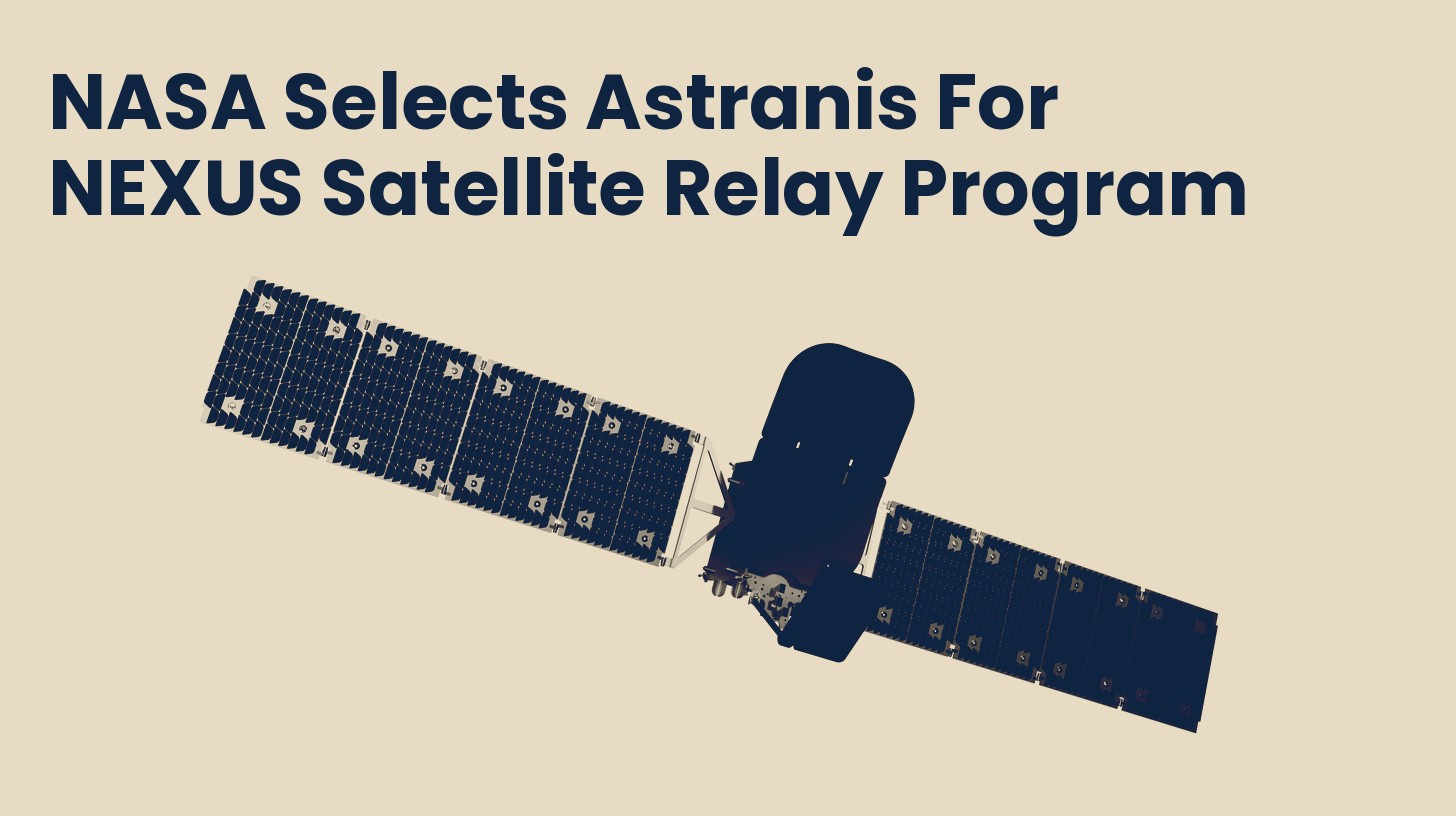
NASA selected Astranis for the initial phase of its NEXUS program to develop backward-compatible Ka-band relay satellites and services supporting the retirement of the government-owned Tracking and Data Relay Satellite fleet. The contract is valued at $264.3 million with performance extending through 2029.
What's happening
- Astranis received a firm-fixed-price contract from NASA worth $264.3 million to develop Ka-band relay capabilities for the NEXUS program.
- Initial concept development and risk reduction runs from November 4, 2026 through May 3, 2027, with follow-on phases extending work through 2029.
- The complete service includes space and ground systems, launch and deployment, on-orbit demonstration, and a future 15-year operational service phase.
- NEXUS represents NASA's shift from government-owned infrastructure to commercial satellite services for relay communications.
Why it matters
- Astranis gains a multiyear government anchor contract to validate and scale its production capacity for high-orbit satellite platforms.
- NASA reduces operational and capital risk by outsourcing relay satellite infrastructure to a commercial provider with proven on-orbit operations.
- The contract enables legacy TDRS users to continue operations without hardware modifications during the government fleet retirement window.
- Success on NEXUS establishes Astranis as NASA's preferred vendor for commercial relay services and potentially expands to other government communications missions.
Going deeper
- Astranis uses the same dual-use satellite platforms designed for commercial customers, enabling economies of scale across government and private markets.
- The program is facilitated through NASA's Space Communications and Navigation division via a nonreimbursable Space Act Agreement.
- Astranis currently operates multiple satellites on orbit and maintains a backlog exceeding $1 billion in commercial contracts.
Financial impact
- Initial phase funding for concept development and risk reduction is obligated in fiscal 2026 and extends through May 2027.
- Full contract value of $264.3 million represents ceiling value; revenue recognition will occur across concept phase and subsequent follow-on phases through 2029.
- The 15-year operational service component extends revenue recognition well beyond 2029 on a deferred basis once on-orbit operations commence.
- Contract supports Astranis' stated strategy to deploy production capacity across commercial and government customers simultaneously.
The fine print
- Contract is structured as firm-fixed-price, shifting cost and schedule risk to Astranis.
- Follow-on phases are described as extending work through 2029, but specific option-year terms and authorization levels are not disclosed.
- NASA's 15-year operational service requirement spans beyond the stated contract period of performance, indicating future funding phases or task orders not yet detailed.
Source: astranis.com · Nov 6, 2026 · Drafted with Claude, reviewed by Industrial Base Alpha.