Mentioned:Impulse SpaceSpaceXRelativity Space
Impulse Space has been awarded two task orders for NASA's Moon Base program to provide in-space mobility and cargo delivery capabilities. Missions are scheduled to begin in 2028 in support of NASA's permanent lunar outpost at the South Pole.
What's happening
- Impulse Space received 2 firm-fixed-price task orders under NASA's VADR contract for Moon Base logistics missions.
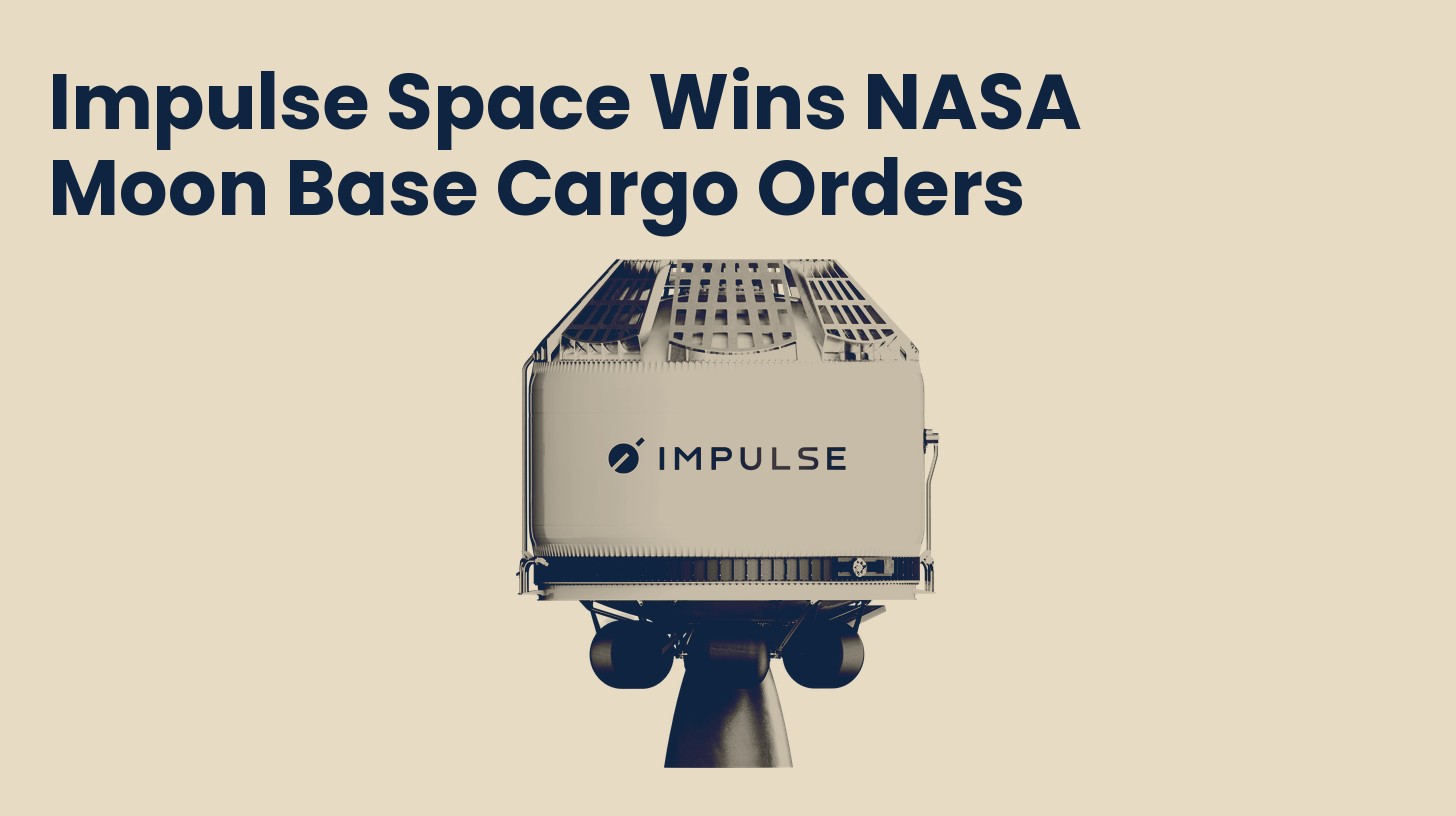
- First task order involves Impulse as prime contractor with SpaceX Falcon 9 launch, using Mira spacecraft for cislunar payload delivery.
- Second task order pairs Impulse as prime with Relativity Space's Terran R launch vehicle, deploying Helios kick-stage and lander for surface cargo testing.
- Mission cadence begins in 2028 with Impulse's full product fleet including lander, Helios kick-stage, and Mira spacecraft.
Why it matters
- Impulse's task orders represent the first awards for Moon Base transportation infrastructure, establishing Impulse as a key provider for sustained lunar operations.
- In-space mobility services fill a critical gap in NASA's cislunar logistics capability, enabling regular cargo resupply and payload deployment to the South Pole.
- Multiple launch provider partnerships with SpaceX and Relativity reduce schedule risk and demonstrate portability of Impulse's platforms across different rocket types.
- Sustained Moon Base logistics demand signals demand for commercial orbital transfer vehicle services beyond current government programs.
Going deeper
- Impulse's lander will perform descent testing with upsized cargo payloads, proving out surface delivery capability as a stepping stone for permanent lunar infrastructure.
- Mira's cislunar hosting platform enables flexible payload deployment, supporting NASA's modular approach to Moon Base construction.
- Task orders build on prior VADR orbital transfer vehicle studies Impulse conducted, converting technical work into operational flight hardware.
The intrigue
- Two separate launch providers suggest NASA is deliberately diversifying cislunar transportation, reducing reliance on any single provider and hedging schedule risk.
- Lander descent profile testing hints at NASA's interest in moving beyond one-way cargo delivery toward reusable or semi-reusable surface logistics vehicles.
The fine print
- Task orders are firm-fixed-price contracts, shifting technical and schedule risk to Impulse but enabling cost certainty for NASA.
- Specific dollar values for task orders are undisclosed; revenue recognition timing depends on mission milestones and delivery schedules.
- Both task orders include options for alternative payload configurations and mission flexibility, preserving NASA's ability to adapt to evolving Moon Base requirements.
Source: impulsespace.com · Nov 7, 2026 · Drafted with Claude, reviewed by Industrial Base Alpha.