Mentioned:PBS GroupZone 5 TechnologiesKongsberg Gruppen$100M · Internal/Self-funded
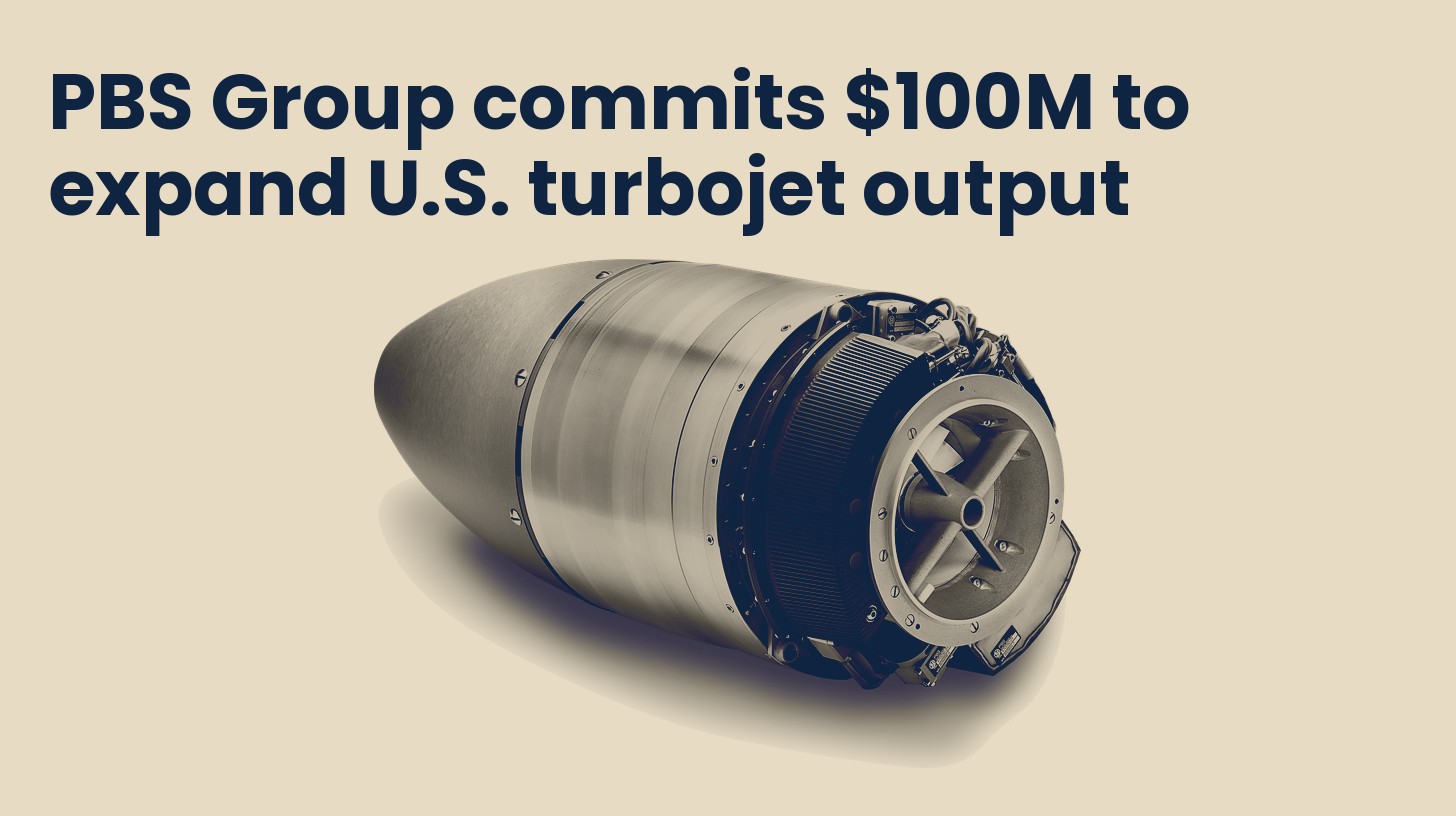
PBS Group is committing $100 million in internal capital to expand turbojet engine production at its Roswell, Georgia facility. The company aims to produce 10,000 TJ40 and TJ80 engines annually by 2028, up from roughly 5,000 units today.
What's happening
- PBS Group is investing $100 million to expand the Roswell, Georgia plant, including 930 square meters of new floor space and two additional engine test chambers.
- The facility plans to launch a second production shift and will produce approximately 40 engines per working day once the 10,000-unit annual target is reached by 2028.
- TJ40 and TJ80 engines power drones and missiles including Zone 5 Technologies' Rusty Dagger and White Spike systems sold to defense customers including Kongsberg Gruppen.
Why it matters
- The expansion addresses supply constraints for small turbojet engines that power U.S. and allied autonomous systems and missiles, with the U.S. facility doubling production capacity.
- Zone 5 Technologies, a key customer now owned by Norwegian defense group Kongsberg Gruppen, has signed a long-term contract for engine supply, securing strategic access to propulsion for its missile systems.
- PBS Group is simultaneously investing approximately 40 million euros in a new aviation technology division in the Czech Republic, indicating dual-base production strategy for allied defense supply.
Going deeper
- PBS Group's original plan targeted 20,000 annual engines by 2026 to 2027, but the company has not confirmed whether those figures remain relevant for later expansion stages.
- A memorandum between Ukrainian company Airlogix and Czech PBS Velká Bíteš outlines licensed production of small turbine engines in Ukraine, beginning with assembly and certified service before full manufacturing expansion.
Financial impact
- The $100 million internal investment will be reflected as capital expenditure on PBS Group's balance sheet in 2026, with the expanded facility generating incremental revenue from 2027 onward as production scales toward 10,000 units annually.
- Revenue recognition for Zone 5 Technologies' long-term engine contract will occur as engines are delivered and accepted over the production ramp, affecting both companies' cost of revenue and gross margins as utilization improves.
The intrigue
- PBS Group scaled back its original 20,000-unit target to 10,000 by 2028, leaving unclear whether supply-chain constraints, customer demand ceilings, or production methodology changes drove the revision.
The fine print
- The 10,000-unit annual target is a projection for 2028; timing and phasing of interim milestones have not been disclosed.
- Zone 5 Technologies' acquisition by Kongsberg Gruppen was completed earlier in 2026, establishing the Norwegian group as an end customer for engines powering Rusty Dagger and White Spike missiles.
Source: militarnyi.com · Oct 30, 2026 · Drafted with Claude, reviewed by Industrial Base Alpha.