Mentioned:AVAV AeroVironmentLMT Lockheed MartinAllen Control SystemsAurelius SystemsKord TechnologiesThor DynamicsYrikka
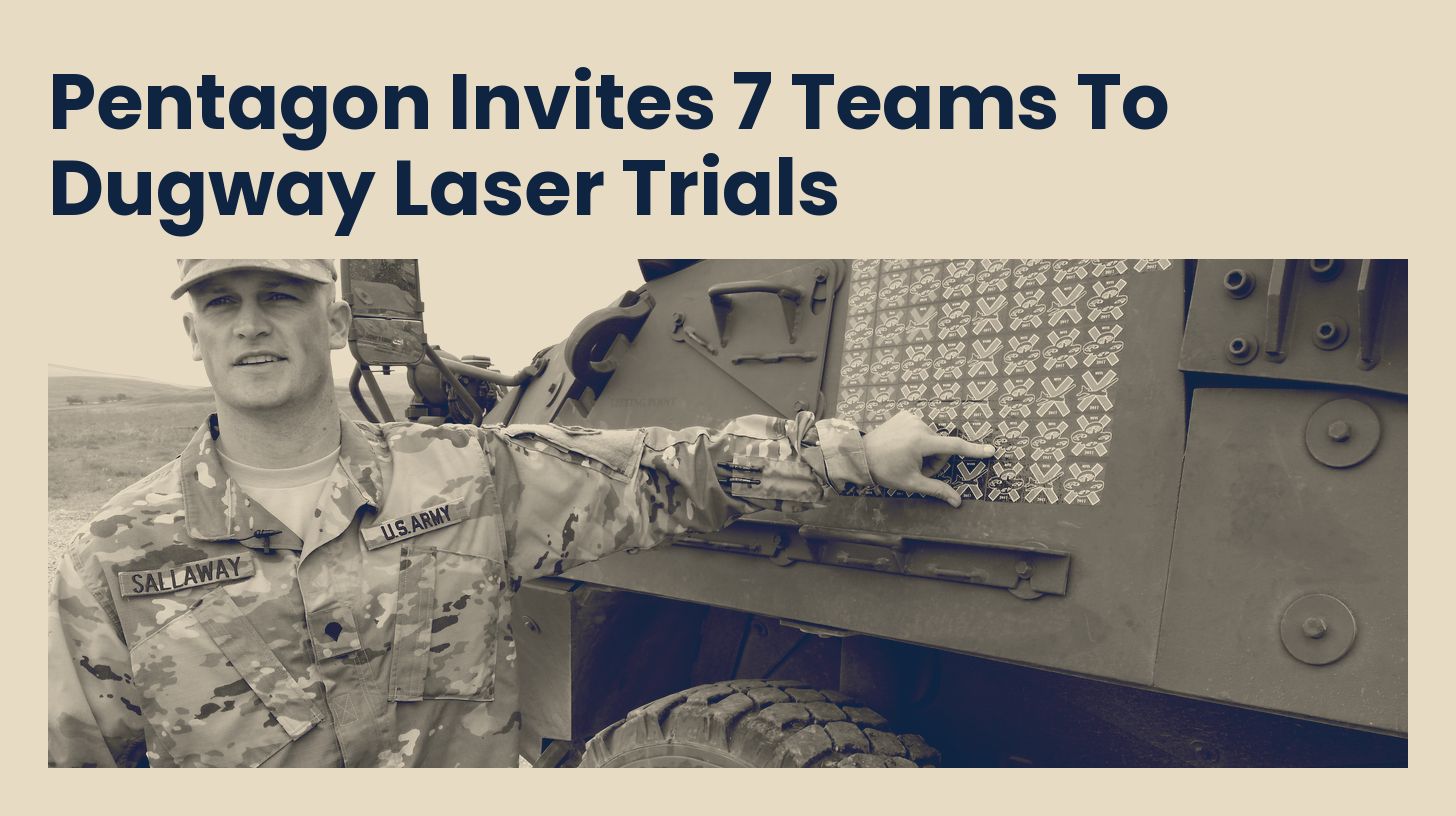
The Pentagon invited seven industry teams to live-fire high-energy laser trials against drones at Dugway Proving Ground starting mid-December. Systems that perform successfully could receive immediate purchase orders and production contracts.
What's happening
- The Department of War's Office of Research and Engineering and Joint Interagency Task Force 401 selected seven teams from 13 white paper submissions to test counter-drone lasers at Dugway.
- Selected teams include Allen Control Systems with BULLFROG HEL, Aurelius Systems with ARCHIMEDES, AeroVironment with LOCUST X1, Kord Technologies with FIREFLY, Lockheed Martin with Crossbow, Thor Dynamics with LASER ARMOR and Yrikka with TALOS.
- Live firing begins mid-December after systems complete laser safety certifications, command-and-control integration, technical safety reviews and preliminary range tests in November.
- Trials will assess how well systems track and defeat drone targets above and below the horizon.
Why it matters
- Directed-energy weapons represent one of the Department's six critical technology areas for countering evolving drone threats across the Joint Force.
- Immediate purchase order authority for successful systems accelerates production line setup and field deployment, compressing the typical acquisition timeline.
- High-energy lasers offer low cost per shot compared to kinetic munitions, reducing logistics burden for distributed air defense.
- Competition among seven teams drives rapid innovation in laser tracking, targeting and integration with existing command-and-control architecture.
Going deeper
- The two-phase evaluation filtered 13 industry proposals to seven finalists, suggesting strong market interest in directed-energy counter-drone systems.
- Trials will test systems against representative drone targets to measure real-world performance before fielding decisions are made.
The intrigue
- The structure allows immediate purchase orders for winners, bypassing traditional competitive procurement cycles that typically delay defense system deployment by years.
- No disclosed ceiling values or obligated funding amounts limit the scope of potential orders, leaving production scale and total investment undefined.
The fine print
- Teams must complete laser safety certifications and command-and-control integration by November to proceed to Dugway trials.
- Systems must clear technical safety reviews and preliminary range tests before live-fire evaluation against drone targets.
- Purchase order and production contract awards contingent on successful system performance during mid-December trials.
Source: defence-industry.eu · Nov 16, 2026 · Drafted with Claude, reviewed by Industrial Base Alpha.