Mentioned:Ramon.SpaceMicron TechnologyPSGIngrasys$124M · Series B
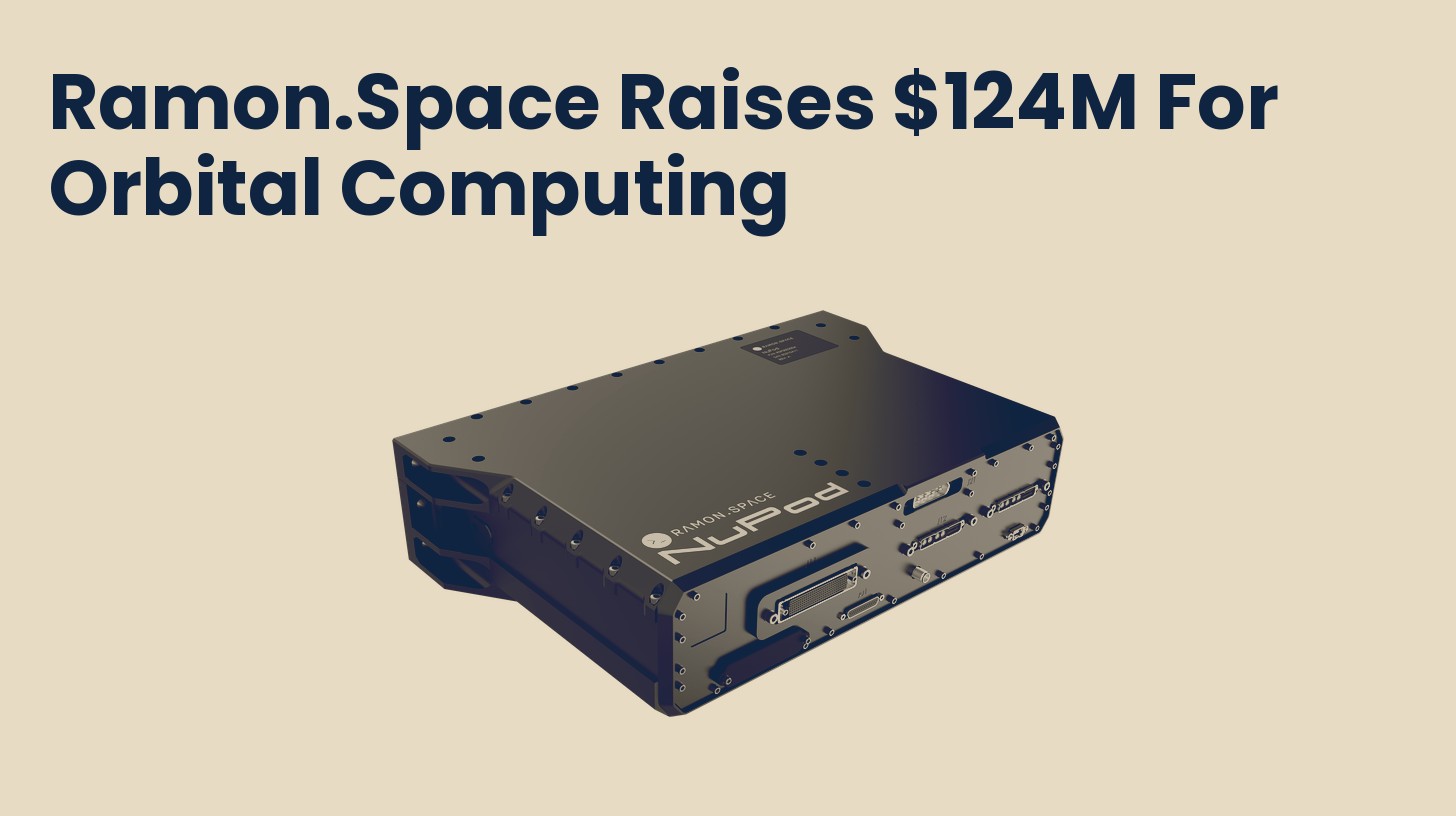
Ramon.Space raised $124M in Series B funding to scale production of onboard computing systems for satellite constellations. The round, led by PSG and including Micron Technology, brings total capital raised to $180M.
What's happening
- PSG led the $124M Series B with participation from Micron Technology, Senvest, and Phoenix Financial, all previous investors in the company.
- Ramon.Space plans to ramp manufacturing from a run rate of thousands of computing units annually to tens of thousands and beyond.
- The company's flight-proven technology has been operating across roughly 100 satellites for about a decade, processing data in orbit rather than transmitting raw data to Earth.
- An orbital data center prototype is scheduled to fly in 2027 through a collaboration with cloud-infrastructure provider Ingrasys, which has been Ramon.Space's manufacturing partner since 2023.
Why it matters
- As satellite constellations expand and AI workloads migrate to space, demand for in-orbit computing capacity becomes critical to data processing bottlenecks and power consumption on individual satellites.
- Ramon.Space's production scale-up directly supports the domestic and allied space industrial base by qualifying Israeli manufacturing for high-volume satellite component supply.
- Micron's strategic investment signals that memory and storage qualified for radiation and thermal extremes are essential infrastructure for the emerging orbital economy.
- Flight heritage across hundreds of operational satellites demonstrates maturity that reduces program risk for constellation operators integrating onboard computing into future missions.
Going deeper
- Ramon.Space's systems are engineered to match ground-based computer performance while surviving radiation, extreme temperatures, and power budgets specific to orbital operations.
- Existing customers include satcom-constellation operators and Earth observation providers; the company is expanding into new market segments with the new capital.
Financial impact
- Series B capital increases cash on balance sheet and extends runway for manufacturing buildout and customer delivery acceleration in calendar 2026 and 2027.
- Revenue recognition will occur as onboard computing units ship to constellation operators under existing pipeline contracts and new sales; exact backlog and revenue timing not disclosed.
- Micron's strategic investment may appear as a minority stake on its balance sheet; financial terms and equity percentage not disclosed.
The intrigue
- PSG's entry into space hardware manufacturing, historically outside its software-focused mandate, signals institutional confidence in orbital computing as a durable capital-intensive market.
The fine print
- Total capital raised to date is $180M; valuation and equity dilution from Series B not disclosed.
- Manufacturing partner Ingrasys collaboration timeline and volume commitments not disclosed.
- Prototype flight in 2027 is slated but subject to mission scheduling and regulatory approval.
Source: payloadspace.com · Nov 17, 2026 · Drafted with Claude, reviewed by Industrial Base Alpha.