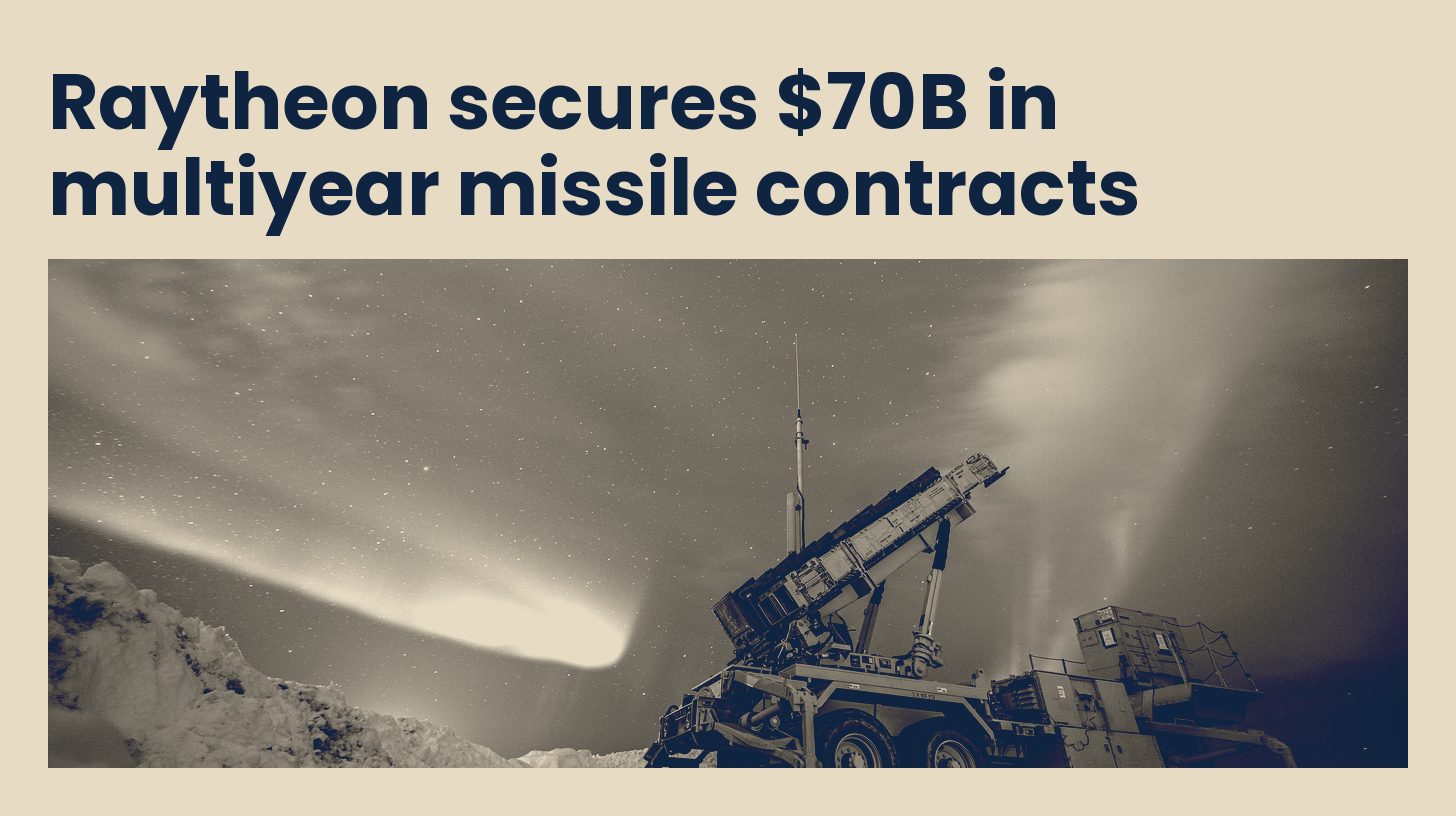
Raytheon disclosed approximately $70 billion in combined multiyear contracts for four critical missile programs, requiring production rate increases of 2-4 times existing capacity. The company has already achieved 90% output growth year-to-date in 2026 and is expanding tooling, suppliers and partnerships to reach full-rate production by 2030.
What's happening
- Raytheon won $70 billion in combined multiyear contracts for Tomahawk, AMRAAM, SM-6 and SM-3 IB missiles with production rate increases of 2-4x required.
- The company achieved 90% output growth across critical munitions in the first nine months of 2026, supported by improved material flow and factory productivity.
- Raytheon is ordering tooling and test equipment and preparing suppliers for expanded production, with capital and other investments taking place over the next 2-3 years.
- The company added 150 new suppliers in 2025 and is expanding partnerships with rocket motor manufacturers to address supply constraints and spread risk.
Why it matters
- The $70 billion multiyear commitment provides Raytheon with nearly a decade of demand visibility for critical naval and air defense systems, stabilizing production planning.
- Supply chain bottlenecks in rocket motors and critical materials threaten production ramp timelines; DoD support for long-term material commitments is essential for 2027 and beyond.
- Raytheon competes with AI sector and other industries for advanced supplies, creating potential capacity constraints across U.S. industrial base if demand outpaces supply.
- Full-rate production across four major missile programs by 2030 addresses NATO and allied air defense needs against peer-state threats.
Going deeper
- Raytheon is working with DoD to streamline testing requirements, improve manufacturability, address obsolescence and qualify new sources of supply across the missile suite.
- Rocket motors represent an immediate supply constraint; RTX is expanding partnerships with motor manufacturers rather than pursuing immediate acquisition to distribute supply risk.
- Material receipts at Raytheon are up double-digits year-over-year, indicating commodity and component availability is supporting near-term production increases.
- The production ramp is expected to gather pace over the next two years and continue through 2030, with capital investments front-loaded in 2024-2026.
Financial impact
- RTX's Raytheon segment reported third-quarter 2026 sales of $8 billion, up 14%, with growth driven by naval programs, land and air defense systems including Patriot, Standard Missile and Tomahawk.
- The $70 billion multiyear contract ceiling will be recognized as revenue over approximately a decade of performance; obligated funding amounts not disclosed.
- RTX raised full-year 2026 sales growth forecast to low teens from prior guidance of high single digits to low double digits, reflecting higher munitions volumes.
- RTX ended third quarter 2026 with $130 billion total backlog after booking $52.3 billion in orders, providing multi-year revenue visibility.
The intrigue
- Competition with AI sector for advanced materials and components suggests potential supply rationing across defense and commercial technology sectors as munitions production accelerates.
- Raytheon declined to identify which programs drove the 90% output increase or disclose individual production quantities, limiting visibility into existing versus new production.
- Full-rate production target of 2030 depends on resolving rocket motor and critical materials constraints with no acquisition planned in motor sector, creating execution risk.
The fine print
- The $70 billion figure represents combined contract ceiling value; obligated funding and annual floor commitments not disclosed.
- Production rate increases of 2-4x are required by contract but not yet achieved; capital investments over 2024-2026 will determine whether ramp timeline is met.
- CEO stated demand will be high and risk is being spread across suppliers, but no supplier contracts have been announced and supplier capacity availability is unconfirmed.
Source: defence-industry.eu · Oct 31, 2026 · Drafted with Claude, reviewed by Industrial Base Alpha.