Mentioned:Rivet$55M · Series A
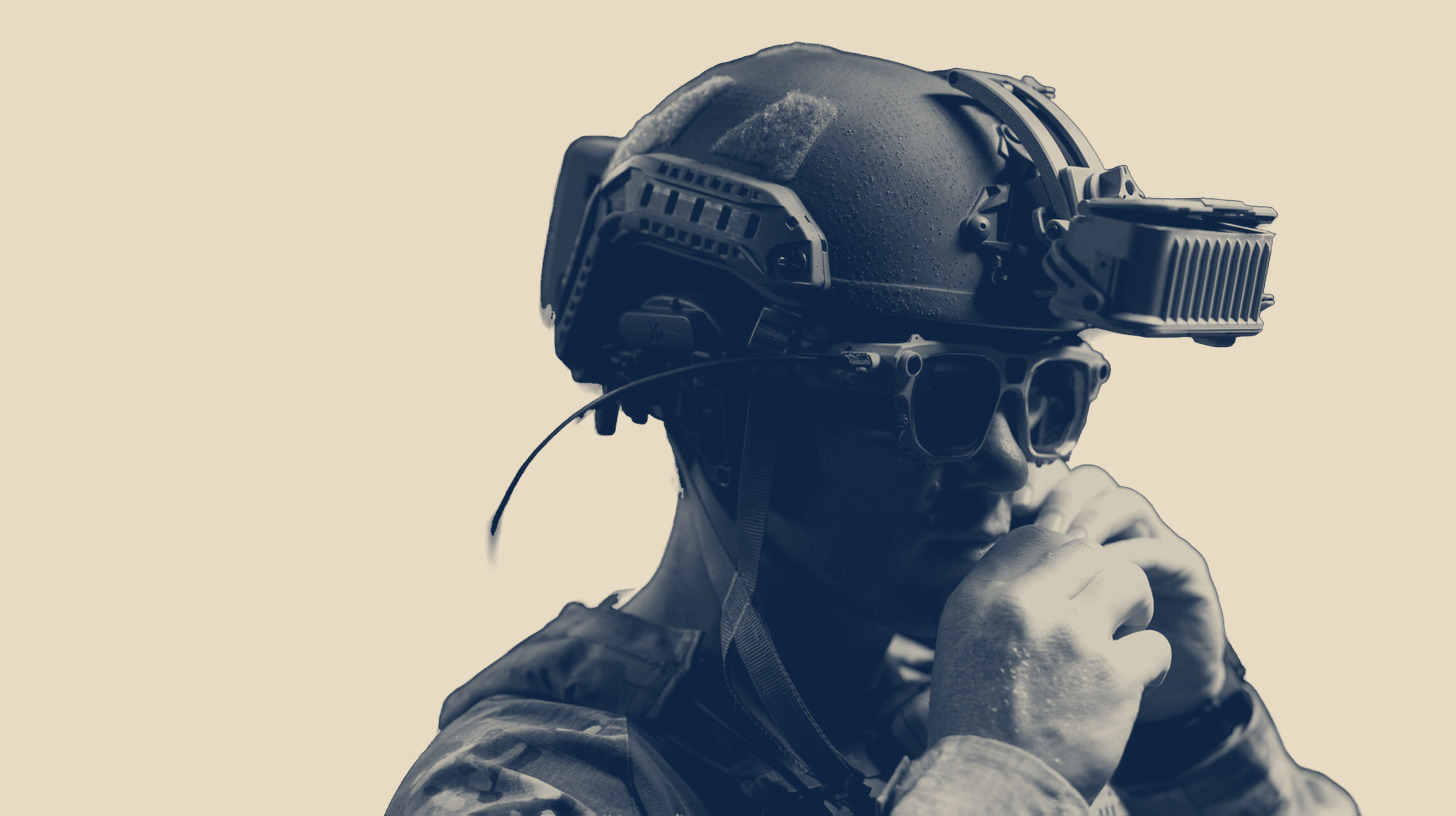
Rivet raised $55 million in Series A funding and delivered 70 prototypes of its Hard Spec smart glasses to the U.S. Army as one of two contractors selected for the Soldier Borne Mission Command program. The glasses enable soldiers to command AI agents controlling battlefield robots and drones through natural language.
What's happening
- Rivet delivered 70 prototypes of the Hard Spec militarized smart glasses to the Army after being selected for Soldier Borne Mission Command, one of two contractors in the program.
- The Hard Spec enables soldiers to issue commands in natural language to AI agents that control robots and drones, moving beyond situational awareness to agentic task delegation.
- Rivet is adapting the technology beyond military applications to aerospace manufacturing, aircraft maintenance, and motor pool procedures where trained professionals need step-by-step guidance.
Why it matters
- Soldier Borne Mission Command addresses a critical Army need for enhanced battlefield situational awareness and communication; Rivet's approach through AI command agents represents a new operational model.
- Rivet's success in prototype delivery and Series A funding validates the military's confidence in smart glasses as an entry point to autonomous agent control on the battlefield.
- The dual-use pathway to aerospace and maintenance applications creates a larger addressable market and production base for the underlying militarized smart glasses platform.
Going deeper
- The Hard Spec differs fundamentally from competitor Anduril's headset design, which resembles the original IVAS system that both firms helped develop.
- Rivet's vision extends beyond tactical targeting to enabling multifunctional soldiers and airmen to perform unfamiliar procedures correctly in high-stress environments without physical manuals.
- The natural-language interface is critical to adoption; soldiers command AI agents using conversational language rather than technical command syntax, lowering training burden.
Financial impact
- Series A funding of $55 million extends Rivet's cash runway and ownership structure; timing not disclosed for when the capital will be fully deployed.
- Revenue recognition from Army prototype delivery and program continuation will depend on obligated funds versus program ceiling value, which are not disclosed.
- Expansion into aerospace manufacturing and maintenance creates a non-defense revenue stream that could improve gross margins and reduce single-customer concentration risk over time.
The intrigue
- The Soldier Borne Mission Command program selected two competing approaches, Rivet and Anduril, creating uncertainty about which design the Army will ultimately scale or whether both will coexist in different operational roles.
- Rivet's move into aerospace manufacturing mirrors a broader defense-industrial trend of dual-use technology, but scaling consumer-grade applications alongside militarized products raises questions about supply chain separation and export control.
The fine print
- The $55 million Series A investors are undisclosed; no information on dilution, valuation, or governance changes.
- Rivet delivered 70 prototypes but no timeline or funding commitment for production scale or series procurement is disclosed.
- The program status and continued funding authority from the Army are not detailed; Soldier Borne Mission Command exists but future obligated funds and ceiling values remain undisclosed.
Source: Defense News · Oct 13, 2026 · Drafted with Claude, reviewed by Industrial Base Alpha.