Mentioned:Bureau 1440Progress rocket and space center
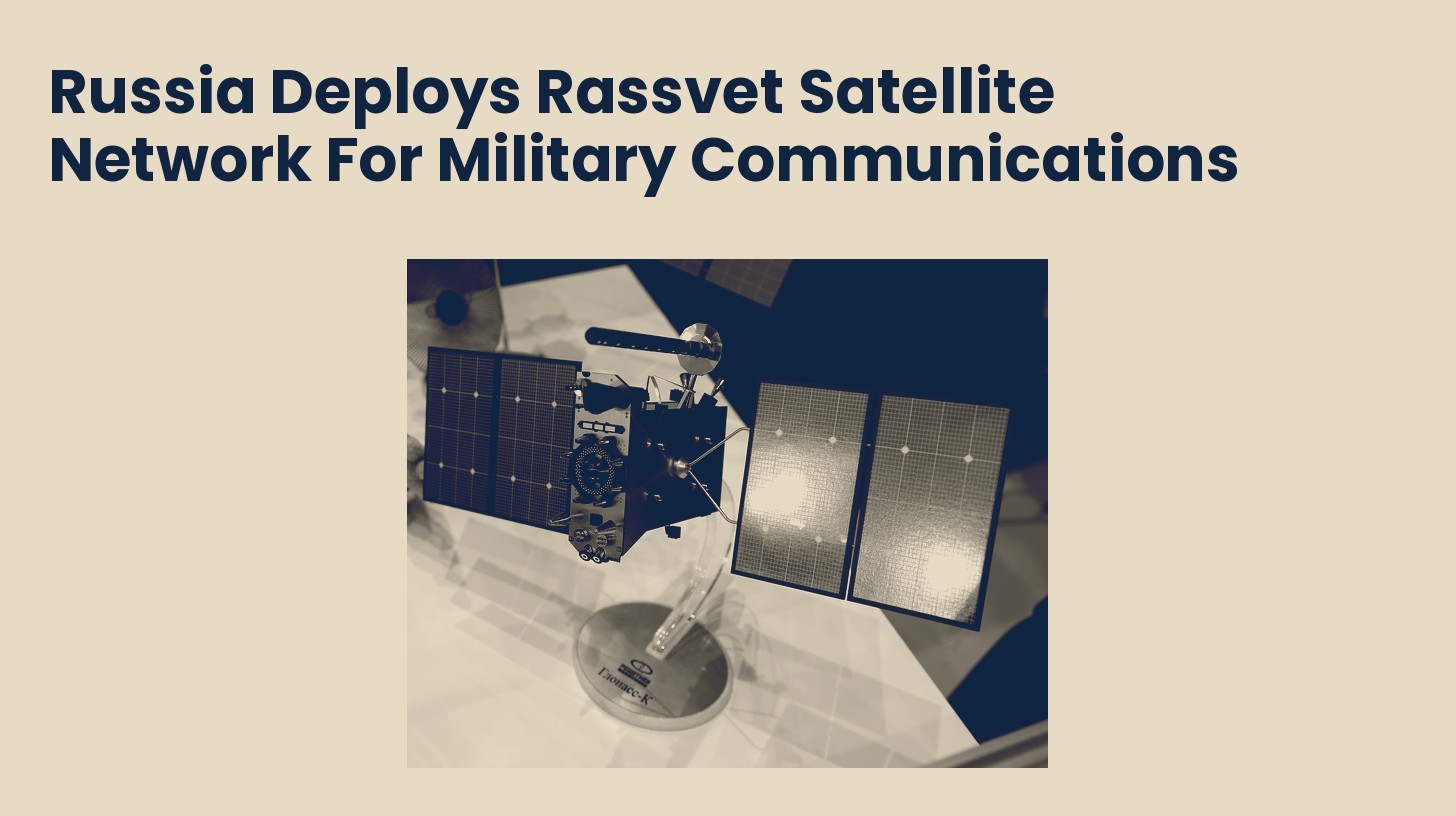
Russia has begun operational deployment of its Rassvet satellite constellation, with 32 satellites launched in two batches in March and July 2026, to enable real-time military communications and drone operations over Ukraine. The system represents Moscow's counter to Ukraine's access to SpaceX's Starshield network.
What's happening
- Russia launched 32 Rassvet satellites in 2026 across two batches in March and July for military communications over Ukrainian territory.
- The constellation currently provides only intermittent coverage as satellites pass overhead, insufficient for continuous communications across Ukraine.
- Rassvet enables two-way data exchange between ground control and Russian strike and surveillance drones, allowing real-time target adjustments and route changes during flight.
- Russia plans additional Rassvet launches before the end of 2026 to expand geographic coverage toward a full low-orbit communications system.
Why it matters
- A Russian military satellite network reduces Moscow's dependence on grey-market access to Starlink terminals, which Ukraine successfully lobbied SpaceX to disable earlier in 2026.
- Real-time data links improve targeting accuracy for Russian jet-powered drones and allow mid-flight course corrections to evade Ukrainian air defenses.
- Rassvet demonstrates a strategic shift in space-based military communications capacity, moving Russia from ad hoc commercial access to dedicated state-controlled infrastructure.
- Ukraine's Starshield advantage, which has underpinned drone operations and battlefield communications, faces erosion as Russia develops redundant satellite-based command and control.
Going deeper
- Bureau 1440, the state-backed project coordinator, publicly targets a constellation of more than 900 satellites by 2035, indicating long-term Russian commitment to space-based military infrastructure.
- Ukraine identified 49 companies from Russia and Belarus participating in Rassvet development and imposed sanctions on 10, including Bureau 1440, but enforcement and supply chain disruption remain unclear.
- Ukrainian intelligence reported signs that Rassvet is already improving precision strike effectiveness, with Russia securing at least two satellite communication windows daily, each lasting more than one hour.
- Ukraine conducted a long-range missile strike against the Progress rocket and space center in Samara region in August, which produces launch vehicles for Rassvet satellites.
The intrigue
- Ukrainian officials claim Rassvet incorporates Chinese components, suggesting Moscow may be dependent on non-Russian supply chains for a system designed to reduce Western technological dependence.
- Russia accelerated Rassvet deployment faster than originally planned, according to Ukrainian military intelligence, raising questions about capability trade-offs in the constellation's design.
- Temporary speed restrictions imposed on Starshield in October, coinciding with U.S. tensions over Ukrainian strikes on Russian oil refineries, created operational uncertainty for Kyiv and may have accelerated Russian Rassvet adoption.
The fine print
- Rassvet coverage remains intermittent across Ukrainian territory due to the constellation's current size; full operational continuity depends on completion of planned expansion launches.
- The 900-satellite expansion target by 2035 represents a stated goal, not committed funding or a signed contract; actual deployment pace depends on Russian space industry capacity and sanctions impact.
- Ukraine requested U.S. Treasury sanctions on Rassvet companies; as of the reporting date, the U.S. Treasury had no comment on additional designations beyond Ukrainian sanctions.
Source: Defense News · Nov 6, 2026 · Drafted with Claude, reviewed by Industrial Base Alpha.