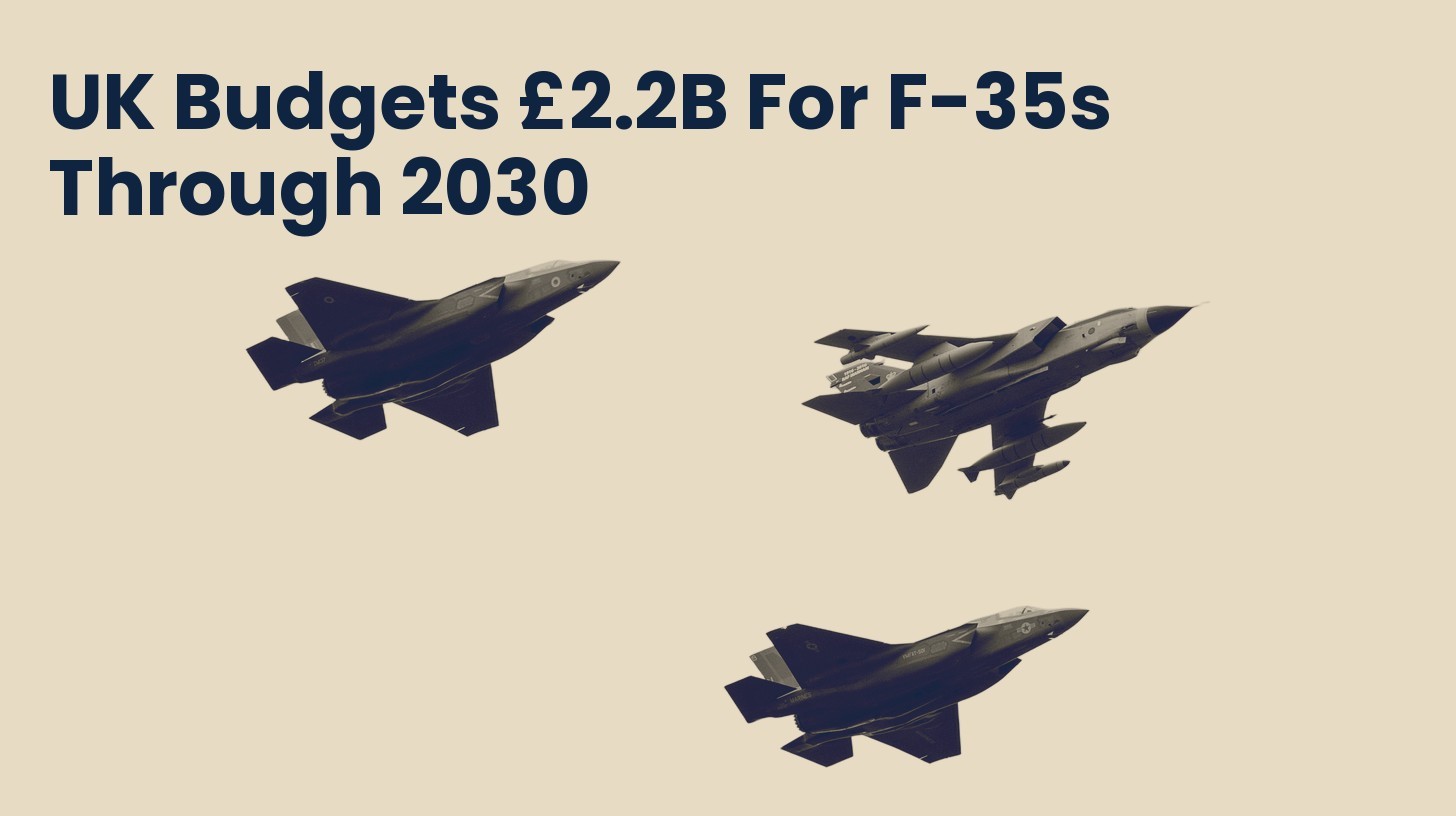
The UK has allocated £2.2 billion through 2030 for its F-35 fleet as it prepares to deploy 12 nuclear-capable F-35As to strengthen NATO deterrence in the High North. The Defence Committee recommends peacetime deployment exercises with allied nations to validate operational readiness.
What's happening
- UK committed in 2025 to acquiring 12 F-35As for NATO's Dual Capable Aircraft programme, giving RAF pilots a tactical nuclear role under US weapons control.
- Defence Investment Plan allocates £2.2 billion through 2030 for the entire F-35 fleet.
- Defence Committee published report on 22 October 2026 recommending peacetime deployment exercises with allied nations in the High North.
- France has already reached agreements with Denmark and Norway allowing its nuclear-capable aircraft to deploy temporarily for exercises and joint missions.
Why it matters
- Nuclear-capable F-35A deployments signal sustained UK and US commitment to NATO deterrence in the High North amid concerns about that commitment.
- Peacetime rehearsals validate the operational capability and allied confidence needed for the nuclear role to function as intended.
- The £2.2 billion investment through 2030 sustains production and modernization of a key multi-role fighter for RAF operations.
Going deeper
- RAF pilots will fly the F-35As, but Washington retains authority to approve use of any US nuclear weapons carried during a crisis.
- The arrangement differs from France's model, where Paris retains full control over its nuclear weapons and deployments.
- UK and France agreed in July 2025 Northwood Declaration to establish a steering group on nuclear policy, capabilities and operations.
Financial impact
- £2.2 billion allocation through 2030 flows to defence investment plan for F-35A procurement, sustainment and basing infrastructure, timing aligned with fiscal year through 2030.
- Nuclear capability deployment preparation requires host nation agreements and forward basing support, expanding lifecycle costs beyond aircraft purchase.
The intrigue
- Defence Committee questioned whether peacetime deployments can convince allies of US commitment to European security if doubts persist, creating potential policy tension.
- Committee requested classified briefing from Defence Ministry on how nuclear arrangement would actually strengthen deterrence, suggesting internal uncertainty about operational effectiveness.
The fine print
- US retains approval authority for nuclear weapons use, making deployment exercises dependent on US agreement and coordination.
- Peacetime deployments require explicit support and agreements from host governments in Denmark, Norway and other High North allies.
Source: defence-industry.eu · Oct 22, 2026 · Drafted with Claude, reviewed by Industrial Base Alpha.