Mentioned:BAE SystemsDstlAirbus Defence and SpaceSSTLOptera$3B · Government Support
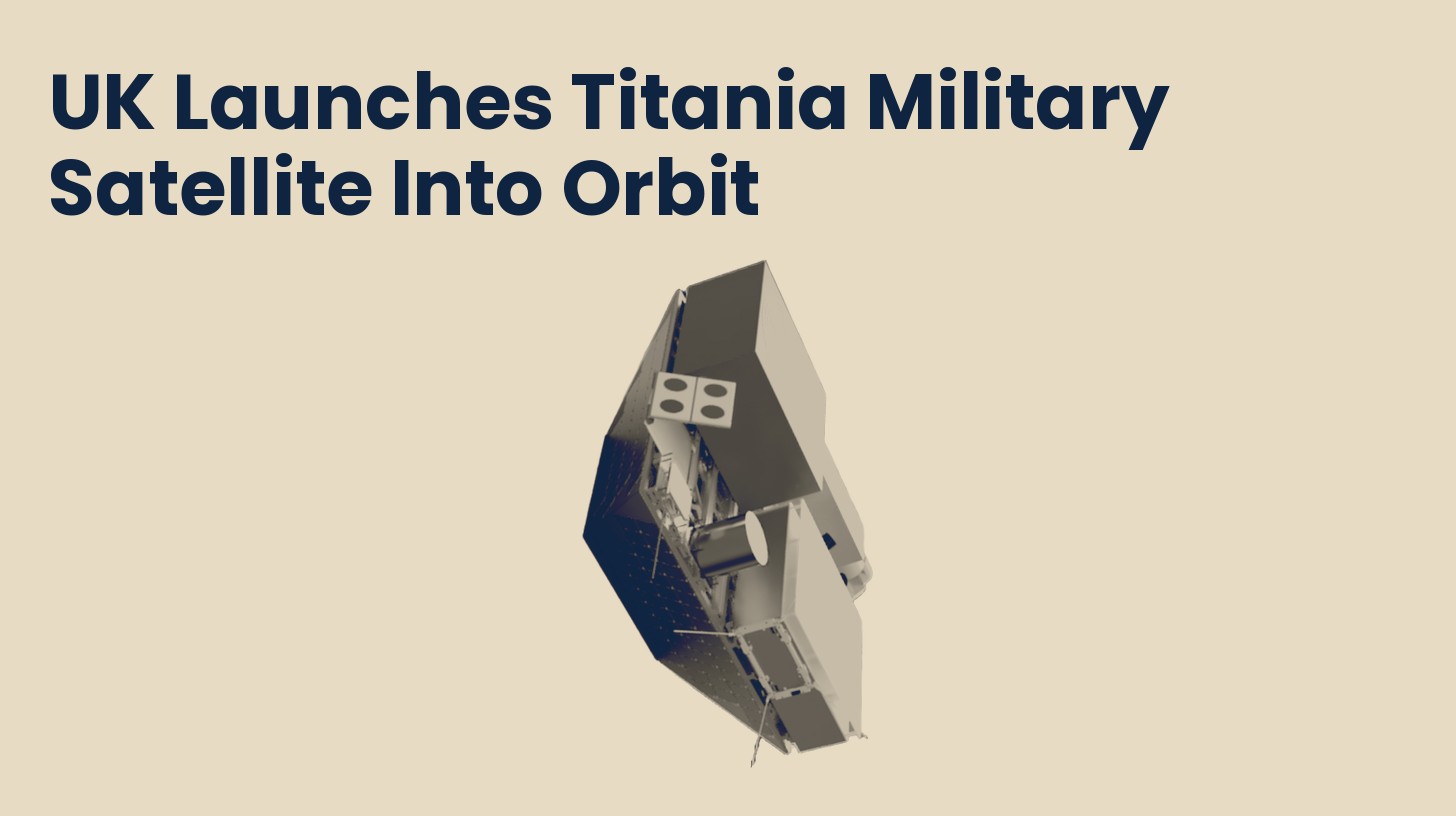
The UK launched Titania, a 100kg military satellite built by BAE Systems and Dstl as part of the ISTARI programme. The launch accompanies a £3bn defense investment over four years to strengthen UK space capabilities and protect military satellites.
What's happening
- Titania, the second satellite in the UK military constellation following Tyche in October, launched successfully and entered orbit traveling at 27,000 kilometers per hour.
- The MOD announced £3bn of defense investment over four years for space-based capabilities including the ISTARI programme satellites and Project Inaros ground sensor network.
- Project Inaros will trial three neuromorphic sensors developed by Optera at sites in the UK, Australia, and Cyprus to detect threats to UK satellites.
- Titania was built under a £9.5 million contract; follow-on satellites Juno with SSTL and Oberon with Airbus Defence and Space are planned.
Why it matters
- The constellation provides UK Armed Forces sovereign space-based intelligence, surveillance and reconnaissance capability for military operations and national security.
- Ground-based monitoring through Project Inaros protects critical satellites that guide British ships, enable mobile phone connectivity, and provide missile attack warning.
- UK military space capacity directly supports deterrence and operational advantage for British forces deployed worldwide.
- The £3bn investment sustains domestic space industrial capacity across BAE Systems, Dstl, SSTL, Airbus Defence and Space, and specialist supply chains.
Going deeper
- Titania weighs approximately 100kg and orbits Earth every 90 minutes, sized for responsive launch and rapid deployment.
- The ISTARI programme roadmap includes four satellites: Tyche, Titania, Juno, and Oberon, delivering expanding ISR constellation coverage.
- Optera's neuromorphic sensors mimic biological light-detection processes to identify unusual or threatening activity near UK satellites.
- UK Space Command operates the constellation through units including No. 1 Space Operations Squadron, No. 2 Space Warning Squadron, and newly established No. 3 Space Effects Squadron.
Financial impact
- BAE Systems and Dstl recognized £9.5 million in contract revenue for Titania design, build and delivery through fiscal 2026.
- The £3bn defense investment over four years funds satellite procurement, ground infrastructure, and sensor development across multiple fiscal periods with timing not disclosed.
- BAE Systems, Airbus Defence and Space, and SSTL will recognize revenue as satellites Juno and Oberon progress through development and integration phases.
The fine print
- Project Inaros operates as a trial network with three sensor sites; transition to full operational capability and funding beyond four years not disclosed.
- Future satellite delivery dates for Juno and Oberon not specified; programme schedule and any option years for expanded constellation not disclosed.
- The £3bn figure is part of broader £298bn Defence Investment Plan spending over four years across all defense capabilities.
Source: gov.uk · Nov 7, 2026 · Drafted with Claude, reviewed by Industrial Base Alpha.