Mentioned:No public companies identified
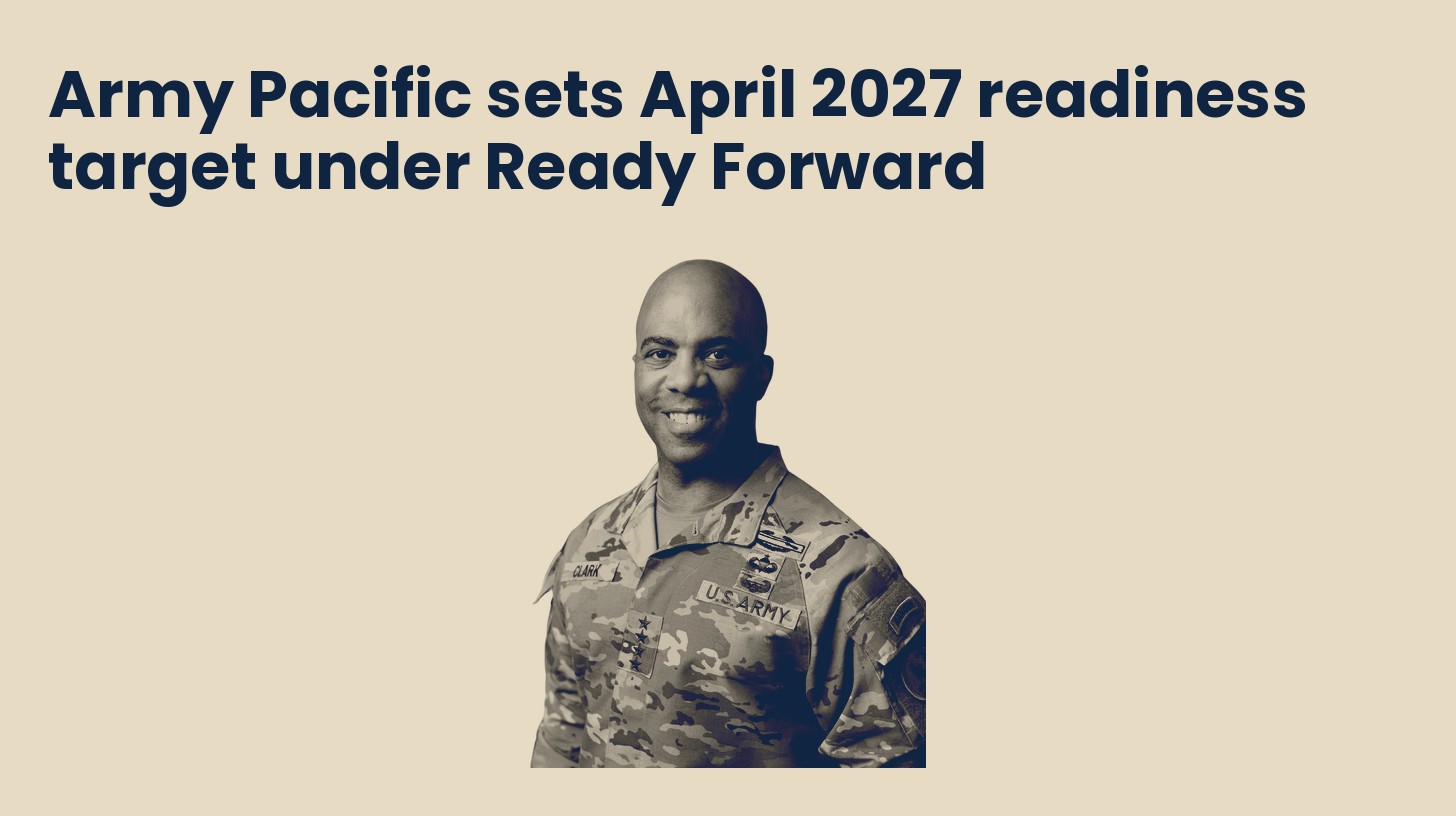
The commander of U.S. Army Pacific reaffirmed that a potential Chinese invasion of Taiwan could occur as early as 2027 and committed his command to be operationally ready by April 2, 2027. Gen. Ronald Clark said the service needs industry to deliver affordable, mass-producible systems including large numbers of low-cost drones that can be fielded at scale.
What's happening
- Army Pacific's 'Army Ready Forward' strategy will rotate forces and equipment across the first and second island chains by April 2, 2027, in response to the 2027 conflict window named after retired Adm. Phil Davidson's 2021 Senate testimony that China could develop invasion capability within 6 years.
- Gen. Clark emphasized urgent need for industry to develop resilient, affordable and scalable systems, including large numbers of low-cost drones capable of overwhelming an adversary, departing from the military's historical reliance on bespoke, tailored equipment.
- The effort prioritizes a commercial-first approach with capabilities fielded at scale, balancing exquisite high-end systems against affordable mass-producible alternatives to overcome operational challenges of disrupted traditional infrastructure.
Why it matters
- The April 2027 readiness deadline creates urgent procurement and production timelines for drone and autonomous systems suppliers, requiring surge capacity and manufacturing scalability across the industrial base within 18 months.
- Army Pacific's shift from bespoke equipment toward low-cost, mass-producible systems signals a fundamental change in acquisition strategy that will reshape demand across autonomy and defense technology suppliers competing for Indo-Pacific deterrence contracts.
- Taiwan deterrence posturing drives force structure and equipment positioning decisions across the first and second island chains, affecting supply chain resilience and logistics infrastructure for sustained operations in a contested region.
The intrigue
- Gen. Clark explicitly stated April 2, 2027 is not a conflict date but a readiness checkpoint, yet the tight timeline and repeated emphasis on industry partnership suggest significant gaps in current affordable, scalable drone and autonomous system capabilities that the defense industrial base has not yet closed.
The fine print
- No specific dollar amounts or contract values disclosed; 'Army Ready Forward' is a strategic positioning approach without announced appropriations or procurement awards.
- The April 2027 readiness date applies to initial positioning; Gen. Clark stated preparations will continue and forces will remain postured for deterrence well beyond 2027.
Source: Breaking Defense · Oct 29, 2026 · Drafted with Claude, reviewed by Industrial Base Alpha.