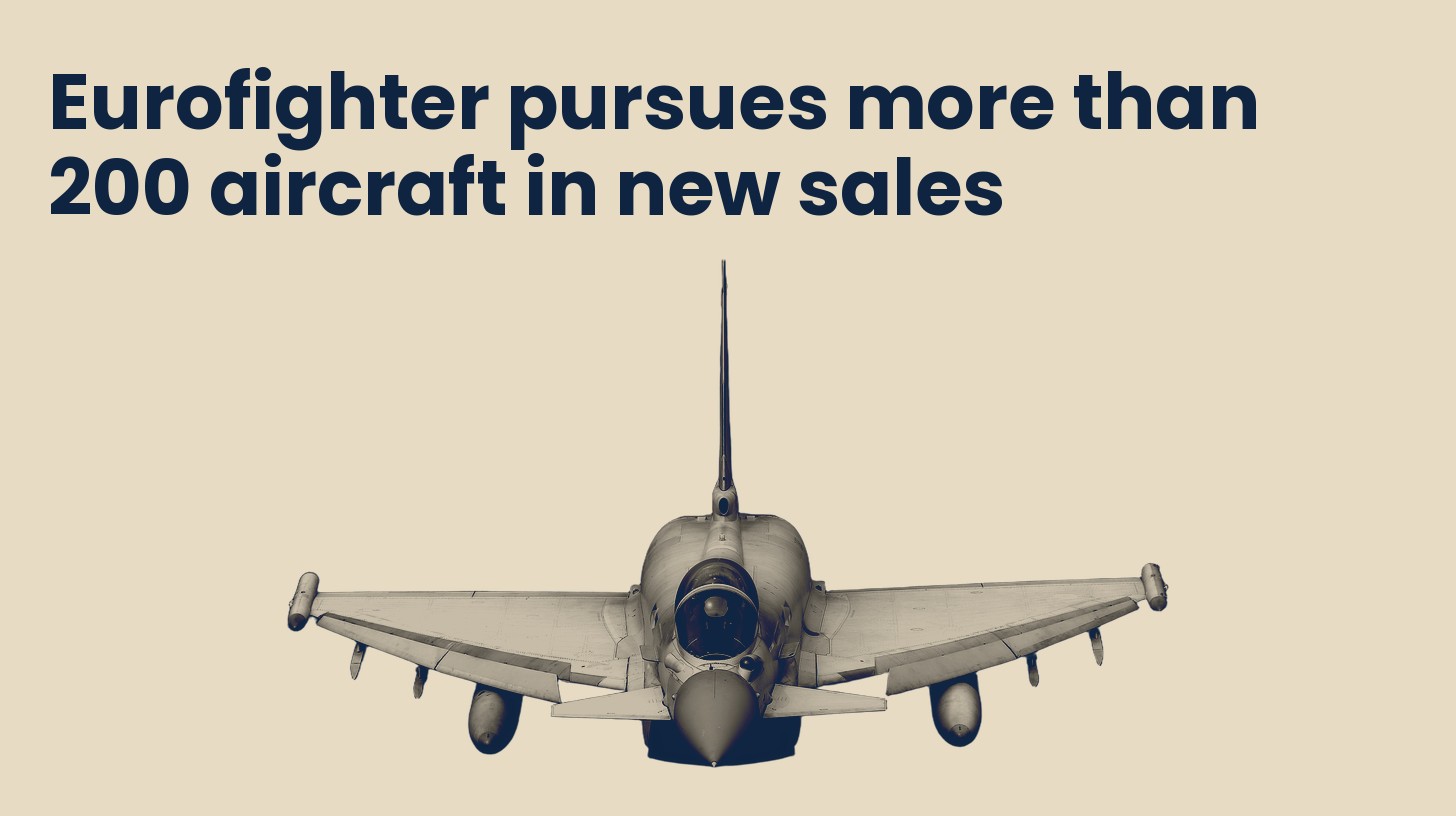
The Eurofighter consortium is targeting more than 200 additional aircraft sales globally, building on confirmed interest from Turkey and Saudi Arabia for 78 units and Austria for 36 aircraft. The sales push comes as the consortium works to ramp production to 30 aircraft per year by 2028.
What's happening
- Eurofighter consortium disclosed plans to sell 200+ additional aircraft, with confirmed second batch orders from Turkey and Saudi Arabia totaling 78 units and Austria's 36-aircraft order.
- Current production stands at 60 aircraft with plans to reach 30 aircraft per year by 2028 pending new export wins.
- Active competition underway for Portugal's F-16 replacement, Poland's 32-unit requirement, and potential sales to Bangladesh, competing against F-35, Gripen and Rafale.
Why it matters
- Production rate increase to 30 aircraft annually by 2028 requires export contracts to justify manufacturing capacity expansion and sustain workforce levels across UK, German, Italian and Spanish facilities.
- Eurofighter's pipeline of 200+ potential units represents critical industrial base capacity for allied air superiority as NATO nations modernize fleets against peer threats.
- Success in Portugal and Poland markets could establish Eurofighter as primary Western fighter alternative to F-35 for European and allied nations, shifting force structure planning.
Going deeper
- Portugal selection deadline approaching with Airbus to formally submit comprehensive proposal by end of 2026, competing against Lockheed Martin F-35, Sweden's Gripen and France's Rafale.
- Poland's 32-unit requirement faces uncertainty after Warsaw secured $4 billion Foreign Military Financing loan from US in September, which could favor additional F-35 procurement.
- Bangladesh negotiations progressed from 2025 letter of intent with Leonardo but face competition from China's J-10CE fighter jet, which Beijing is actively marketing to Dhaka.
The intrigue
- Turkey's 2025 $10.7 billion deal for 20 Typhoons with UK formally closed on prior MoU for 40 total aircraft, yet consortium is pursuing second batch from Ankara without disclosed pricing or quantity specifics.
- Saudi Arabia's second batch commitment remains undisclosed in unit count and timing, limiting visibility into Middle Eastern demand signal for Western fighter production.
- Poland's choice between Eurofighter and F-35 will be influenced by NATO interoperability standards and US industrial policy, not procurement merit alone.
The fine print
- No binding contracts disclosed for the 200+ aircraft target; most prospects remain in evaluation or early proposal stages with Portugal deal pending formal submission and Portugal, Poland and Bangladesh selections undecided.
- Production ramp to 30 aircraft yearly by 2028 is contingent on securing new export business; no timeline provided for actual rate increase execution.
- Current production of 60 aircraft covers existing contracts with Spain, Germany and Kuwait; future orders totaling 89 aircraft represent committed future production separate from the 200+ sales pipeline.
Source: Breaking Defense · Nov 5, 2026 · Drafted with Claude, reviewed by Industrial Base Alpha.