Mentioned:FlyingBasketFlock SafetyMannaPerceptoExedyABZ InnovationVEXEnGeniusZyxelSyncroboticBluepath RoboticsFoundry RoboticsAmazon$6B · Program/Policy
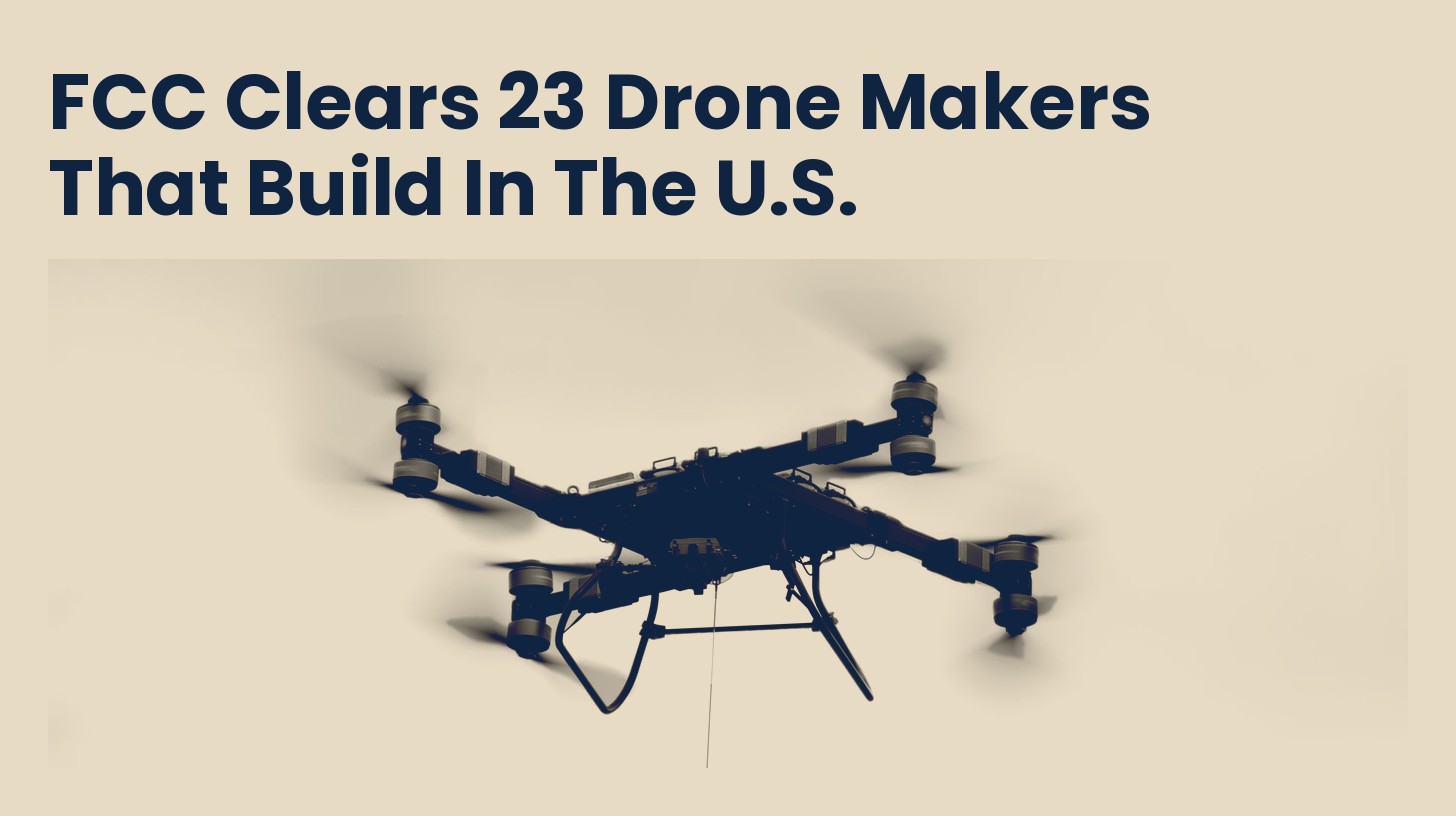
The FCC has cleared 23 drone and drone-component makers to sell equipment otherwise barred by the Covered List, conditional on relocating production to the United States. The approvals are part of a broader program that has generated $6 billion in domestic investment and 5,700 jobs since December.
What's happening
- The FCC approved 23 drone and drone-component makers out of 71 total companies cleared across sectors, with approvals dating from March 17 through November 18.
- Each approval requires the company to follow a plan moving production to U.S. facilities, with approval contingent on cybersecurity review and Department of War national security determination.
- No DJI or Autel products appear on the drone approval list, as both companies remain on the Covered List under separate statutory authority.
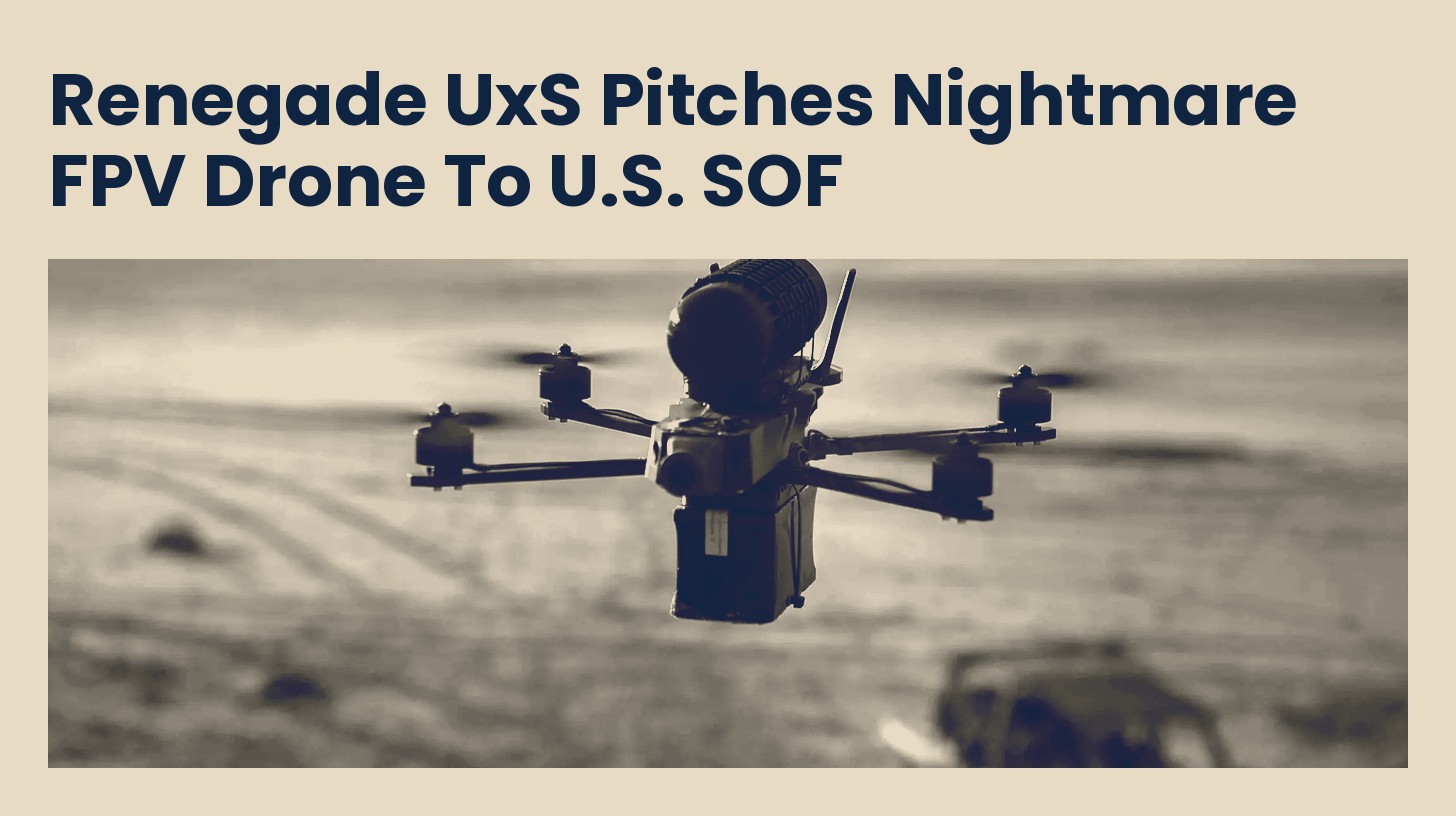
- Approved drones include FlyingBasket's FB3, Manna's delivery aircraft, Percepto's Air Max and Exedy's Ayre CX sprayer.
Why it matters
- The program creates measurable domestic drone manufacturing capacity: 5,700 jobs created and $6 billion invested in U.S. production since December.
- Conditional approvals reshape supply chain dependencies by requiring manufacturers to onshore production or lose equipment authorization, forcing relocation decisions by foreign firms.
- Review speed has accelerated to 24 days on average from 40 days three months prior, reducing approval delays for manufacturers.
- Approval removals for missed onshoring commitments establish enforcement mechanisms to hold companies accountable to production plans.
Going deeper
- The 71 approvals span four sectors: 23 drone makers, 24 router manufacturers, 17 robotics companies and seven power inverter makers, with routers generating $119 million in pledges and power inverters $600 million.
- FlyingBasket's FB3 heavy-lift drone cleared on November 18 will continue European production until U.S. manufacturing begins in early 2027, illustrating the transition period for approved equipment.
- The FCC reports $4.4 billion in total investment pledges across the 71 companies, though specific sector breakdowns and individual company amounts remain undisclosed.
- Approvals carry no mandatory end date and remain in force as long as companies follow onshoring plans and pass updated security vetting.
Financial impact
- The $6 billion in U.S. drone manufacturing investment since December represents committed capex for facility construction and equipment, with timing distributed across 2026 and 2027 as onshoring plans execute.
- The 5,700 jobs created flow through operating expense and payroll accruals for participating manufacturers, reflected in operating cash outflows during buildout phases.
- Approved manufacturers secure revenue recognition rights from U.S. government and commercial customers once domestic production meets contractual requirements, shifting cost of goods sold and gross margin as manufacturing moves onshore.
The intrigue
- FCC Commissioner Anna Gomez stated the Covered List was designed for security but has become an industrial policy tool to extract onshoring commitments unrelated to cybersecurity risk.
- No specific security threat is documented for any approved drone, yet each approval depends on relocation of production, raising questions about whether the security rationale justifies the trade policy effect.
- No consumer camera drone appears among the 23 approvals; the list comprises commercial-grade systems, suggesting policy may target market segments rather than uniform security risk.
The fine print
- Each approval is conditional on the company executing its onshoring plan; failure to do so returns the product to the Covered List with equipment authorization revoked.
- Department of War and Department of Homeland Security conduct security review as part of the approval process, with War Department issuing the national security determination.
- Router approvals expire within approximately 18 months; drone and other equipment approvals carry no termination date if onshoring and vetting requirements remain met.
- The $6 billion investment figure lacks sector-by-sector or company-by-company breakdown; $4.4 billion in pledges similarly remain unsegmented in FCC public disclosure.
Source: dronexl.co · Nov 22, 2026 · Drafted with Claude, reviewed by Industrial Base Alpha.