Mentioned:No public companies identified
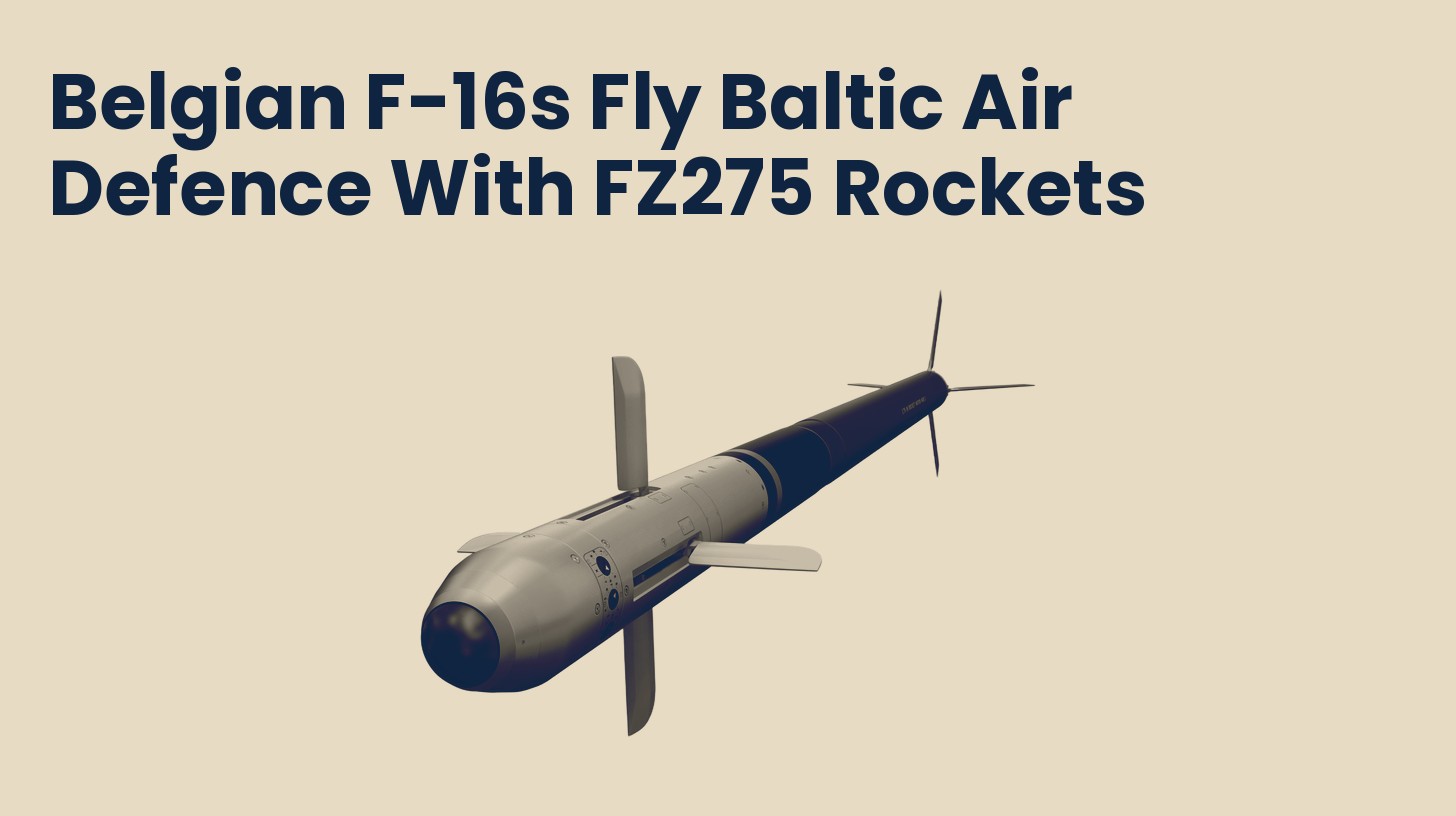
Belgian Air Force F-16s deployed to Šiauliai Air Base in Lithuania carried FZ275 laser-guided rockets operationally for the first time during a flypast over Riga on November 18, 2026. The loadout reflects NATO's pivot from monitoring air traffic to active air defence against Russian drone threats in the Baltic.
What's happening
- Two of Belgium's six forward-deployed F-16s carried FZ275 laser-guided rockets during the November 18 flypast over Latvia, their first operational use after trials earlier in 2026.
- The mixed weapons payload included AIM-9M and AIM-9X Sidewinders, AIM-120 AMRAAMs, an AN/ALQ-131 electronic countermeasures pod, and a Sniper targeting pod.
- Baltic Air Policing, a 22-year NATO mission, was redesignated as Baltic Air Defence in 2026, expanding pilot mandates to conduct intercepts and engagements of hostile aircraft.
Why it matters
- FZ275s provide NATO air defence with a lower-cost guided munition specifically designed to counter large swarms of small one-way attack drones like Russia's Geran-2.
- The shift from air policing to air defence increases operational readiness and engagement authority along the Russian border following repeated drone incursions into Baltic airspace.
- The scaleable weapons mix allows F-16s to adapt responses to multiple threat types during a single sortie, improving operational flexibility against asymmetric threats.
Going deeper
- Russia's extensive use of attack drones against Ukraine and harassment of NATO members using various drone types accelerated NATO's integration of counter-drone munitions.
- Belgium joined other NATO nations including Turkey in rapidly adopting FZ275 and similar systems like APKWS II for Baltic deployments.
- The mission redesignation increases emphasis on critical air defence operations and shifts focus from monitoring Kaliningrad traffic to defending the border itself.
The intrigue
- Belgian F-16s paired older AIM-9M Sidewinders with newer AIM-9X variants despite apparent redundancy, suggesting stockpile management and performance optimization in specific scenarios remain undisclosed.
Source: theaviationist.com · Nov 22, 2026 · Drafted with Claude, reviewed by Industrial Base Alpha.