Mentioned:NestAILMT GroupInstitute of Electronics and Computer Science$1M · Strategic Partner
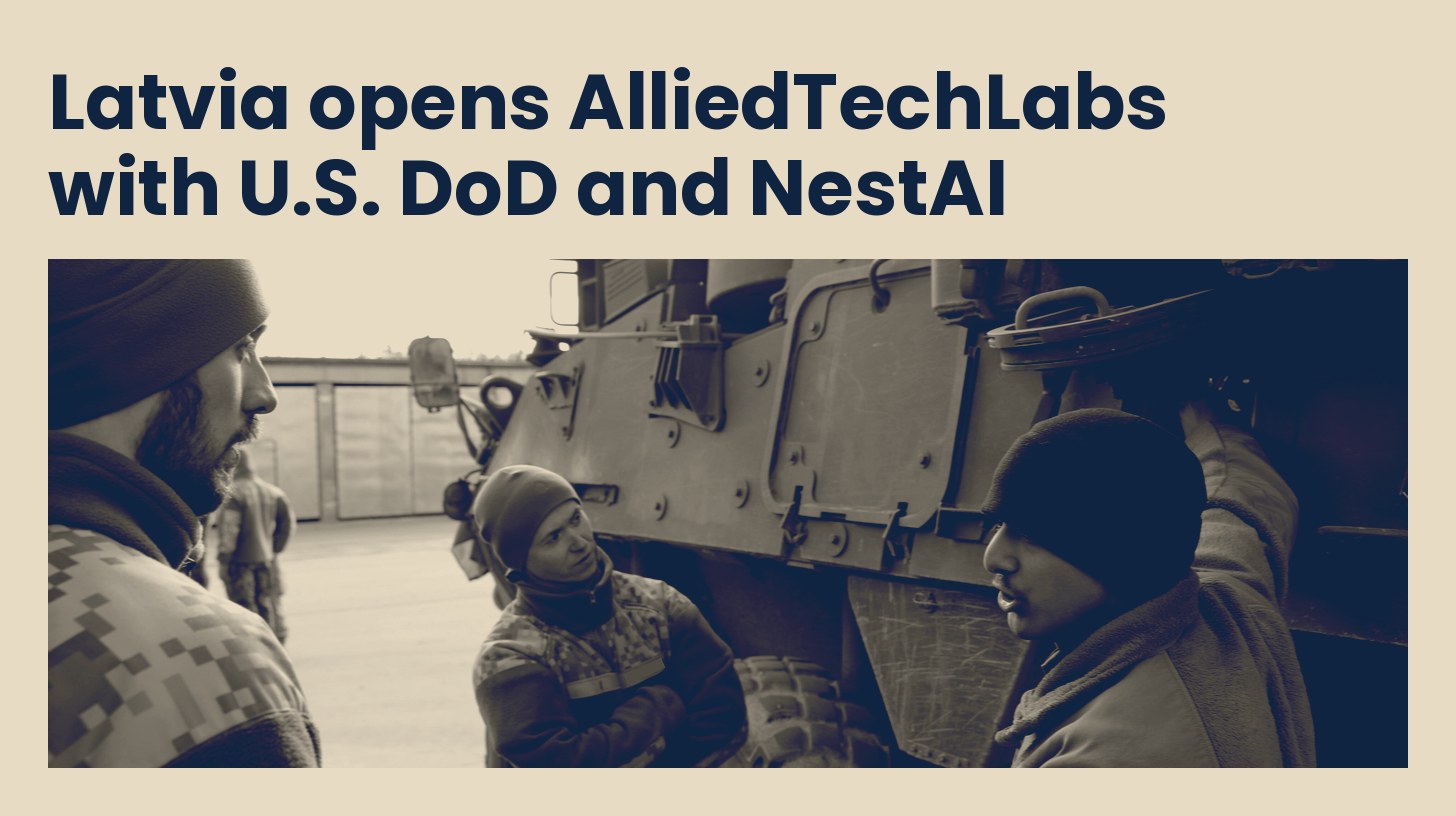
Latvia opened AlliedTechLabs on October 30, an international platform for testing defense technologies including 5G/6G communications, artificial intelligence and dual-use systems. The U.S. Department of Defense FutureG office and European defense AI lab NestAI are participating, with NestAI committing up to €1 million over three years as strategic partner.
What's happening
- AlliedTechLabs operates as a specialized unit of Latvia's Institute of Electronics and Computer Science with support from LMT Group, Latvia's Ministry of Defence and Ministry of Education and Science.
- The center will focus on 5G/6G communications networks, signal detection and processing, AI, edge computing and software-defined networks for tactical real-time data transmission.
- NestAI signed a memorandum of cooperation to contribute its adaptive operating system NestOS, designed for modern combat systems, with potential €1 million investment over three years.
- Testing will leverage Latvia's telecommunications infrastructure, military 5G test networks and NATO DiBaX experience conducted in Latvia since 2022.
Why it matters
- The facility expands NATO interoperability testing capacity for next-generation communications and AI systems across the alliance, reducing dependency on individual member trials.
- Ukrainian combat-proven technologies inform NATO and EU testing standards, accelerating integration of battlefield-validated solutions into alliance procurement and doctrine.
- Co-locating the U.S. FutureG office with European partners locks U.S. and allied wireless technology development into a shared testing environment, reducing fragmentation and certification delays.
- The center addresses legacy architecture limitations by developing resilient software-defined networks for real-time tactical communications, directly supporting NATO's network modernization roadmap.
Going deeper
- NestAI's participation follows its June agreements with Finnish and Estonian defense forces on military AI, command-and-control systems and autonomous unmanned platforms.
- Ukraine and Latvia signed joint development memorandums in July for unmanned systems with investment and technology transfer provisions, creating dual-use drone testing infrastructure.
- AlliedTechLabs will assess technologies in conditions approximating real-world operations using specially prepared environments and Latvia's military 5G test networks.
Financial impact
- NestAI commits up to €1 million over three years starting October 2026, recorded as strategic partner contribution to operating expenses and potentially deferred revenue if the company recognizes testing fees.
- The facility attracts no disclosed direct capital from U.S. DoD beyond FutureG office participation; funding model and cost-sharing terms between Latvian government, LMT Group and private partners not disclosed.
- NestAI's cash outlay reduces cash runway by €1 million disbursed over the three-year period through approximately Q4 2029; ownership and governance stakes not disclosed.
The intrigue
- AlliedTechLabs blends NATO DiBaX military experimentation with dual-use commercial testing, but cost allocation between defense and civilian 5G/6G development work and IP ownership between participants remain opaque.
- Ukrainian technology integration and standards-setting role could drive NATO procurement toward Ukrainian vendors and solutions, creating asymmetric influence over allied interoperability requirements.
The fine print
- NestAI's €1 million commitment is 'up to' over three years, contingent on performance and participation terms not detailed in the memorandum.
- Testing standards and NATO/EU recommendations generated by the center lack defined approval gates or mandatory adoption timelines.
- Intellectual property ownership, data sharing between partners and export control classifications for technologies developed or tested at AlliedTechLabs are not disclosed.
Source: militarnyi.com · Oct 30, 2026 · Drafted with Claude, reviewed by Industrial Base Alpha.