Mentioned:Guardian DynamicsDemconAxient SystemsTNO
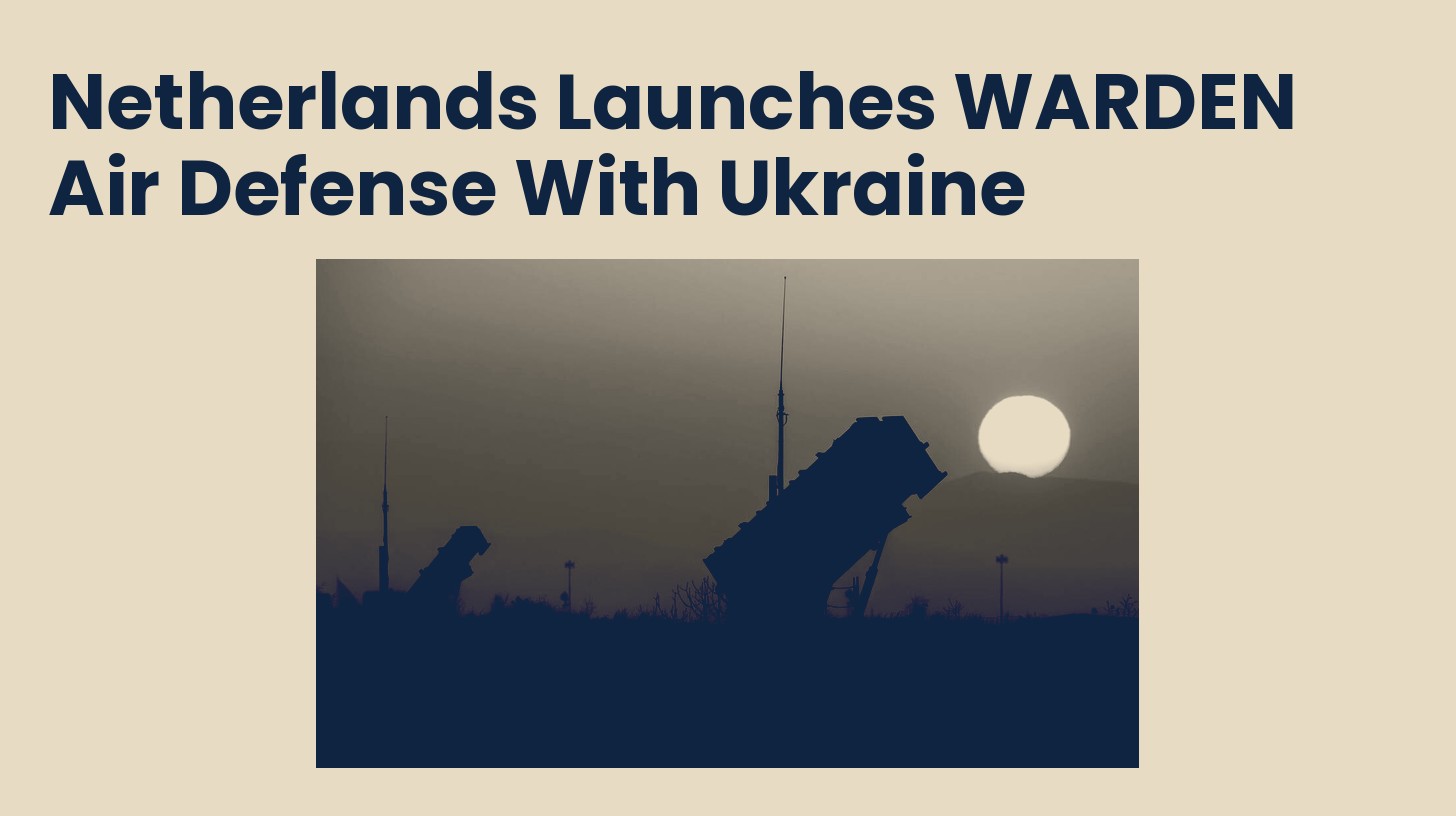
A Dutch defense consortium led by Guardian Dynamics has officially launched the WARDEN program to develop and produce short- and medium-range surface-to-air missiles. Ukrainian defense companies will participate in manufacturing, component production and future testing under a distributed production model designed to leverage existing industrial capacity.
What's happening
- Guardian Dynamics, Demcon, Axient Systems, and TNO signed a memorandum of understanding at the European Defence Innovation Forum 2026 to develop the WARDEN missile family.
- The program plans three missile variants with ranges up to 5 km, 10 km and 20 km, using modular architecture compatible with existing Western launch platforms.
- Ukrainian companies will join the manufacturing cluster for component production and assembly within a distributed model; their names remain undisclosed.
- First missile tests are scheduled for 2027 in the Netherlands and Ukraine, with the Dutch Ministry of Defense providing direct support.
Why it matters
- The program addresses air defense shortages identified in Ukraine and Middle East conflicts by producing affordable, high-volume interceptors instead of relying solely on expensive long-range systems.
- Distributed manufacturing across existing civilian production lines, including automotive facilities, avoids construction of new factories and reduces supply chain concentration.
- Integration with existing Western air defense platforms enables rapid deployment across allied forces without requiring new launch systems or command infrastructure.
- Ukrainian participation creates a production node within NATO-aligned defense industrial network while addressing Ukraine's stated air defense requirements.
Going deeper
- WARDEN uses a two-stage solid-fuel rocket motor, command guidance during midcourse and autonomous terminal seeker, reaching speeds up to Mach 2.
- Demcon serves as systems engineering lead responsible for production preparation and integration across interceptor, launch platform and support systems.
- The approach emphasizes effector design rather than developing a complete system, leveraging integration with existing Western air defense architectures.
- Guardian Dynamics CEO Saulo Waardenburg stated the program targets low-cost solutions for mass aerial threats like Shahed drones where high-end missiles are economically inefficient.
The fine print
- Ukrainian company names and participation scope have not been disclosed; formal agreements likely remain under negotiation.
- Program funding amount is undisclosed; timing and phases beyond 2027 testing are not detailed in available sources.
Source: militarnyi.com · Nov 11, 2026 · Drafted with Claude, reviewed by Industrial Base Alpha.