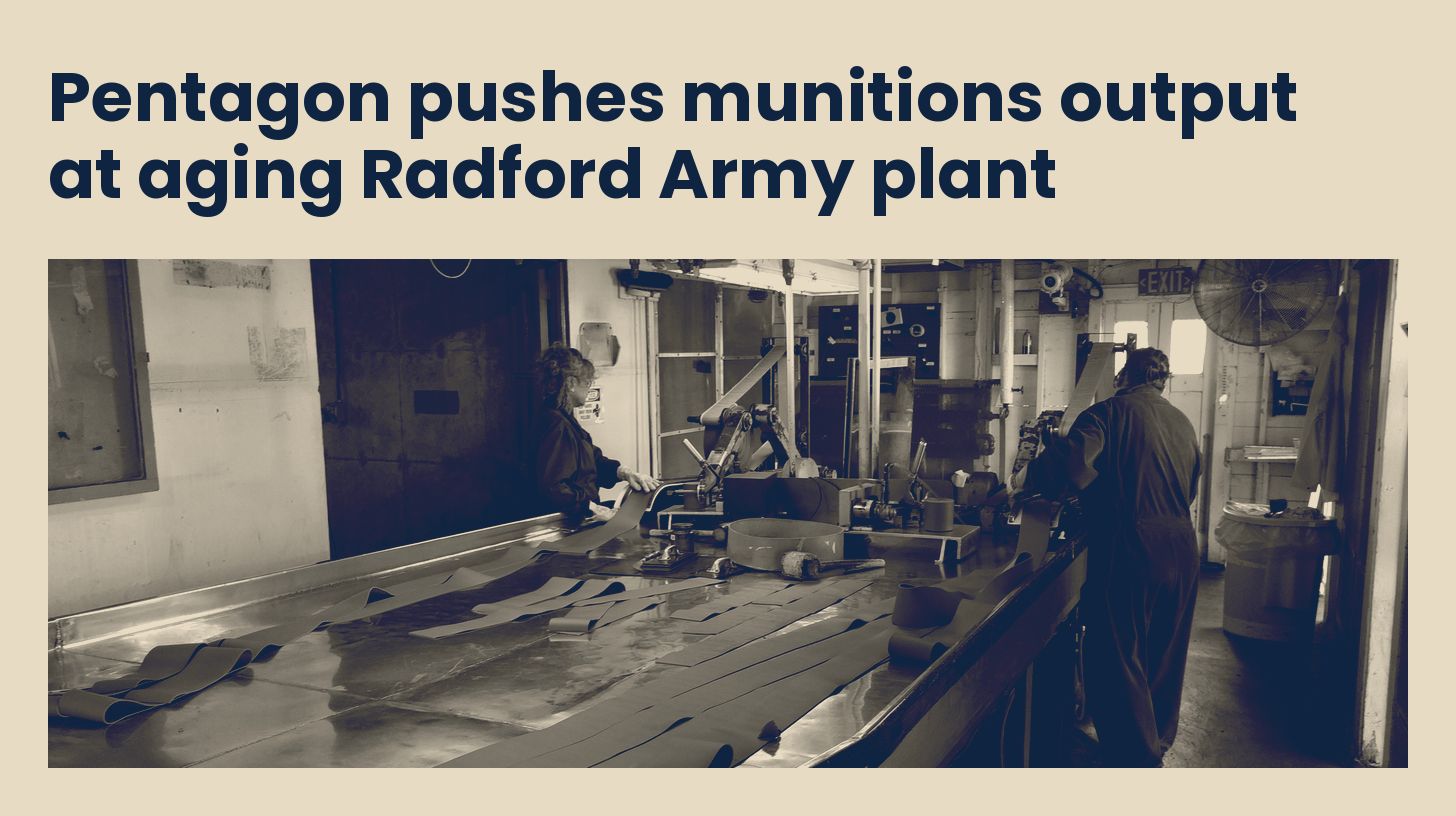
Mentioned:Radford Army Ammunition Plant
The Pentagon is accelerating munitions production at aging Army ammunition plants, including Radford in Virginia, to rebuild depleted inventories. Patriot missile stocks have fallen to 800 from 2,300 at the start of the Iran War, and THAAD interceptors have fallen nearly 50 percent.
What's happening
- Pentagon is increasing output at Army ammunition plants like Radford to address munitions shortages created by the Iran War.
- Patriot interceptor inventory fell from 2,300 to approximately 800 by July 2026, a 65 percent decline.
- THAAD interceptor stocks declined by nearly 50 percent from approximately 450 before the conflict.
- Radford Army Ammunition Plant is the only domestic producer of certain propellant types used in artillery and rockets.
Why it matters
- Reliance on aging facilities with poor environmental compliance records creates supply chain vulnerability and regulatory risk.
- Radford had regulatory violations in 2024, 2023, and was Virginia's top toxin releaser in 2022, raising questions about sustainable production capacity.
- Many Army ammunition plants date to World War II and were designed for Cold War production rates, not current demand surge.
- Production increases will generate additional toxic byproducts at facilities already operating near or above compliance limits.
Going deeper
- U.S. artillery shell production was 14,000 rounds per month before the Iran War, insufficient for peer-conflict consumption rates.
- Radford flooded in October 2024, releasing 1,500 gallons of dibutyl phthalate and other chemicals; three containers remain unaccounted for.
- Army did not alert residents of chemical releases for weeks after the flood, citing assumption that containers would sink and dilute.
- Pentagon has historically deprioritized munitions in budget fights, preferring aircraft and ship acquisitions, leaving production capacity underdeveloped.
The intrigue
- Environmental advocates argue production cost is artificially cheap for the military because plant workers and rural communities absorb health and environmental costs.
- Pentagon culture treats environmental and safety compliance as secondary to production mission, creating tension with regulatory agencies and local authorities.
The fine print
- Radford faced citations for excessive pollutant discharge into the New River in 2024 and 2023.
- Dibutyl phthalate from the 2024 flood has been linked to cancer and reproductive problems in humans.
- Three chemical containers from the 2024 Radford flood remain unaccounted for as of November 2026.
Source: Defense News · Nov 4, 2026 · Drafted with Claude, reviewed by Industrial Base Alpha.