Mentioned:SingularityNaval Air Warfare Center Weapons Division
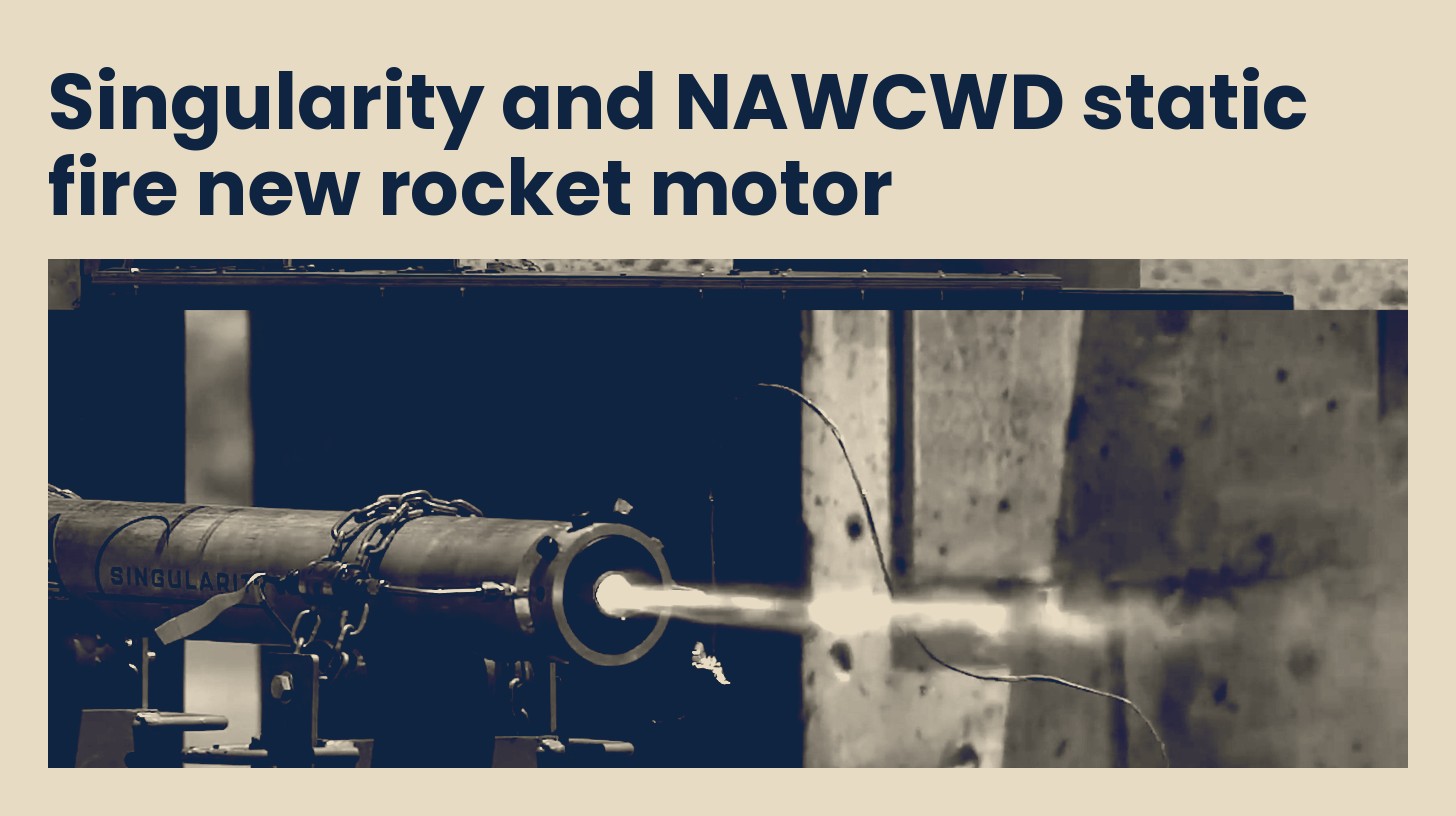
Singularity and the Naval Air Warfare Center Weapons Division successfully static fired an advanced solid rocket motor in three months, compressing conventional development timelines by 75 percent. The motor will power Singularity's tactical air defense interceptor systems as the Navy addresses an acute interceptor shortfall.
What's happening
- Singularity and NAWCWD completed static fire testing of an advanced solid rocket motor under a CRADA, the cooperative research agreement that enabled compressed three-month development versus a conventional one-year timeline.
- The motor design validates the propulsion architecture for Singularity's forthcoming interceptor systems, focused on the counter-drone and tactical air defense mission.
- Teams are now focused on transitioning the motor to high-volume production to address the U.S. military's air defense capacity shortfall.
Why it matters
- The U.S. military faces an acute interceptor shortfall in tactical air defense, and Singularity is designing an assembly line based on automotive principles to ramp production volumes beyond any comparable U.S. system.
- NAWCWD's deep technical expertise and weapons systems design heritage paired with Singularity's advanced manufacturing capabilities and in-house subsystem integration addresses the growing demand for air defense capacity at scale.
- The CRADA model demonstrates how flexible government-industry partnership and prioritization of speed to test can compress development timelines and accelerate capability delivery to the warfighter.
Going deeper
- Singularity emerged from stealth in July 2026 with a focus on deploying low-cost air defense systems at scale, designing major subsystems in-house for manufacturability and rapid production ramp.
- Propulsion and energetics work originating from NAWCWD's China Lake facilities has historically migrated into industry, and a new generation of companies is now developing rocket motors directly with the Navy's labs under agreements like this CRADA.
The intrigue
- Singularity has yet to unveil its full interceptor system architecture; the static fire test validates only the motor component, leaving open questions about cost-per-round, sensor integration, and time-to-first-production-unit.
The fine print
- Terms of the CRADA, funding allocation, and specific performance milestones are undisclosed; no government or private funding figures attached to motor development are public.
- Timeline for transition from development to high-volume production has not been announced; production scale targets remain unspecified.
Source: seapowermagazine.org · Oct 23, 2026 · Drafted with Claude, reviewed by Industrial Base Alpha.