Mentioned:Saronic
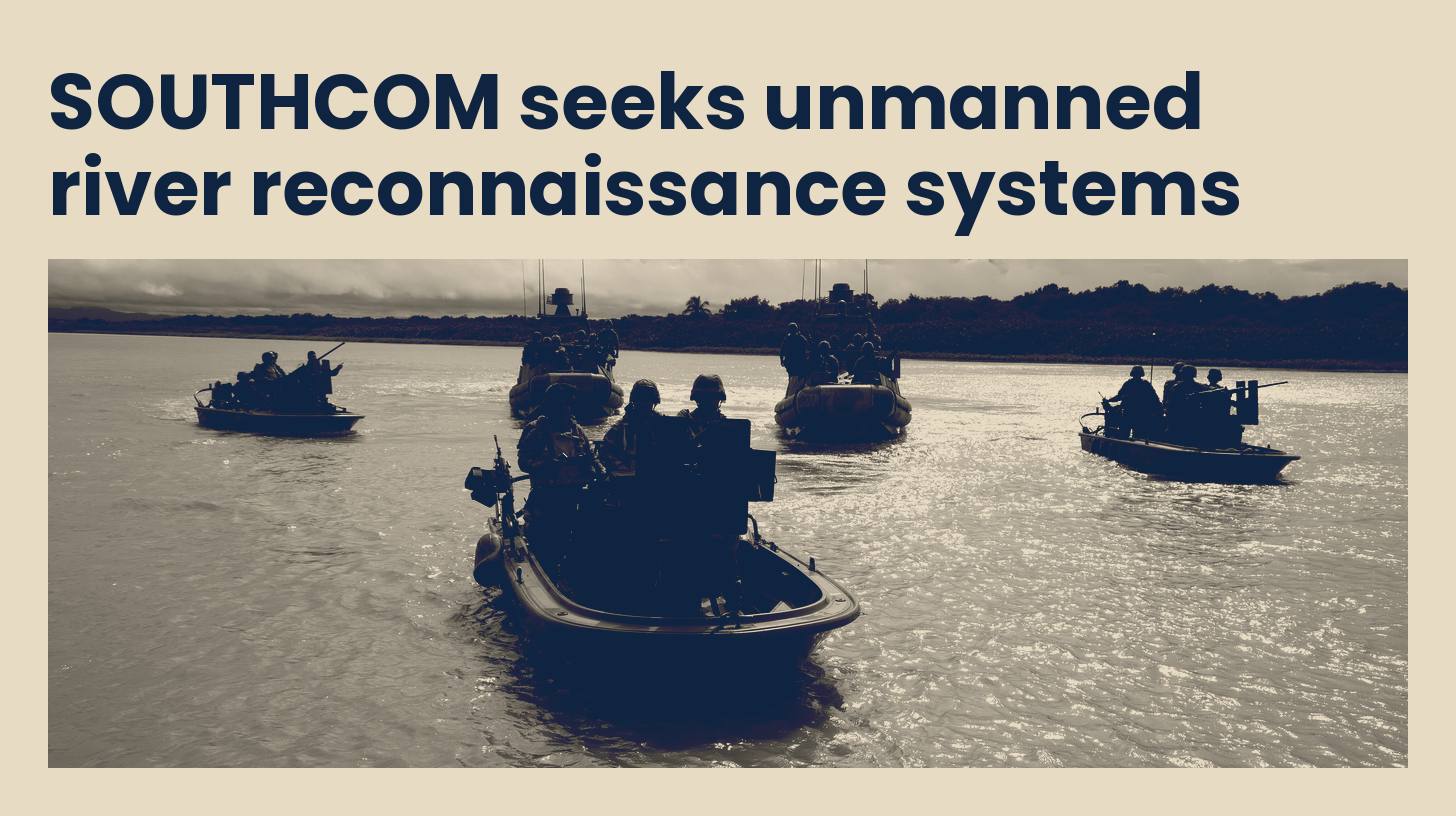
Gen. Francis Donovan, who took over SOUTHCOM in February 2026, told Breaking Defense the command is seeking a bespoke river reconnaissance system combining unmanned surface, air and subsurface autonomous platforms for counter-drug operations across Central and South American waterways.
What's happening
- SOUTHCOM established its Autonomous Warfare Command (SAWC) to test and operate unmanned systems across the theater, with a forward facility at Guantanamo Bay, Cuba open to U.S., allied and federal agency partners.
- Saronic-made Corsair unmanned surface vessels have been deployed on either side of the Panama Canal to support narco-terrorist operations and physical security of the Canal.
- SAWC has attracted cross-service personnel including USAF Pararescue, Navy SEALs and Riverine Surface Warfare officers, Army Green Berets and USMC intelligence specialists.
- The command also deploys MQ-9 aerial unmanned systems to collect data that increases domain awareness for U.S. and partner nations across the hemisphere.
Why it matters
- Autonomous river platforms extend SOUTHCOM's operational reach in a resource-constrained environment, allowing the command to monitor criminal networks' use of waterways without dedicating manned naval assets.
- SAWC accelerates operationalization of autonomous warfare across the theater rather than limiting systems to test phases, shifting doctrine toward integrated unmanned operations.
- Data collected from unmanned systems supports domain awareness for U.S. partners in the Americas who lack comparable maritime, air and land surveillance capacity.
- Autonomous platforms reduce demand on the joint force by substituting lower-cost unmanned systems for expensive assets like destroyers for sustained operations.
Going deeper
- The requirement for river-specific autonomous systems reflects environmental constraints unique to Central and South American operations, where shallow waterways, dense foliage and criminal concealment tactics demand tailored platforms rather than off-the-shelf solutions.
- SAWC's model of partnering with industry and federal agencies for testing and operations signals a shift toward treating the command's area of responsibility as a live development and experimentation hub for autonomous warfare capabilities.
- The Trump administration's emphasis on the narco-terrorism mission through Joint Task Force Western Hemisphere has elevated SOUTHCOM's resource competition for autonomous systems.
The fine print
- The requirement is for bespoke systems tailored to SOUTHCOM's environment; no established contract or acquisition timeline has been announced.
- Amount and funding vehicle remain undisclosed.
Source: Breaking Defense · Oct 26, 2026 · Drafted with Claude, reviewed by Industrial Base Alpha.