Mentioned:Rolls-Royce$6.7B · Government Support
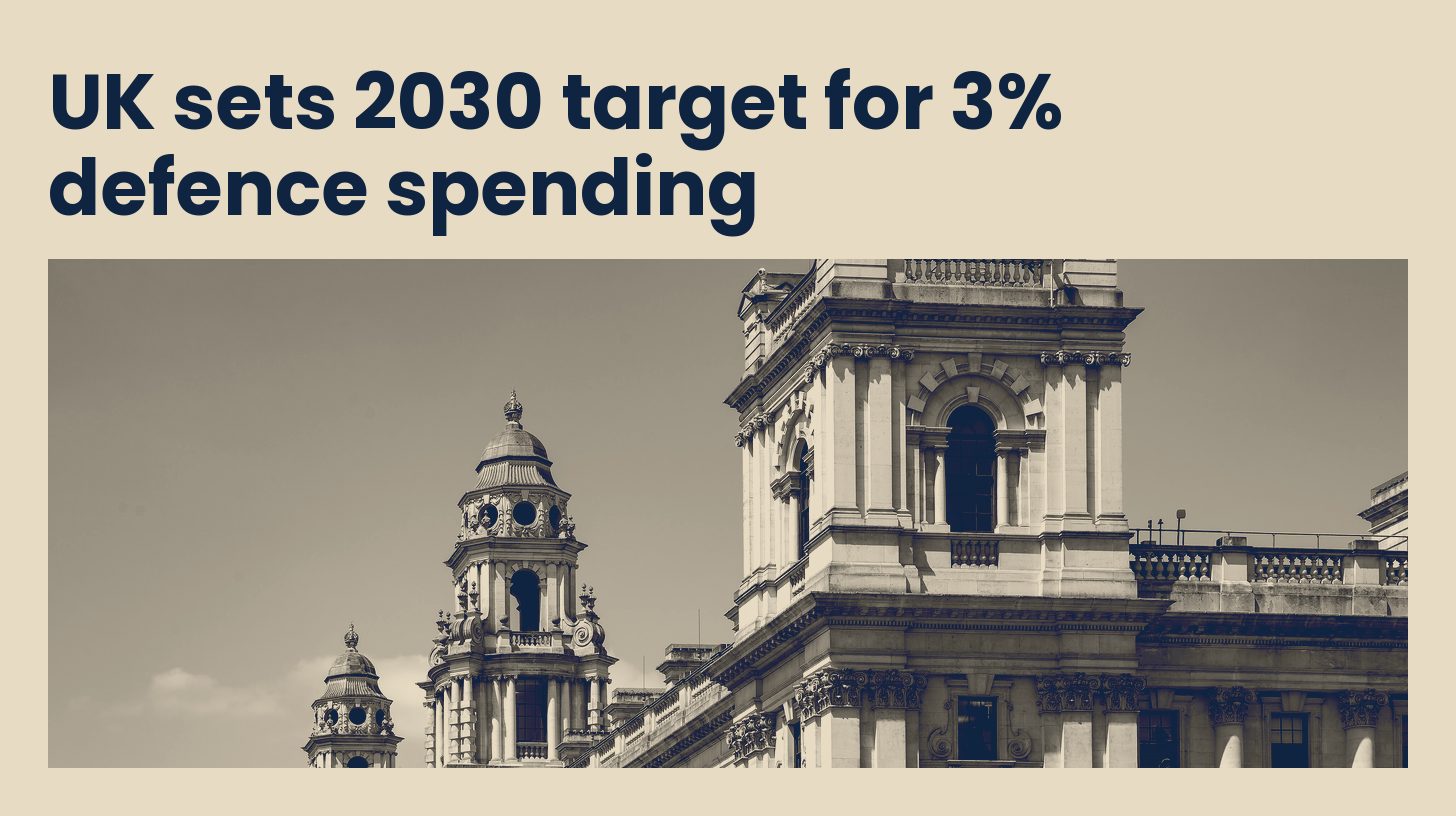
The UK Chancellor announced a commitment to reach 3 percent GDP defense spending by 2030 as part of a broader budget that includes up to £5 billion in government-backed investment over four years into defense and dual-use sectors.
What's happening
- UK plans to reach 3 percent GDP defense spending by 2030, stepping toward NATO's 3.5 percent target by 2035.
- National Wealth Fund and British Business Bank will deploy up to £5 billion over four years into defense, dual-use and national security sectors.
- Government established Innovative Defence Financing Taskforce to maximize private and international finance contributions to UK defense.
- UK creating Ministry of Defence-led drone regulation unit to streamline testing and deployment of uncrewed and autonomous systems.
- Unfunded £2.5 billion, 10-year Rolls-Royce gas turbine engine program announced, contingent on negotiations and legal approval.
Why it matters
- Commitment to 3 percent spending reverses years of UK defense underfunding and signals sustained industrial capacity investment across aerospace, autonomy and space.
- £5 billion fund deployment directly addresses sovereign capability gaps in dual-use and critical defense sectors, reducing reliance on foreign supply chains.
- Drone regulation streamlining removes barriers to UK autonomous systems development and testing, supporting commercial and military industrial base.
- Rolls-Royce engine program, if funded, secures domestic propulsion capability for military and civil applications across multiple platforms.
Going deeper
- Chancellor Healey's appointment signals political commitment; he resigned as defense secretary over military underfunding under previous administration.
- UK coordinating with Finland, Poland and Netherlands on pooled defense funding and joint NATO procurement to amplify investment impact.
- Ten billion pounds in additional funds committed to Ukraine support, extending UK forward defense posture beyond NATO territory.
Financial impact
- National Wealth Fund and British Business Bank capital deployment of £5 billion over four years beginning 2026, structure and recipient companies not yet disclosed.
- Rolls-Royce engine program represents £2.5 billion unfunded commitment; funding, negotiations and legal approvals remain pending, timing not disclosed.
- Defense spending increases as share of budget through reallocation from other priorities rather than new taxation, per Chancellor announcement.
- Fund structure allows government-backed capital to flow to private defense contractors and dual-use suppliers without direct appropriations affecting near-term fiscal baseline.
The intrigue
- Rolls-Royce program explicitly unfunded and contingent on award negotiations; government left open whether funding will be managed through National Wealth Fund deployment or separate defense budget allocation.
- Drone regulation streamlining signals UK intent to compete with U.S. autonomy leadership, but execution depends on cross-agency coordination with unclear governance.
The fine print
- Rolls-Royce £2.5 billion program not contracted; funding subject to award, negotiations and relevant legal processes.
- National Wealth Fund and British Business Bank deployment of up to £5 billion includes dual-use and national security sectors not yet defined.
- Spending commitments contingent on next year's spending review detailing pathway to 3 percent by 2030 and 3.5 percent by 2035.
Source: Breaking Defense · Oct 28, 2026 · Drafted with Claude, reviewed by Industrial Base Alpha.