Mentioned:United Launch AllianceSpaceXAmazon
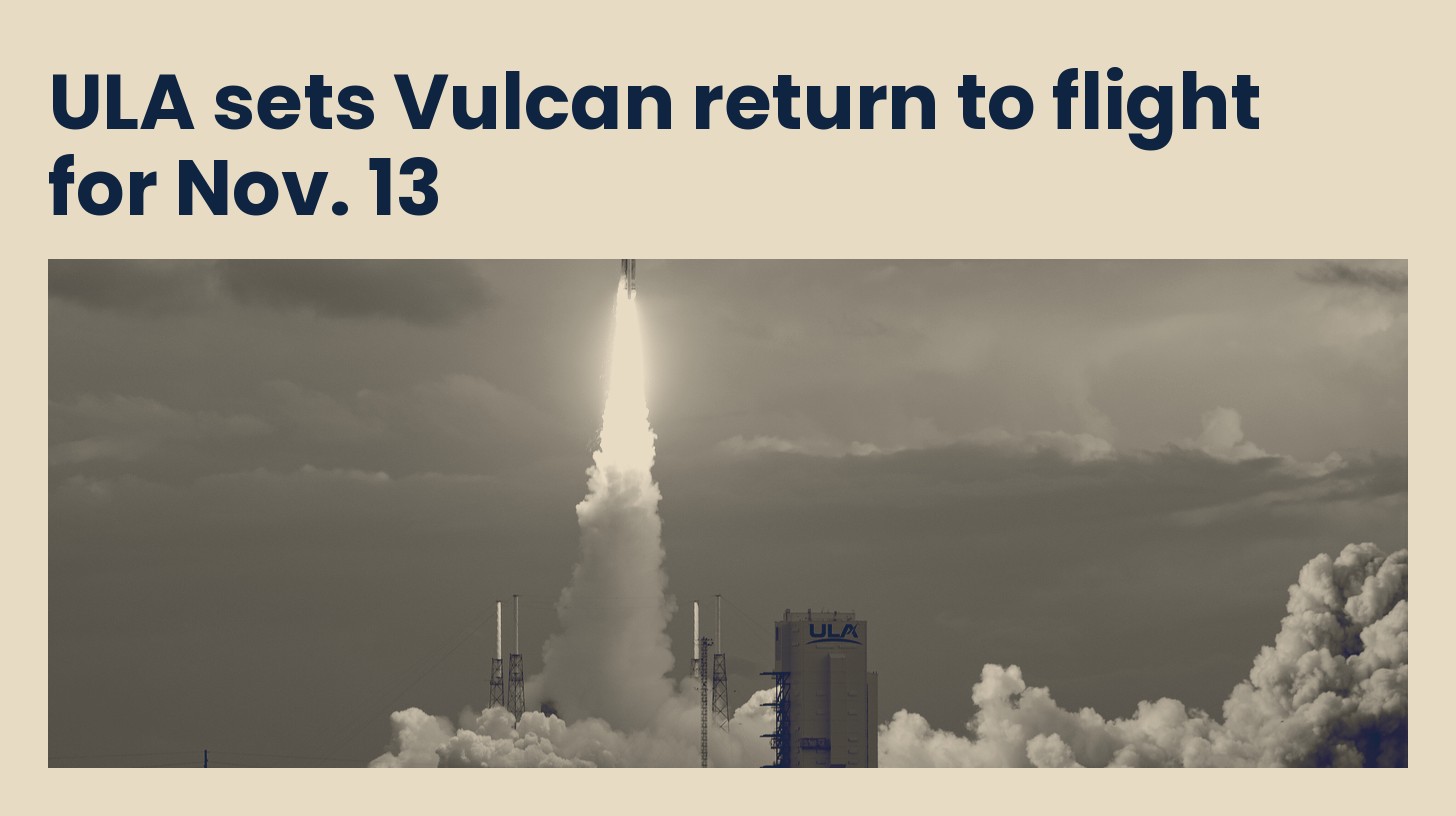
United Launch Alliance's Vulcan rocket will return to flight November 13 after a 9-month grounding caused by a solid rocket booster nozzle anomaly. The outage has strained the U.S. military space launch industrial base, forcing the Space Force to redirect four critical missions to SpaceX.
What's happening
- Vulcan is scheduled to launch November 13 carrying Amazon LEO satellites after being grounded since February 2026 following a significant performance anomaly in the solid rocket booster nozzle.
- ULA has redesigned the booster nozzle and completed ground tests to mitigate identified contributors to the anomaly, with additional analysis continuing parallel to the commercial mission.
- The Space Force has shifted four national security missions from Vulcan to SpaceX: the final GPS III satellite, a Space Development Agency Tranche 1 tracking mission, an Air Force Research Laboratory cislunar pathfinder, and a Next-Generation OPIR satellite.
Why it matters
- With only ULA and SpaceX certified for sensitive national security payloads, Vulcan's extended downtime has created a capacity bottleneck in the defense space launch industrial base.
- The Space Force must collect flight data from Vulcan's commercial missions before certifying military payloads, delaying critical capabilities like Next-Gen OPIR missile warning satellites.
- ULA and SpaceX are absorbing mission swaps, but integration timelines and payload-vehicle compatibility limit how many missions can be easily transferred, creating planning complexity for the Space Force manifest.
Going deeper
- The February 2026 anomaly occurred during the USSF-87 mission but did not prevent successful payload deployment, indicating the nozzle failure happened post-separation.
- Space Force leadership is conducting risk assessment on when military payloads can return to Vulcan, with decisions contingent on ground testing and actual flight performance data from commercial launches.
- The Space Force coordinates manifest trades with the NRO and NASA every two to three months to balance civil, commercial, and national security launch priorities and manage technical incompatibilities.
The intrigue
- The Space Force faces a timing trade-off: waiting for Vulcan flight data to prove nozzle reliability delays critical military missions, but rushing certification risks repeating the anomaly on high-value payloads.
Source: airandspaceforces.com · Oct 28, 2026 · Drafted with Claude, reviewed by Industrial Base Alpha.