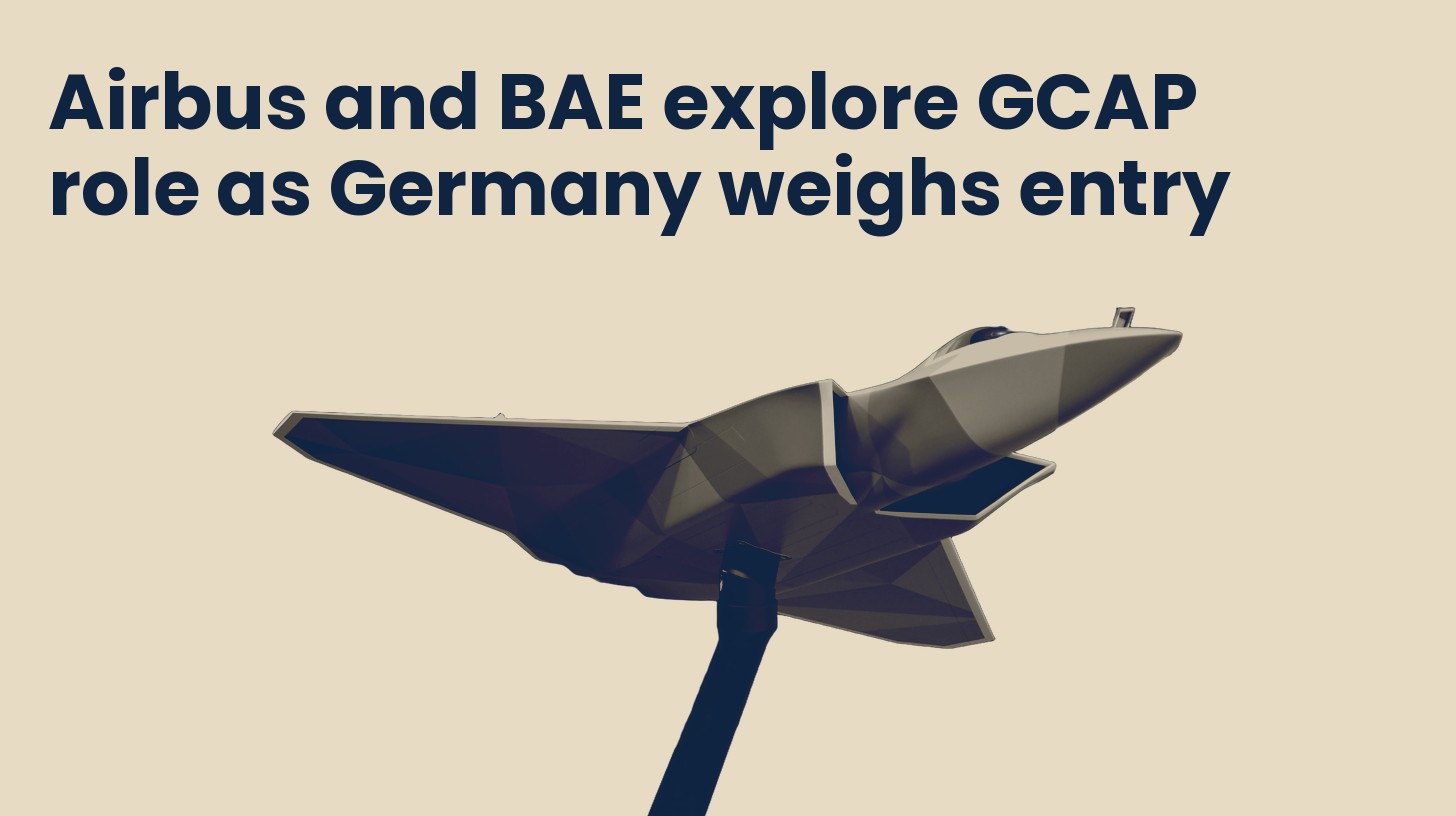
Airbus and BAE Systems are in exploratory talks over potential cooperation on the Global Combat Air Programme (GCAP), the UK-Italy-Japan sixth-generation fighter effort, as Germany weighs joining the trilateral partnership. The discussions cover the crewed fighter, collaborative combat aircraft and networked combat-cloud systems, though no final decisions have been made and integration with existing programme structures remains institutionally complex.
What's happening
- Airbus and BAE Systems are exploring cooperation across GCAP, collaborative combat aircraft and digital combat-cloud technologies connecting aircraft, sensors and drones.
- Germany is evaluating a potential role in GCAP as the UK signals openness to German participation in the trilateral programme.
- Airbus has stated it expects meaningful industrial participation, including development and production roles, rather than limited manufacturing if it joins.
- The Financial Times reported the talks on October 25 with four people familiar with the plans; BAE described the meeting as routine.
Why it matters
- German participation could expand GCAP's industrial base and technological capacity while strengthening European fifth and sixth-generation fighter development.
- Additional financial resources from Germany could support the programme's affordability and production scale objectives, though governance changes risk disrupting the 2035 entry-into-service target.
- Airbus involvement would introduce a major European defense contractor into a programme currently managed through Edgewing, the joint venture of BAE Systems, Leonardo and Japan Aircraft Industrial Enhancement Co.
- Broader participation could reshape work distribution within GCAP's established trilateral structure and intellectual-property arrangements.
Going deeper
- The UK, Italy and Japan established GCAP on an equal-partnership principle with work distribution proportionate to financial and technical contribution; the International Government Organisation oversees governance.
- In July 2026 the partner nations finalised a £4.6 billion contract with Edgewing for design advancement; Britain committed £8.6 billion over four years to GCAP.
- Airbus Defence and Space chief Michael Schöllhorn indicated the company would seek meaningful industrial role and referenced Sweden's Saab as a potential partner.
- Airbus and BAE already collaborate on Eurofighter Typhoon, providing established industrial relationship though GCAP operates under substantially different governance.
The intrigue
- One strategic avenue involves cooperation on collaborative combat aircraft and combat-cloud technologies outside the crewed fighter itself, potentially broadening industrial participation without disrupting core fighter responsibilities.
- Spain's role in future European combat-air development remains undefined despite Airbus's call for Spanish and wider European industry participation.
The fine print
- No final decisions on Airbus or German participation have been announced; current talks are exploratory.
- Any German or Airbus role must be reconciled with GCAP's existing governmental and industrial structures and the 2035 entry-into-service target.
- Airbus participation would require accommodation of its workshare expectations without disrupting existing intellectual-property arrangements or schedule.
Source: armyrecognition.com · Oct 26, 2026 · Drafted with Claude, reviewed by Industrial Base Alpha.