Mentioned:ARX Robotics$110M · Government Support
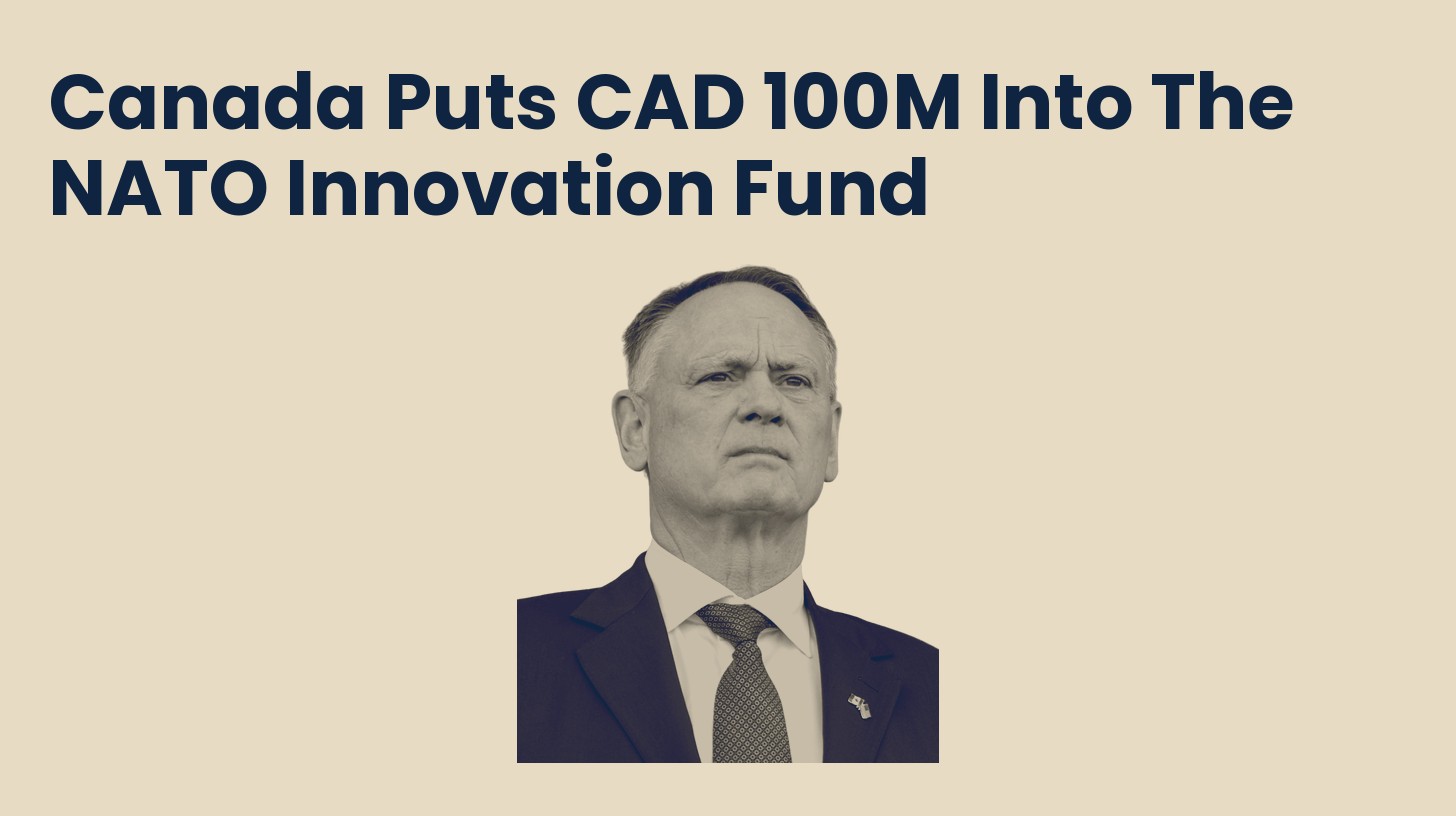
Canada announced a CAD 100 million investment into the NATO Innovation Fund, bringing total alliance commitments past 1.1 billion euros. The move gives Canadian defense startups access to capital and a venture network spanning NATO members.
What's happening
- Canada pledged CAD 100 million, approximately USD 110 million, to the NATO Innovation Fund.
- Total commitments to the fund now exceed 1.1 billion euros from multiple NATO members.
- Canadian defense startups gain eligibility to draw capital from the fund and access its venture network.
- The fund connects startups with investors and military users across NATO to scale successful technologies.
Why it matters
- Canadian defense startups now access a pooled NATO capital source rather than relying solely on domestic funding.
- The fund accelerates technology adoption across the alliance by connecting solutions with military users in multiple countries.
- NATO members strengthen collective innovation capacity in AI, autonomy and software without duplicating R&D spending.
- Competition for alliance-wide capital creates pressure on startups to solve urgent capability gaps rather than pursue niche national interests.
Going deeper
- The NIF invested in approximately 10 companies as of April 2025 from thousands of deal submissions.
- ARX Robotics, a German ground robot maker, raised 9 million euros in a seed round led by NIF in June 2024, then 42 million euros by July 2025 across subsequent rounds.
- The fund operates without national preference, prioritizing technologies that address alliance-wide capability needs rather than pro-rata distribution to contributing members.
- NIF President Ari Kristinn Jónsson stated the fund targets the best technologies addressing collective alliance requirements, not necessarily those benefiting contributor nations.
Financial impact
- Canada's USD 110 million contribution enters the NATO Innovation Fund as committed capital to be deployed against deal flow; timing of deployment and return flows to Canadian investors not disclosed.
- The fund operates as a venture mechanism with no guaranteed repatriation of returns to contributing members, creating opportunity cost for domestic defense spending in Canada.
- Individual portfolio companies like ARX Robotics recognize revenue through venture raises; Canada's contribution does not directly generate recognizable revenue for any single company or program.
The intrigue
- Canada made the announcement hours after the Trump administration restricted military cooperation with Canada and imposed tariffs on Canadian goods, signaling a pivot toward NATO multilateralism over US bilateralism.
- No guarantee exists that capital deployed through the fund will benefit Canadian startups or companies; the allocation criterion is alliance capability need, not national origin.
- The move raises questions about Canada's industrial base strategy: whether pooled NATO innovation investment complements or substitutes for domestic defense R&D spending.
The fine print
- The NATO Innovation Fund operates without pro-rata returns to contributors, meaning Canada has no contractual claim on a percentage of fund gains or portfolio exits.
- Fund deployment and investment decisions rest with NIF leadership and partner venture firms, not Canadian government; individual deal participation is not guaranteed.
Source: defenseone.com · Nov 21, 2026 · Drafted with Claude, reviewed by Industrial Base Alpha.