Mentioned:Fairbanks Morse Defense$60M · Government Support
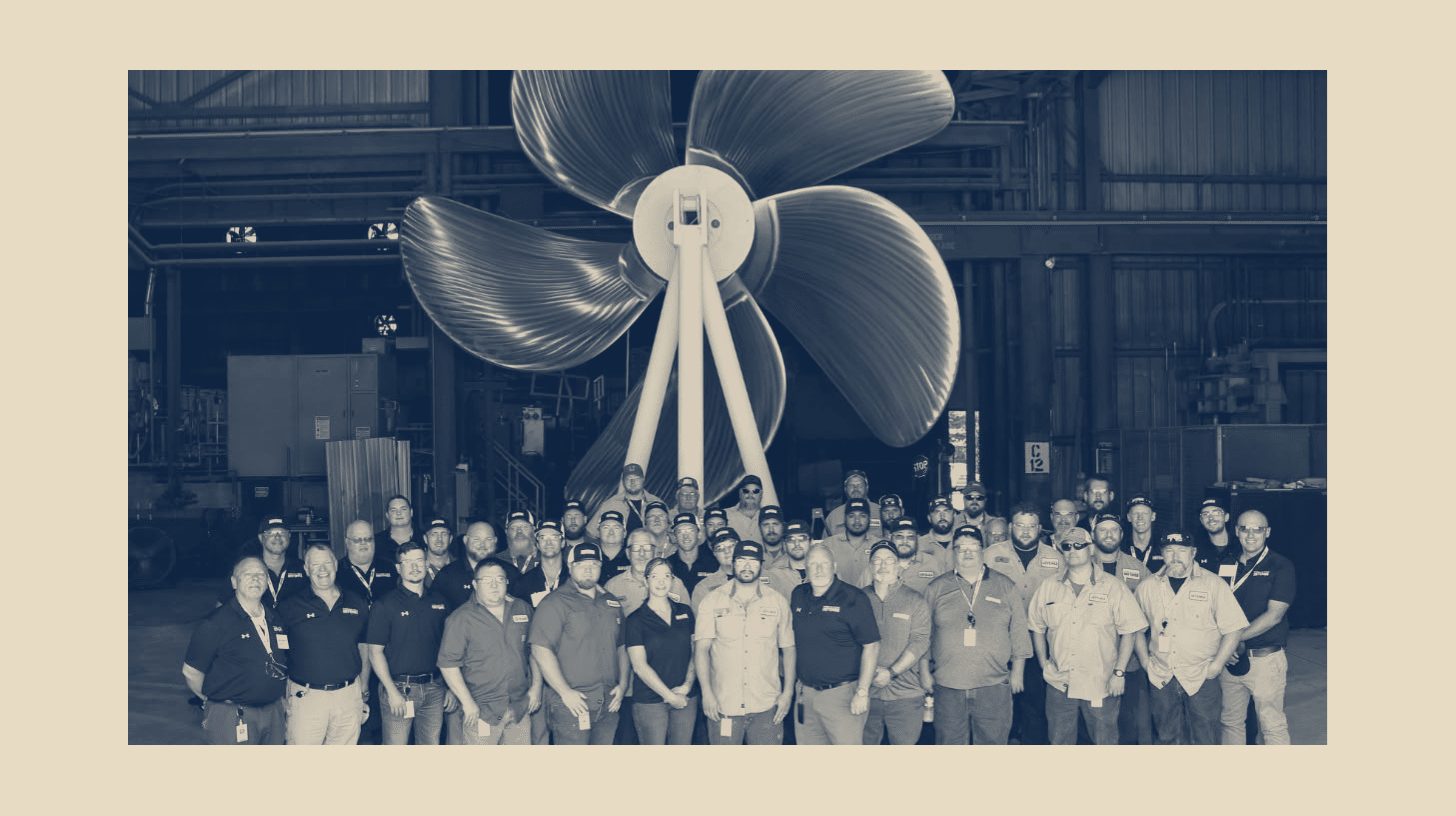
Fairbanks Morse Defense broke ground on a $60M expansion at its Pascagoula, Mississippi facility to double capacity for naval propulsion systems. The project includes $27M from the U.S. Navy and $22M from Australia under AUKUS Pillar I, adding 38,000 square feet and two new five-axis CNC machines.
What's happening
- Fairbanks Morse Defense is constructing Center of Excellence 3 (CoE3) at its Pascagoula foundry with $60M total funding, including $27M from the U.S. Navy and $22M from Australia.
- The 38,000 square foot expansion will add two five-axis CNC machines capable of handling parts up to 100 metric tons, bringing total CNC capacity to four machines.
- The facility will add manufacturing bay space for a future 3D sand printer and integrate design, casting, machining and finishing capabilities under one hub.
- New capacity is scheduled to come online by Q1 2028 and will grow the Pascagoula workforce by 25% to approximately 100 highly skilled employees.
Why it matters
- Doubling capacity directly addresses documented maritime industry constraints limiting Virginia-class submarine and next-generation surface combatant production timelines.
- As the only privately-owned U.S. foundry certified for large-scale Navy propeller manufacturing, Pascagoula is designated a National Asset, making this expansion critical to undersea and surface fleet readiness.
- AUKUS Pillar I funding formalizes Australian investment in U.S. submarine industrial base capacity, signaling allied commitment to Indo-Pacific deterrence through shared production infrastructure.
- The foundry specializes in complex, high-tonnage naval propulsion systems that cannot be easily duplicated, making this capacity addition non-substitutable for Navy production schedules.
Going deeper
- Fairbanks Morse Defense acquired Bird-Johnson Propeller Company in July 2025 and restored the Bird-Johnson name to honor its nearly 70-year history in American-made naval propellers.
- The facility operates as a fully integrated manufacturing hub handling design through delivery, reducing supply chain dependencies for propulsion system production.
- The expansion reflects public-private partnership model where government (Navy, Australia) co-funds private foundry expansion to address sovereign production requirements.
Financial impact
- Fairbanks Morse Defense will capitalize $60M in facility construction costs over the project period, with depreciation expenses beginning in Q1 2028 when capacity comes online.
- Revenue from Virginia-class and next-generation surface combatant propulsion contracts will benefit from improved production rates and reduced delivery delays starting Q1 2028.
- Operating cash flow will benefit from higher throughput on existing contracts, though timing and magnitude of revenue acceleration depend on Navy production schedules and order placement, not disclosed in this announcement.
- For Fairbanks Morse Defense as a private company, the $60M government and allied co-funding reduces equity capital requirements and preserves cash for operations and maintenance.
The intrigue
- Australia's $22M AUKUS contribution signals intent to co-produce advanced submarine systems but the terms governing Australian access to this U.S. National Asset foundry remain undisclosed.
- The facility roadmap includes a future 3D sand printer bay but no timeline, investment amount or capability maturity level has been announced, suggesting modularity in the expansion plan.
The fine print
- Capacity is scheduled to come online by Q1 2028, creating 18-month timeline risk from groundbreaking to full operational capability.
- As a privately-held company, Fairbanks Morse Defense does not disclose operational metrics, so actual capacity utilization rates and contract backlog cannot be verified independently.
- The designation as National Asset restricts facility access and technology transfer; AUKUS Pillar I funding structure and security protocols are not detailed in this announcement.
Source: seapowermagazine.org · Oct 20, 2026 · Drafted with Claude, reviewed by Industrial Base Alpha.