Mentioned:WarhoundAnduril IndustriesColossal Biosciences$200M · Seed
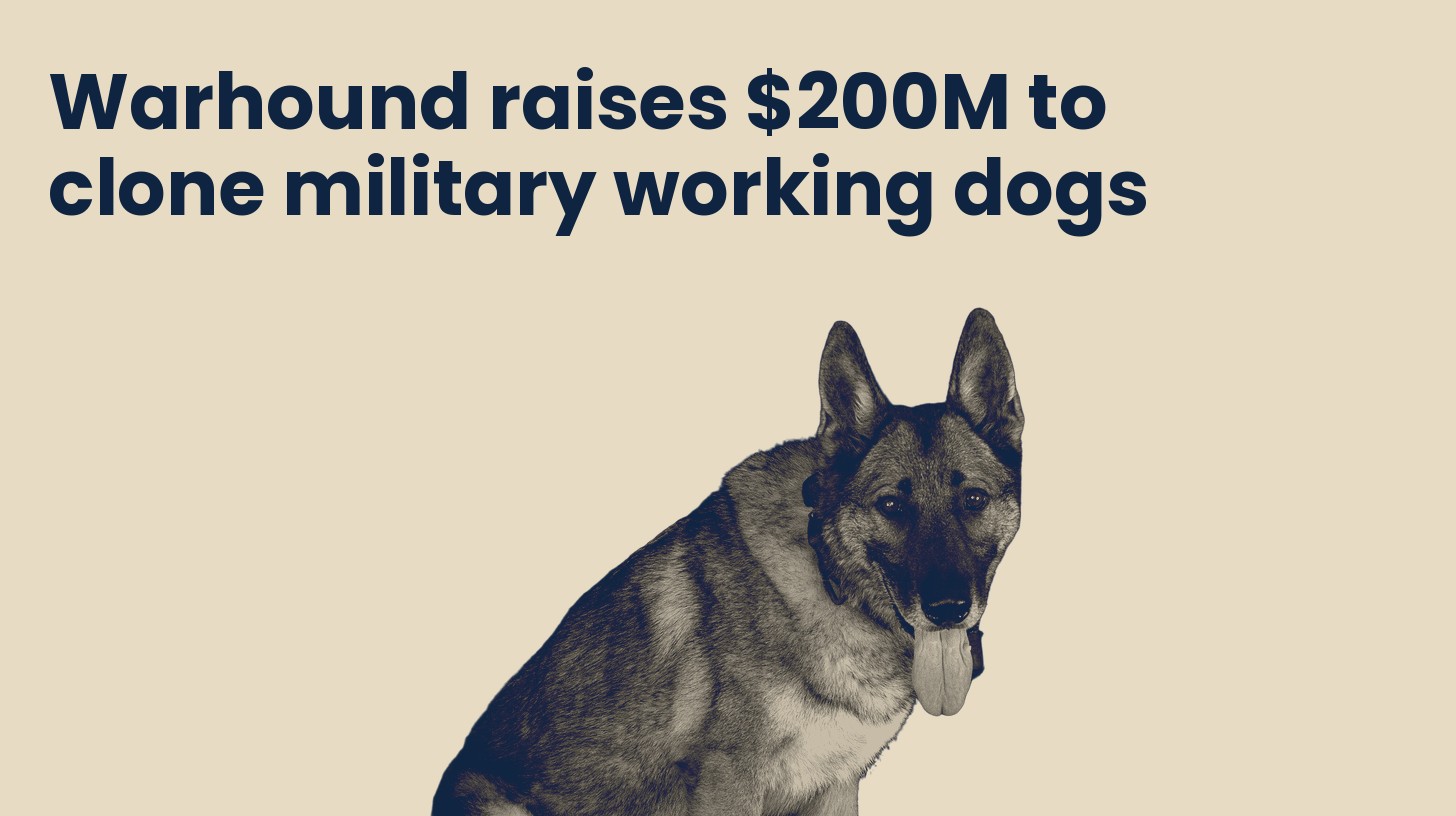
Warhound, a Texas biotech startup co-founded by Anduril's Palmer Luckey and Colossal Biosciences CEO Ben Lamm, raised $200 million in seed funding to clone and gene-edit military working dogs. The company plans to field the first dogs by 2028, addressing a critical shortage where fewer than half of imported dogs pass military training.
What's happening
- Warhound raised $200 million in seed funding from In-Q-Tel, Sequoia Capital, ARK Invest, Franklin Templeton, 8VC and Lux Capital, valuing the company at $1.2 billion.
- The company will clone top-performing Belgian Malinois and German Shepherd working dogs and perform targeted gene edits to remove genetic markers for hip dysplasia and other inherited diseases.
- Warhound plans to produce the first cloned dogs in early 2027, with initial dogs entering service by 2028.
- Anduril will supply protective equipment and integrate cloned dogs with its Eagle Eye autonomous system so dogs, handlers and autonomous platforms operate as a single team.
Why it matters
- More than 80% of the U.S. military's 2,200 working dog teams rely on European imports, and fewer than half of purchased dogs pass training, forcing the military to acquire and train roughly 200 dogs to field 100.
- Cloning and gene-editing proven performers could reduce acquisition and training pipeline costs and increase the proportion of dogs that pass training, easing dependence on foreign supply.
- Gene-edited dogs screened for career-ending conditions could reduce attrition from hip dysplasia and muscle degeneration, extending service life and lowering total cost of ownership.
- Warhound addresses competition from China and Russia for the same pool of European working dogs, reducing allied exposure to foreign supply disruption.
Going deeper
- Warhound plans to build national-scale kennel and training infrastructure using private capital and has briefed government groups but has no signed contracts yet.
- The company is exploring a Canine-as-a-Service model in which the government would buy a steady supply of trained dogs rather than purchasing animals outright.
- Colossal Biosciences, which owns cloning company Viagen, licenses its technology to Warhound and holds an economic interest in the startup.
- The American Humane Society will certify Warhound's training programs and operate its Military Working Dog Reunification Program to match retired dogs with former handlers.
Financial impact
- Warhound raised $200 million in seed funding with a $1.2 billion post-money valuation, timing not disclosed for when the capital will be deployed.
- The company has no signed customers and has not set a price per dog, so revenue recognition timing and margins are not disclosed.
- Capital will fund breeding and gene-editing operations, national kennel and training infrastructure, and integration with Anduril's autonomous systems platform.
The intrigue
- Luckey and Lamm conceived Warhound at Peter Diamandis' Moonshots Summit, yet Luckey holds no equity and Anduril has no ownership stake, creating potential conflicts between the defense contractor's platform interests and the startup's independence.
- The company plans to edit traits beyond disease prevention, such as speed, agility and sense of smell, but Lamm stated the company is still determining which edits can be pursued responsibly, leaving the full scope of genetic modifications unclear.
The fine print
- Warhound has no signed customers and has not set pricing, so the scale and timing of military adoption remain uncertain.
- The company plans to begin with Belgian Malinois and German Shepherd breeds and may expand to other breeds later.
- CEO David Spirk is a former Marine who served as chief data officer of U.S. Special Operations Command and Department of War.
Source: defence-blog.com · Oct 23, 2026 · Drafted with Claude, reviewed by Industrial Base Alpha.