Mentioned:LD TravoceanExailNaval GroupMBDA
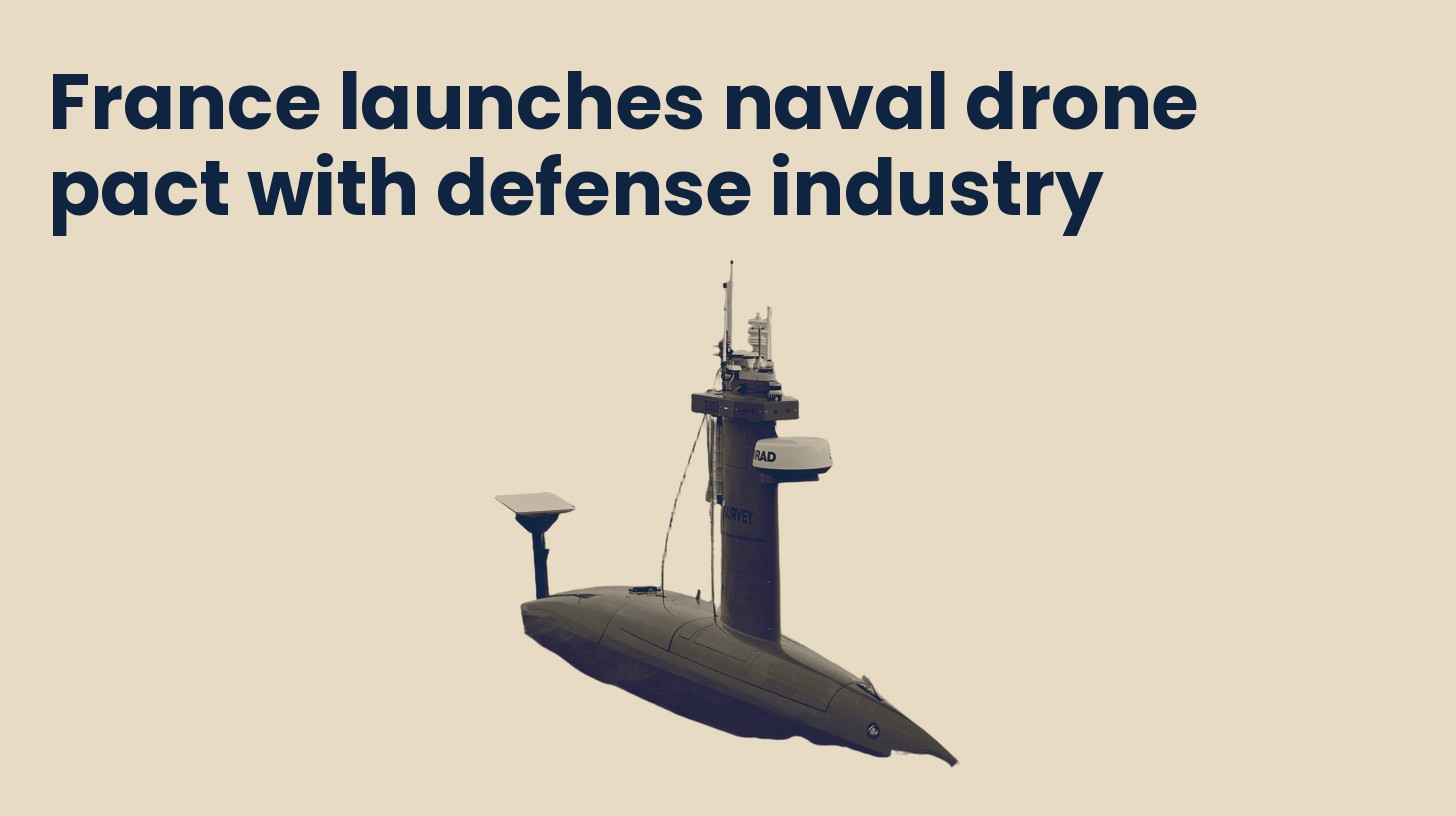
France announced a new government-industry pact on Nov. 3 aimed at coordinating naval drone development and procurement. Initial orders include remotely operated vehicles from LD Travocean, countermine robots from Exail, and unmanned combat vehicles from Naval Group.
What's happening
- French defense minister Catherine Vautrin unveiled the framework at Euronaval trade show on Nov. 3 as a mechanism for aligning armed forces needs with industry capacity.
- France ordered a second ROV Deep Sea drone from LD Travocean, a 3,600-kilogram system capable of diving to 6,000 meters depth.
- French Navy will acquire 8 A18 countermine robots from Exail, multi-sensor underwater drones designed to find and characterize sea mines.
- France ordered a second unmanned combat underwater vehicle from Naval Group, over 10 meters long and weighing more than 10,000 kilograms, designed for weeks-long underwater deployment.
- Naval Group and MBDA will retrofit France's FDI frigates to increase Aster missile capacity from 16 to 32 cells per ship.
Why it matters
- The pact establishes a coordinated procurement pathway for naval drones at a time when underwater reconnaissance, mine countermeasures and sustained underwater operations are becoming central to naval strategy.
- Repeating orders for ROV and combat vehicles signal sustained demand that can stabilize production planning and capital investment across French and allied maritime drone suppliers.
- Seabed mapping and underwater infrastructure protection have become military priorities as critical cables and pipelines face sabotage risk, making autonomous underwater systems strategically important.
Going deeper
- The framework mirrors France's earlier success with aerial drone procurement coordination, applying a proven model to the underwater domain.
- LD Travocean's first ROV Deep Sea completed qualification trials for its 6,000-meter depth rating before the second unit was ordered, reducing technical risk.
The intrigue
- The combat underwater vehicle is described as longer and heavier than a first test vehicle, but no comparison dimensions were disclosed, leaving the capability improvement unquantified.
Source: Defense News · Nov 3, 2026 · Drafted with Claude, reviewed by Industrial Base Alpha.