Mentioned:General DynamicsLockheed MartinRaytheon Technologies$4B · Program/Policy
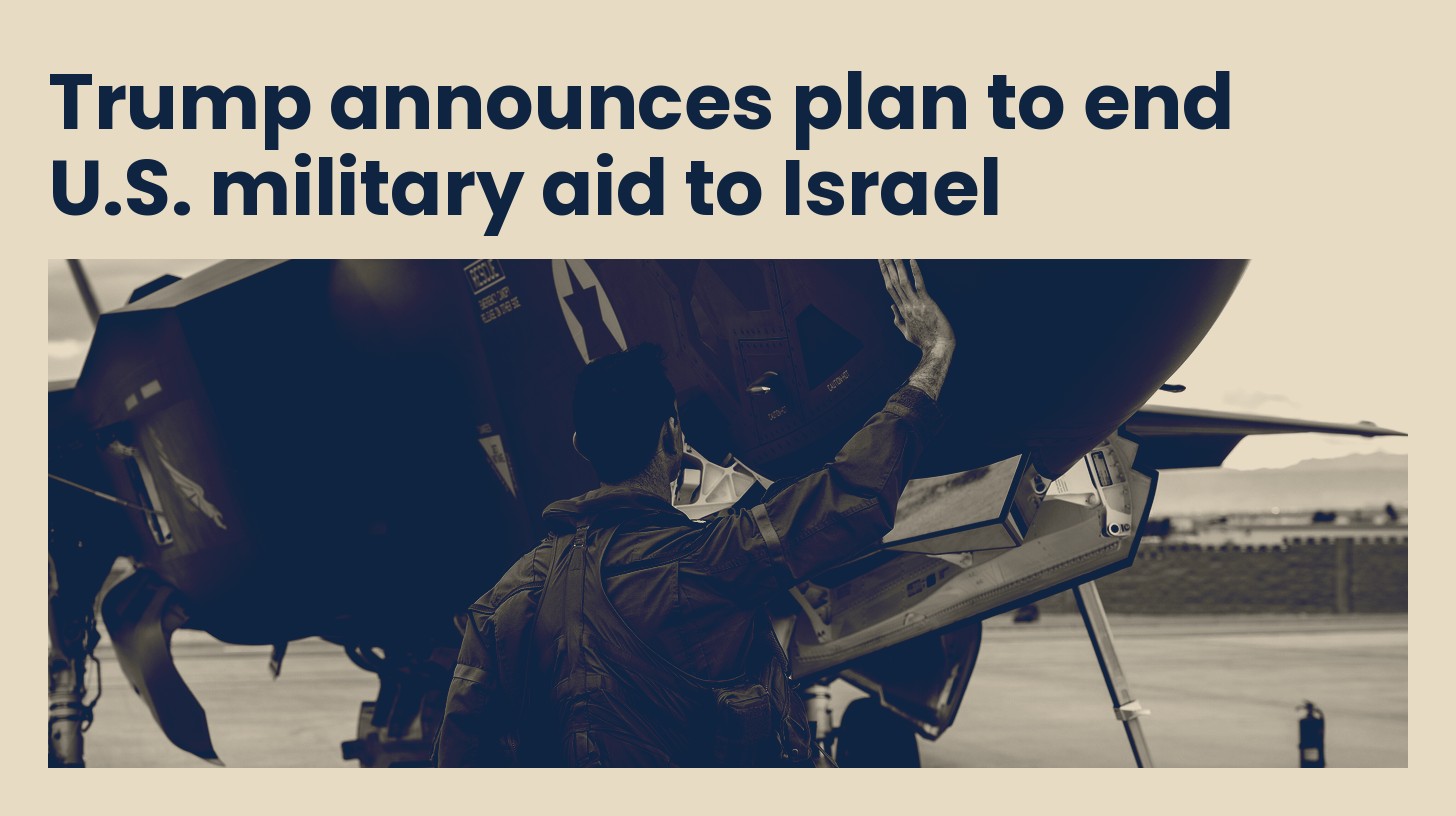
President Trump announced the U.S. will terminate its $4 billion annual military aid to Israel effective end of 2026, claiming prior agreement with Israeli Prime Minister Netanyahu. The move ends a commitment under the 2016 memorandum of understanding worth $38 billion across fiscal years 2019-2028.
What's happening
- Trump stated in a November 3, 2026 Fox News interview that the U.S. will stop annual military aid to Israel by year-end 2026.
- The decision affects a 10-year memorandum of understanding signed in 2016 that allocated $38 billion for fiscal years 2019-2028, comprising $33 billion in Foreign Military Financing and $5 billion for missile defense development.
- Trump clarified that Israel may continue purchasing U.S. weapons and receive assistance if needed, but annual funding transfers will cease.
- Netanyahu had proposed gradual aid phase-out in May 2026, linking it to shifting political sentiment in the U.S. toward Israel.
Why it matters
- The decision redirects $4 billion annually from Israel to other defense priorities or domestic spending, reshaping the industrial base relationship with a major allied customer.
- Israel's ongoing procurement of F-35I and F-15IA fighter jets and pending $2.8 billion aerial munitions packages may require alternative financing or be subject to contract renegotiation.
- U.S. defense contractors supplying Israel through Foreign Military Financing will lose predictable annual revenue streams starting in 2027, affecting program planning and production schedules.
- The policy shift creates uncertainty for the remaining two years of the 2016 memorandum, as Congress retains authority over annual appropriations and may challenge or modify the decision.
Going deeper
- Trump linked the decision to domestic political criticism of Israeli aid by Democratic lawmakers, characterizing it as a response to election-year pressure rather than military doctrine.
- Israeli Defense Forces officials expressed surprise at the announcement, and Israel's Ministry of Defense declined immediate comment, suggesting coordination gaps despite Trump's claim of prior Netanyahu agreement.
- The 2016 memorandum is not a legally binding treaty; Congress controls annual appropriations and could override or modify Trump's decision in subsequent appropriations cycles through 2028.
Financial impact
- U.S. defense contractors will lose $4 billion in annual Foreign Military Financing revenue effective 2027, a cash flow reduction that will be recognized in the income statement as lower revenue in fiscal years 2027 and beyond.
- Israel's pending $2.8 billion aerial munitions purchase, partially financed through FMF, may be affected depending on whether Trump's decision applies to direct funding, arms transfers, or both; terms remain unclear as of November 3, 2026.
- The remaining $2 billion annually through fiscal 2028 under the current memorandum will be subject to congressional appropriation processes, creating revenue uncertainty for prime contractors reliant on predictable Israeli defense budgets.
The intrigue
- Trump's assertion of prior Netanyahu agreement contradicts lack of coordination evident in Israeli military and defense ministry responses, raising questions about whether the announcement was coordinated or unilateral.
- The timing of the announcement on U.S. midterm election day, coupled with Trump's acknowledgment of Democratic criticism of Israel aid as a campaign issue, suggests political motivation that may invite congressional push-back.
The fine print
- Trump did not specify whether the decision applies to direct cash grants, arms transfer financing, or both, leaving ambiguity for contract interpretation and congressional implementation.
- The 2016 memorandum remains binding through fiscal 2028; Congress retains power to appropriate funds annually and may reject Trump's decision in appropriations bills.
- Israel retains the right to purchase U.S. weapons at market prices, but loss of FMF financing will increase Israeli defense ministry costs and may shift procurement timelines or quantities.
Source: militarnyi.com · Nov 3, 2026 · Drafted with Claude, reviewed by Industrial Base Alpha.