Mentioned:AsterKyowa IndustrialAndurilTerra DroneKaaz
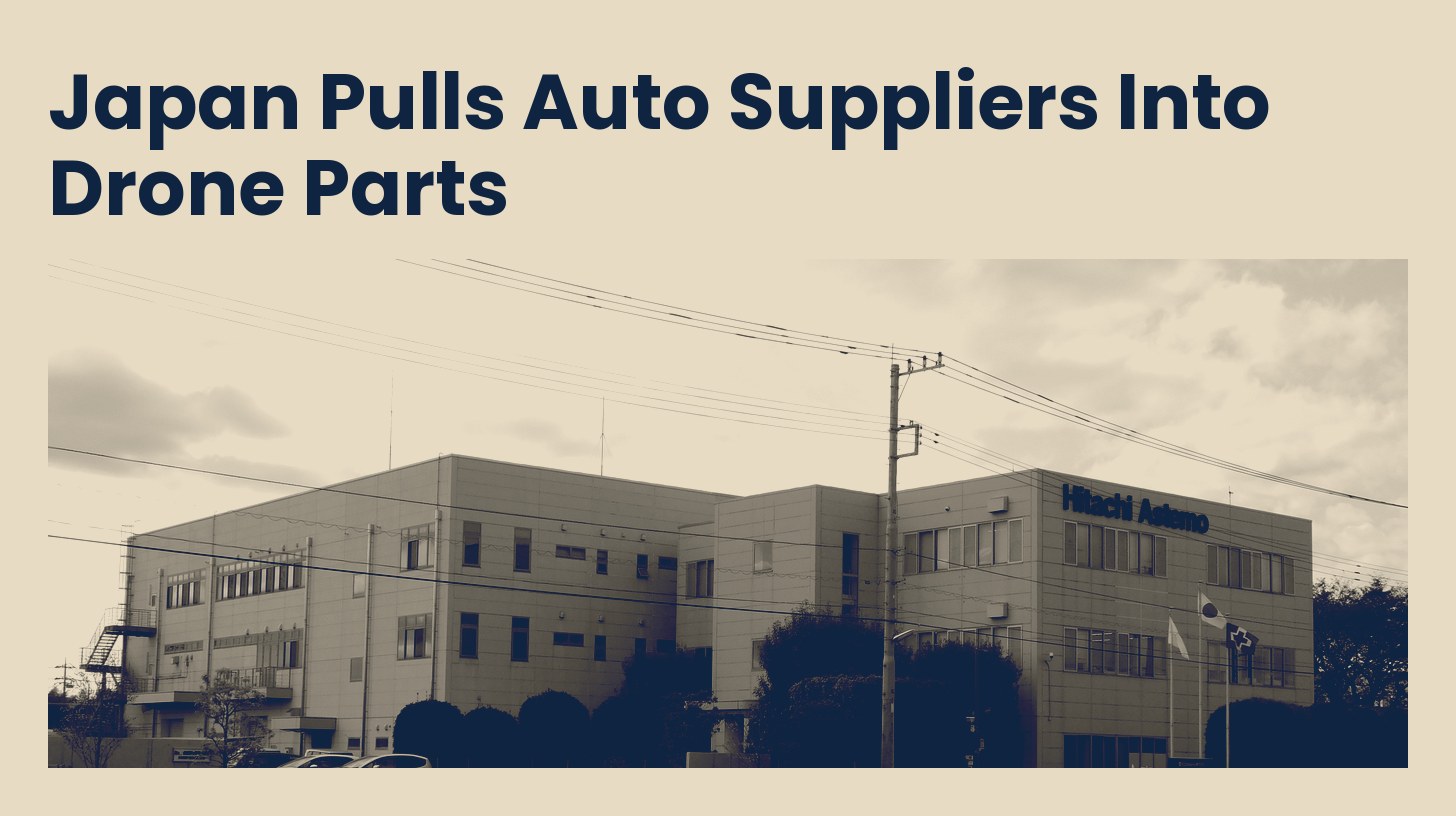
Japan's Acquisition, Technology & Logistics Agency is redirecting auto supplier capacity into defense manufacturing as part of the country's largest military buildup since World War II. Suppliers including Aster and Kyowa have shifted 10% of annual revenue to defense work, with government funding and Western contractor partnerships driving the transition.
What's happening
- Aster, a Toyota supplier, now derives 10% of revenue from drone electric motors built for U.S. contractor Anduril after entering defense contracting last year.
- Kyowa Industrial has grown defense sales to 10% of annual revenue from 3% in spring 2025, supplying prototype drone engines and missile components.
- ATLA hosted a September event connecting 48 Japanese suppliers with Western military contractors, double the prior year's attendance.
- ATLA launched a funding program in October offering millions of dollars to suppliers advancing military technology to prototype stage.
Why it matters
- Japan's auto industry produced nearly 900,000 fewer vehicles in 2025 than a decade earlier, making defense diversification critical for the 70,000-company supply chain supporting 1 in 10 Japanese jobs.
- Auto supplier precision manufacturing and quality control capabilities directly apply to drone and missile component production at scale.
- Japan exported only 1,100 drones in 2025 versus Taiwan's 123,000 UAVs; tapping auto capacity could substantially increase domestic drone production for the planned fleet expansion.
- Domestic industrial sourcing reduces reliance on stressed U.S. suppliers depleted by Middle East and European conflicts.
Going deeper
- Japan's upcoming national security strategy is expected to outline plans to arm the country with attack and interceptor drone fleets.
- ATLA has been evaluating suppliers, pairing them with arms firms, and offering new funding streams to accelerate sector entry.
- Kyowa was recently introduced by ATLA officials to Kaaz, a racing car parts maker that has developed a small gasoline-powered aircraft engine for potential drone applications.
- Prime Minister Sanae Takaichi's Cabinet is overseeing changes to trade ministry programs aimed at helping auto suppliers diversify into defense and other industries.
Financial impact
- Defense work now comprises 10% of annual revenue for both Aster and Kyowa as of late 2026, shifting income statement revenue mix away from automotive.
- ATLA's October 2026 funding program offers millions in development and testing support to suppliers reaching prototype stage, affecting balance sheet cash and operating cash flow timing unclear.
- Drone-related spending in Japan's budget is likely to be ringfenced despite fiscal constraints elsewhere, ensuring long-term revenue visibility for drone component suppliers through the national security strategy implementation.
The intrigue
- Japan's pacifist-shaped public resistance to defense contracting is being overcome by auto industry economic pressure and government coordination, raising questions about how quickly cultural acceptance will translate to production scale.
- ATLA is simultaneously building partnerships with Western military contractors while developing domestic drone capacity, leaving unclear whether Japan intends primary self-sufficiency or export-oriented production.
The fine print
- ATLA funding amounts are described as millions of dollars with no specific ceiling or obligated value disclosed.
- Kyowa's defense revenue grew to 10% by late 2026 from 3% in spring 2025, but the breakdown between Japanese government work and international contractor orders is not specified.
- No approval timelines or program milestones are disclosed for the national security strategy expected to outline drone fleet plans by year-end 2026.
Source: Defense News · Nov 24, 2026 · Drafted with Claude, reviewed by Industrial Base Alpha.