Mentioned:LMT Lockheed Martin
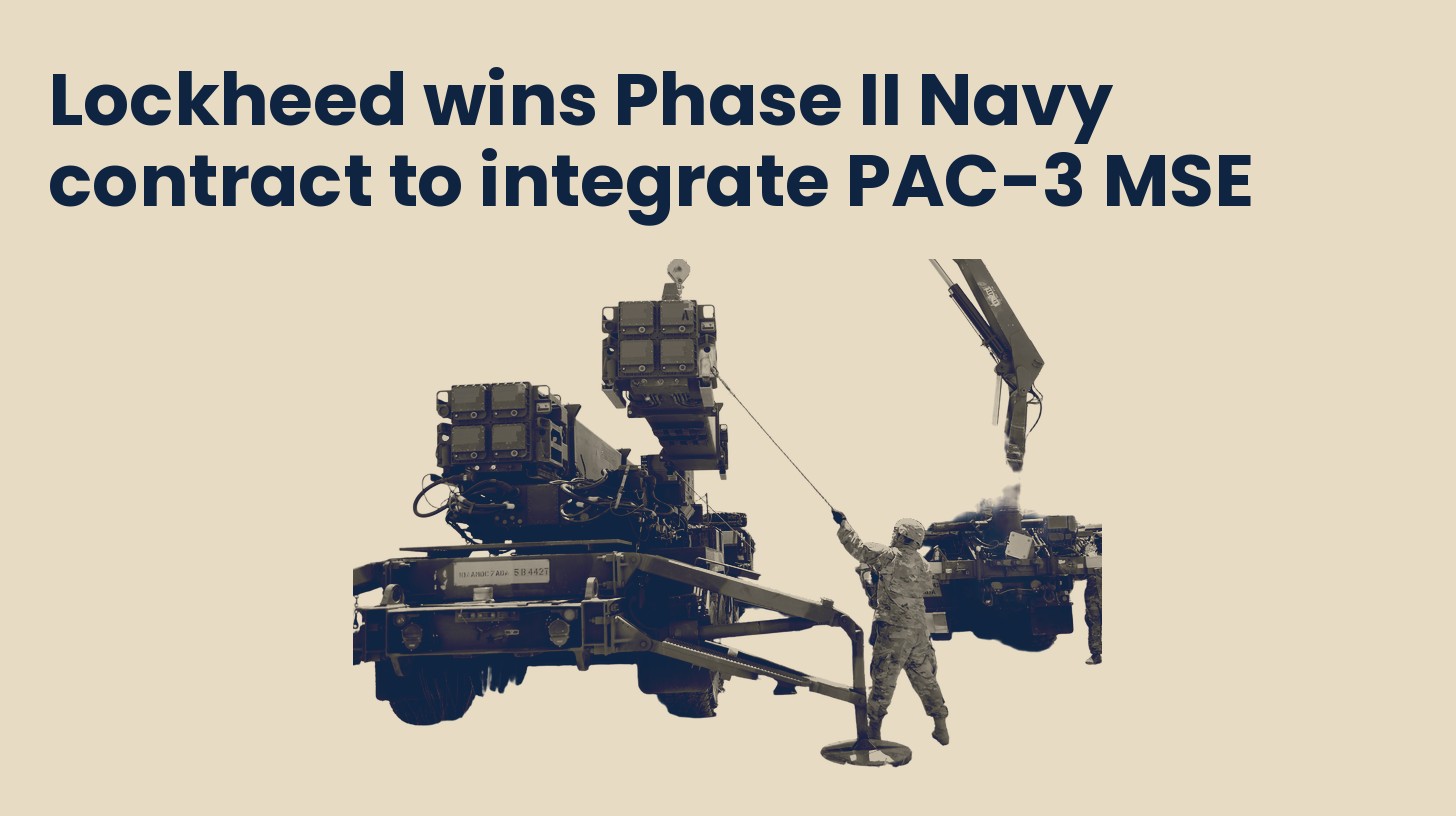
The U.S. Navy awarded Lockheed Martin a second-phase contract to integrate the PAC-3 Missile Segment Enhancement interceptor with Aegis and Mk 41 Vertical Launching System for shipboard deployment by 2029. The award follows a $93 million program-of-record contract and reflects the company's $120 million prior investment in integration work.
What's happening
- Lockheed Martin received the Phase II contract in late September 2026 to complete naval PAC-3 MSE integration with Aegis Weapon System and Mk 41 VLS.
- Land-based flight test is planned for 2027, shipboard flight tests for 2028, with Navy fielding targeted for 2029.
- Engineers are redesigning hardware and software, including a new canister for Mk 41, rewritten launch-timing software, and S/X-band data link with upgrade growth.
- Production will scale at Lockheed's Camden, Arkansas All-Up Round III facility alongside existing Army PAC-3 MSE variants.
Why it matters
- PAC-3 MSE adds proven combat air-defense capability to Navy's integrated air and missile defense architecture, addressing emerging threats in complex naval environments.
- Dual production of Navy and Army variants at Camden scales manufacturing to meet demand from U.S. services and allied partners, supporting the Navy's platform modernization cadence.
- Successful naval integration expands the interceptor's deployment footprint beyond land-based systems, increasing total addressable production volume for Lockheed.
Going deeper
- A 2024 ground test confirmed the interceptor passes through Mk 41 launch canisters without damage; a virtual Aegis flight test in 2024 demonstrated first vertical launch of PAC-3 MSE from a Mk 70 launcher.
- Lockheed has already invested $120 million in prior integration hardware and software development, establishing technical foundation for Phase II execution.
- Navy fielding by 2029 aligns with broader destroyer and cruiser modernization schedules, potentially accelerating procurement timelines for multiple shipbuilding programs.
Financial impact
- Phase II contract value is undisclosed; revenue recognition will begin with production phase, likely FY2028-2029 as hardware and software deliverables meet Navy acceptance criteria.
- Camden facility capex and labor scale-up will likely appear in operating cash flow in 2027-2028 as production tooling and workforce ramp ahead of fielding.
- Contract backlog increases with Phase II award, extending Lockheed's PAC-3 MSE workload beyond the prior $93 million program-of-record stage.
The intrigue
- Lockheed's $120 million prior investment without guaranteed Phase II award exposed the company to risk; Phase II confirmation now validates the business case for dual-service production strategy.
The fine print
- Contract value, period of performance, and obligated funds are undisclosed; Phase II scope and ceiling value not stated.
- Fielding date of 2029 depends on successful completion of 2027 land-based and 2028 shipboard test gates; delays in testing could slip Navy deployment.
Source: defence-industry.eu · Nov 5, 2026 · Drafted with Claude, reviewed by Industrial Base Alpha.