Mentioned:Blue OriginSpaceXRelativity SpaceFirefly AerospaceImpulse SpaceQuantum SpaceAdvanced SpaceArrow Science and TechnologyIntuitive Machines$1.3B · Contract Award
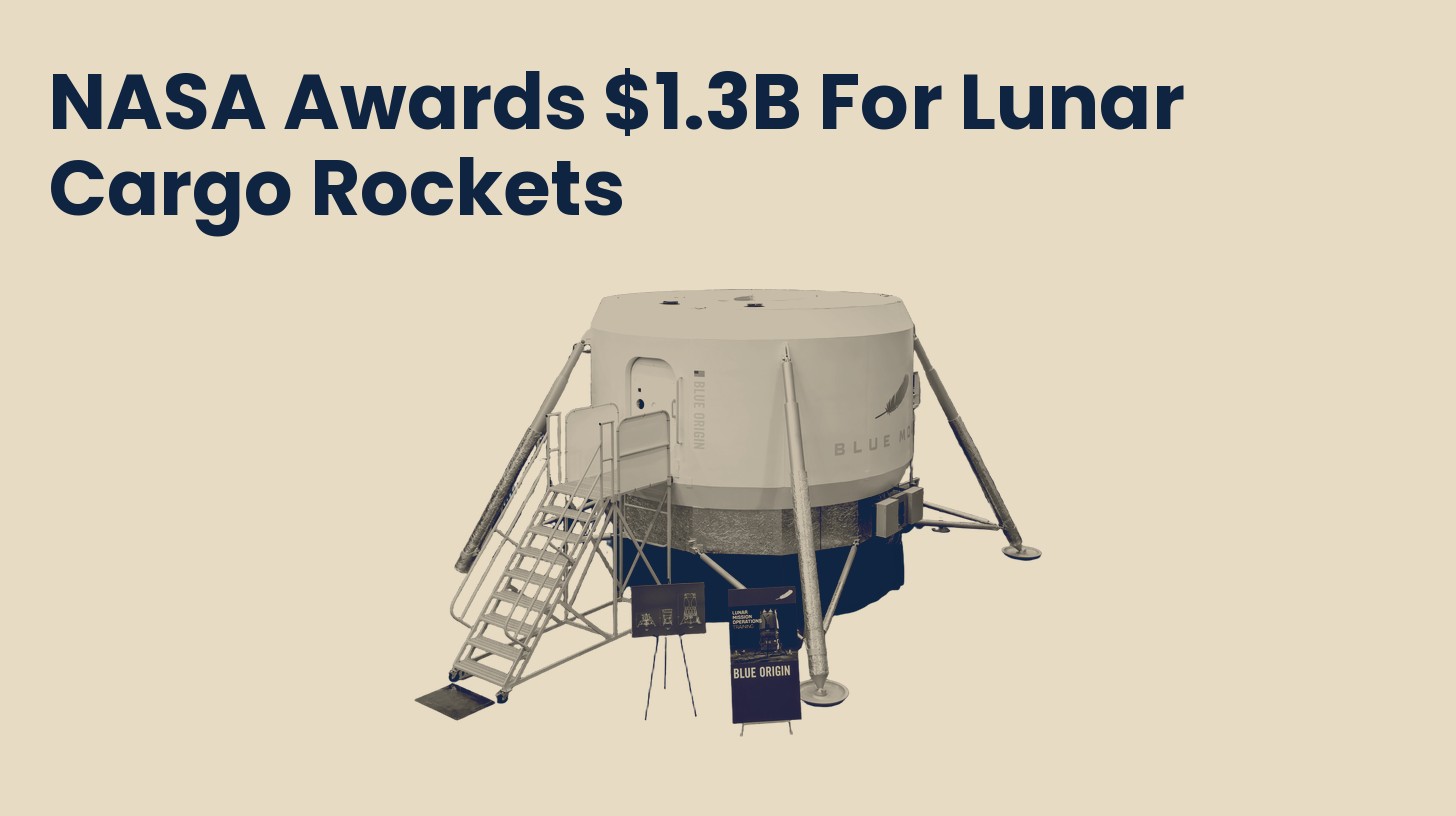
NASA awarded $1.3 billion in task orders across six providers for rockets and orbital transfer vehicles to establish transportation capacity for its Moon Base program. The awards span Blue Origin, SpaceX, Relativity Space, Firefly Aerospace, Impulse Space, and Quantum Space under the 10-year VADR contract.
What's happening
- NASA issued six task orders totaling $1.3 billion under the Venture-Class Acquisition of Dedicated and Rideshare contract to establish Moon Base logistics.
- Blue Origin, SpaceX, Relativity Space, Firefly Aerospace, Impulse Space, and Quantum Space received awards for rocket launches and orbital transfer vehicle services.
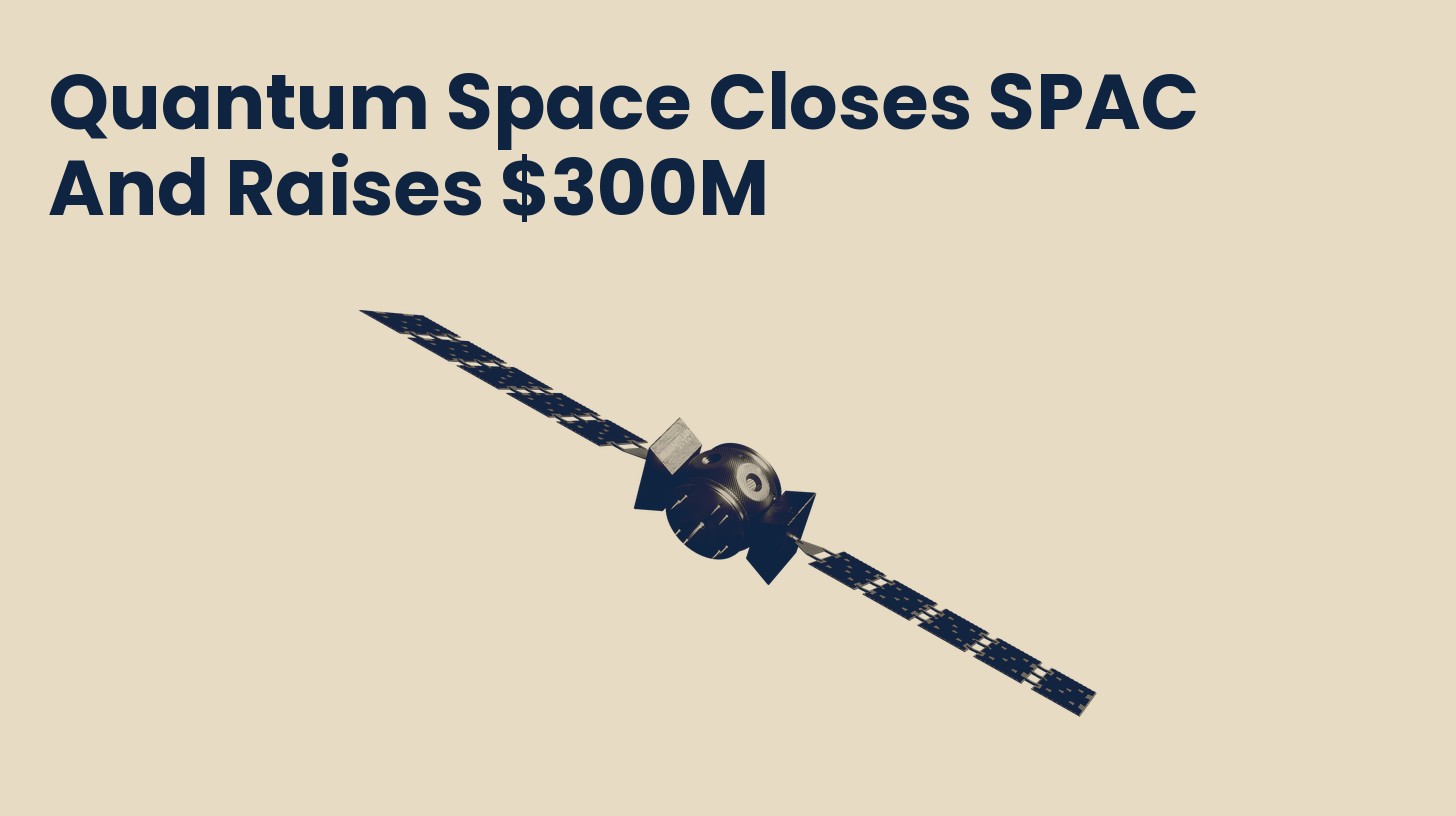
- Specific missions include a $185 million CAPSTONE 02 satellite mission launching in 2027-2028 on SpaceX Falcon 9 with Quantum Space's Ranger OTV.
- Three additional missions will fly on Blue Origin's New Glenn rocket with Firefly Aerospace, Impulse Space, and other OTV providers through 2028.
Why it matters
- The contract establishes stable demand for emerging commercial space logistics providers, reducing development risk for companies with unflown orbital transfer vehicles.
- NASA's shift to procurement of transportation capacity rather than mission-specific contracts accelerates commercial industry maturation while maintaining government control of Moon Base assets.
- Phase One through 2029 focuses on technology demonstrations and science experiments, building the operational foundation for sustained lunar presence at the south pole.
- Pre-positioning payload inventory and matching payloads to available transportation increases mission flexibility and reduces schedule risk for the aggressive Moon Base timeline.
Going deeper
- Only Relativity Space's Terran-R rocket has not yet flown; it is expected to have its launch debut in 2027, making this contract critical to its commercial validation.
- All four selected orbital transfer vehicle providers have not yet flown in space, so these missions serve as operational demonstrations of emerging transportation architectures.
- The CAPSTONE 02 mission will test cislunar navigation, communication, and gravity gradient operations required before Orion spacecraft begin docking in cislunar space for lunar descent.
- By using orbital transfer vehicles to consolidate multiple spacecraft onto single launches, NASA reduces launch cadence and frees Commercial Lunar Payload Services missions from carrying communications satellites.
Financial impact
- The $1.3 billion in task orders will be recognized as revenue by each provider over the period of performance as services are rendered, with CAPSTONE 02 valued at $185 million launching in 2027-2028.
- For Blue Origin, SpaceX, Relativity Space, Firefly Aerospace, Impulse Space, and Quantum Space, these contracts represent committed backlog supporting operational cash flow through 2029 or beyond.
- Timing of revenue recognition follows mission schedules: CAPSTONE 02 in 2027-2028, MoonFall hopper mission in 2028, and remaining missions through Phase One completion in 2029.
- The awards establish recurring demand for orbital transfer vehicle development, reducing per-unit costs and improving unit economics as production ramps.
The intrigue
- NASA's shift from mission-focused procurement to transportation capacity procurement trades detailed government oversight for industry speed and cost reduction, creating execution risk if providers fail to meet launch windows or performance requirements.
- The contract funds development and operation of four different orbital transfer vehicle architectures in parallel, raising questions about which platforms will dominate after Phase One and how NASA will rationalize future procurement.
The fine print
- The $1.3 billion figure is the collective value of six task orders; individual award amounts are not disclosed except for CAPSTONE 02 at $185 million.
- Phase One runs through 2029 with no disclosure of option years or total contract ceiling value under the broader 10-year VADR framework.
- Specific orbital transfer vehicle selection remains flexible for some missions; the Impulse Space Mira is noted as a potential choice for the communications satellite mission rather than a confirmed selection.
Source: spaceflightnow.com · Nov 23, 2026 · Drafted with Claude, reviewed by Industrial Base Alpha.