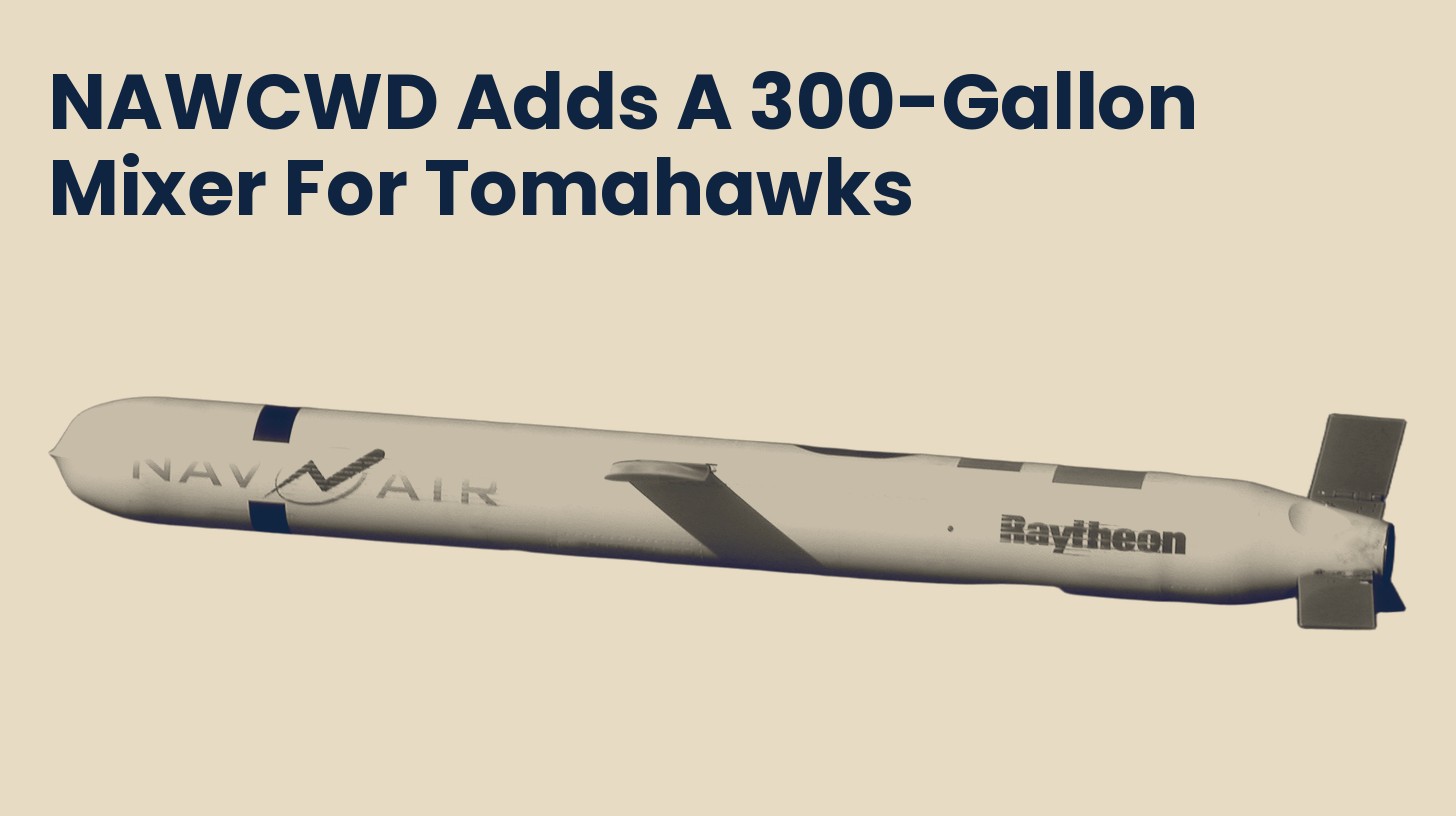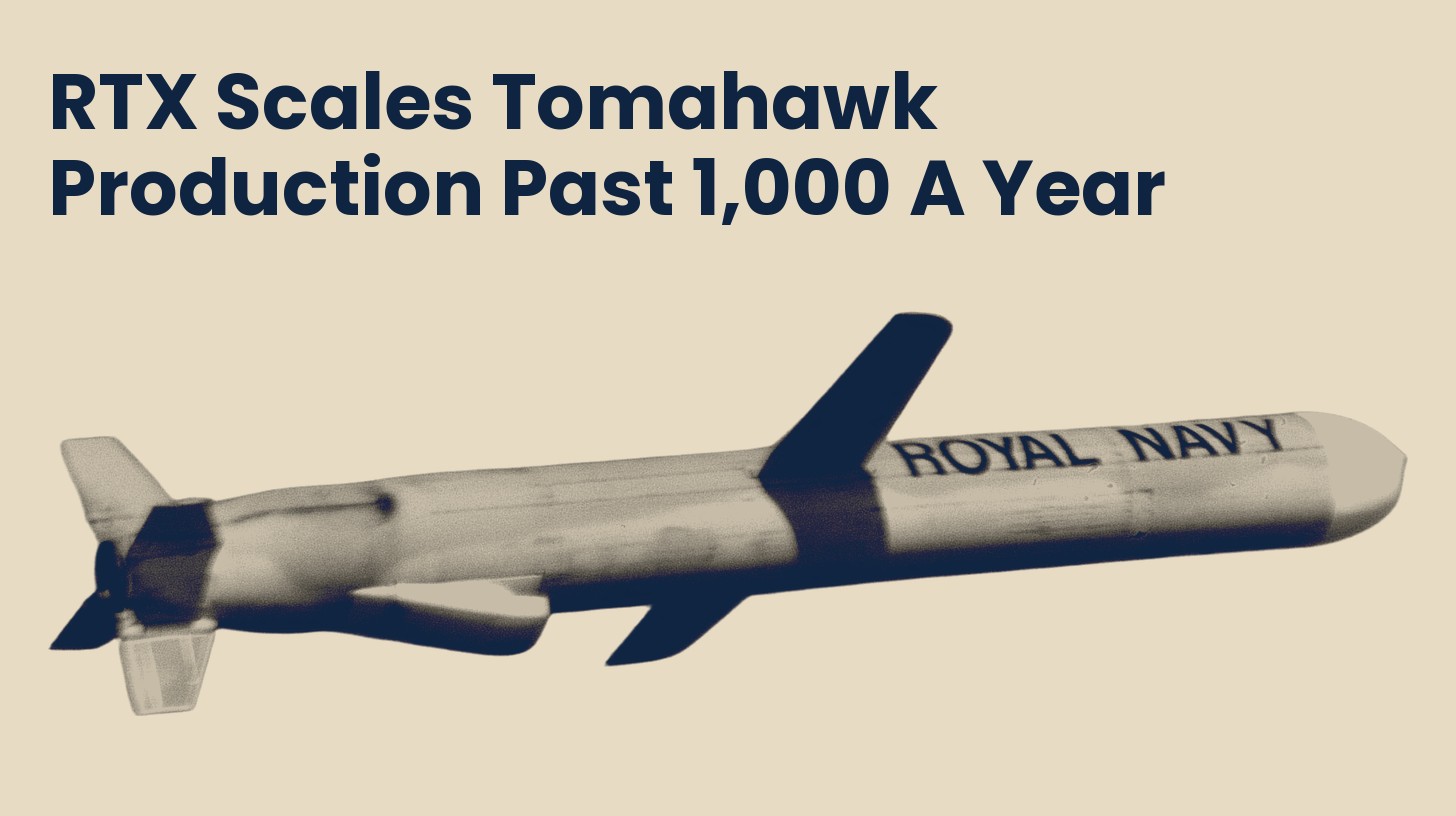
RTX landed a $22.9 billion multiyear framework agreement with the U.S. Department of War to increase Tomahawk cruise missile production to over 1,000 annually. The deal replenishes stocks and supports German interest in purchasing up to 400 Tomahawks for 2029 delivery.
What's happening
- RTX signed a $22.9 billion multiyear framework agreement announced August 17 to ramp Tomahawk production beyond 1,000 missiles per year.
- RTX delivered three times as many Tomahawks in the first half of 2026 compared to the prior year under existing contracts.
- Production of key components rose more than 90% during the first half of 2026 versus the same 2025 period.
- Germany is considering purchasing up to 400 Tomahawks and three initial Typhon launchers for delivery in 2029.
Why it matters
- The agreement directly addresses U.S. military stock depletion during the Iran conflict and rebuilds strategic strike inventory.
- Sustained production at 1,000+ annually establishes Tomahawk as the backbone of allied deep-strike capability across NATO and Indo-Pacific partners.
- German procurement signals NATO commitment to land-based cruise missiles after the U.S. cancelled its own Typhon deployment in Germany.
Going deeper
- RTX is scouting German suppliers to support expanded production, indicating reliance on allied industrial base for component supply.
- Germany views the Tomahawk as a temporary solution while developing indigenous cruise missiles for land, sea and air platforms.
- Some Tomahawks could be fitted to future German frigates, expanding the weapon's role beyond land-launch platforms.
Financial impact
- The $22.9 billion multiyear framework agreement will be recognized as revenue over the performance period, timing not disclosed, with obligated funds and ceiling value not differentiated in available sources.
- Backlog will increase materially as the company secures U.S. military and potential foreign military sales orders over the contract duration.
- Ramped production rates will affect cost of goods sold and gross margin as RTX scales manufacturing and supply chain; first-half 2026 delivery volume more than tripled year-over-year, indicating rising operating leverage.
The intrigue
- Germany's 2029 delivery timeline conflicts with acknowledged limits on U.S. production capacity and the priority to replenish American stocks, creating potential competition between allied and U.S. demand.
The fine print
- German procurement remains under letter of intent signed at the July NATO summit; no formal contract or obligated funding confirmed.
- German suppliers have not been named; the outcome of RTX's scouting effort and any subcontracting arrangements remain undisclosed.
- Overseas sales such as Germany's purchase would be subject to U.S. Foreign Military Sales approval and executive branch authorization.
Source: defence-industry.eu · Nov 7, 2026 · Drafted with Claude, reviewed by Industrial Base Alpha.