Mentioned:STM
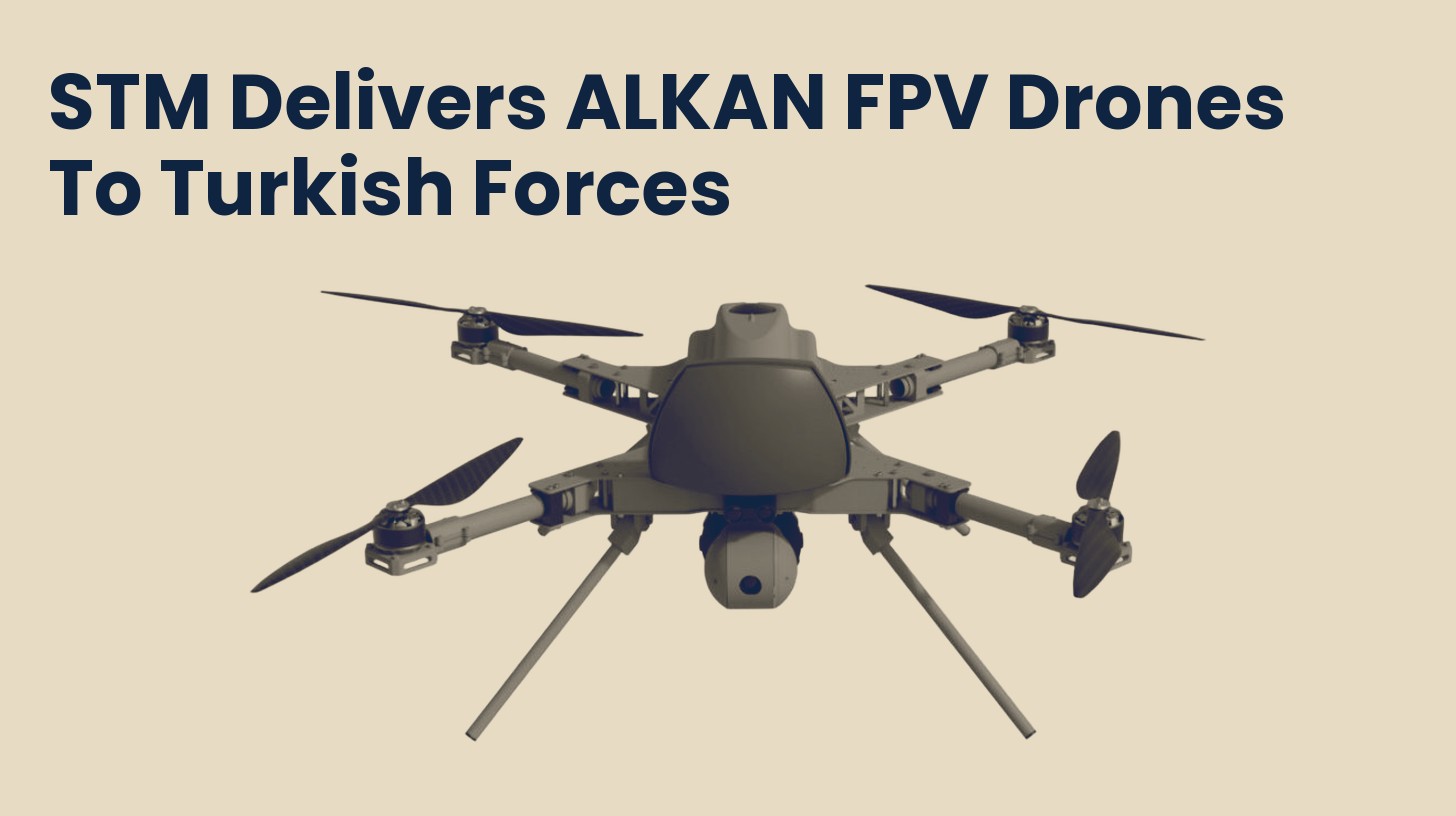
STM has completed deliveries of ALKAN FPV first-person-view drones to Turkish security forces following acceptance testing. The system pairs operator-controlled flight with autonomous terminal guidance and uses interchangeable munitions from STM's KARGU loitering-munition platform.
What's happening
- ALKAN FPV completed acceptance testing and multiple systems entered Turkish security forces inventory, with further deliveries planned.
- The drone combines operator-controlled flight via real-time camera imagery with autonomous terminal dive capability once the operator designates a target.
- System features fibre-optic control as an alternative to radio frequency, enabling operation without GPS or RF signals and immunity to electromagnetic jamming.
- ALKAN FPV uses the same anti-personnel and armour-piercing warheads as STM's KARGU platform without modification, extending compatibility across two platforms.
Why it matters
- STM expands its unmanned systems portfolio into the first-person-view category, leveraging autonomy and image-processing capabilities to reduce operator dependency while enhancing strike accuracy.
- Fibre-optic control option addresses a critical operational need in contested electromagnetic environments where GPS denial and jamming are persistent threats.
- Interchangeable munition design between ALKAN FPV and KARGU reduces logistics complexity for Turkish security forces and simplifies sustainment across two tactical platforms.
- STM claims operational experience across more than 15 countries on four continents with prior systems like KARGU, BOYGA, TOGAN and ALPAGU, positioning ALKAN FPV as a fielded technology rather than an experiment.
Going deeper
- ALKAN FPV specifications include a 10-kilometre mission range, maximum speed of 140 km/h, and endurance exceeding 20 minutes in attack configuration or up to 44 minutes in observation mode.
- The drone operates at a 500-metre mission altitude and maximum altitude of 5,500 metres with day-and-night capability and low radar cross-section design.
- Safety fuze complies with MIL-STD-331 military standard with both impact and adjustable distance-fuze sensor options for automatic detonation.
- STM applied the same autonomy engineering expertise used in its rotary-wing loitering munition to this fixed-wing first-person-view platform.
The fine print
- Deal amount and specific delivery quantities remain undisclosed.
- The system was previously designated KARGUFPV before being renamed STM ALKAN FPV.
Source: defence-industry.eu · Nov 23, 2026 · Drafted with Claude, reviewed by Industrial Base Alpha.