Mentioned:RTX RTXNOC Northrop GrummanLHX L3HarrisGD General Dynamics Ordnance and Tactical SystemsAVAV AeroVironmentAndurilQinetiQUrsa MajorX-Bow SystemsDRS Leonardo DRSAdvanced NavigationPersistent Systems
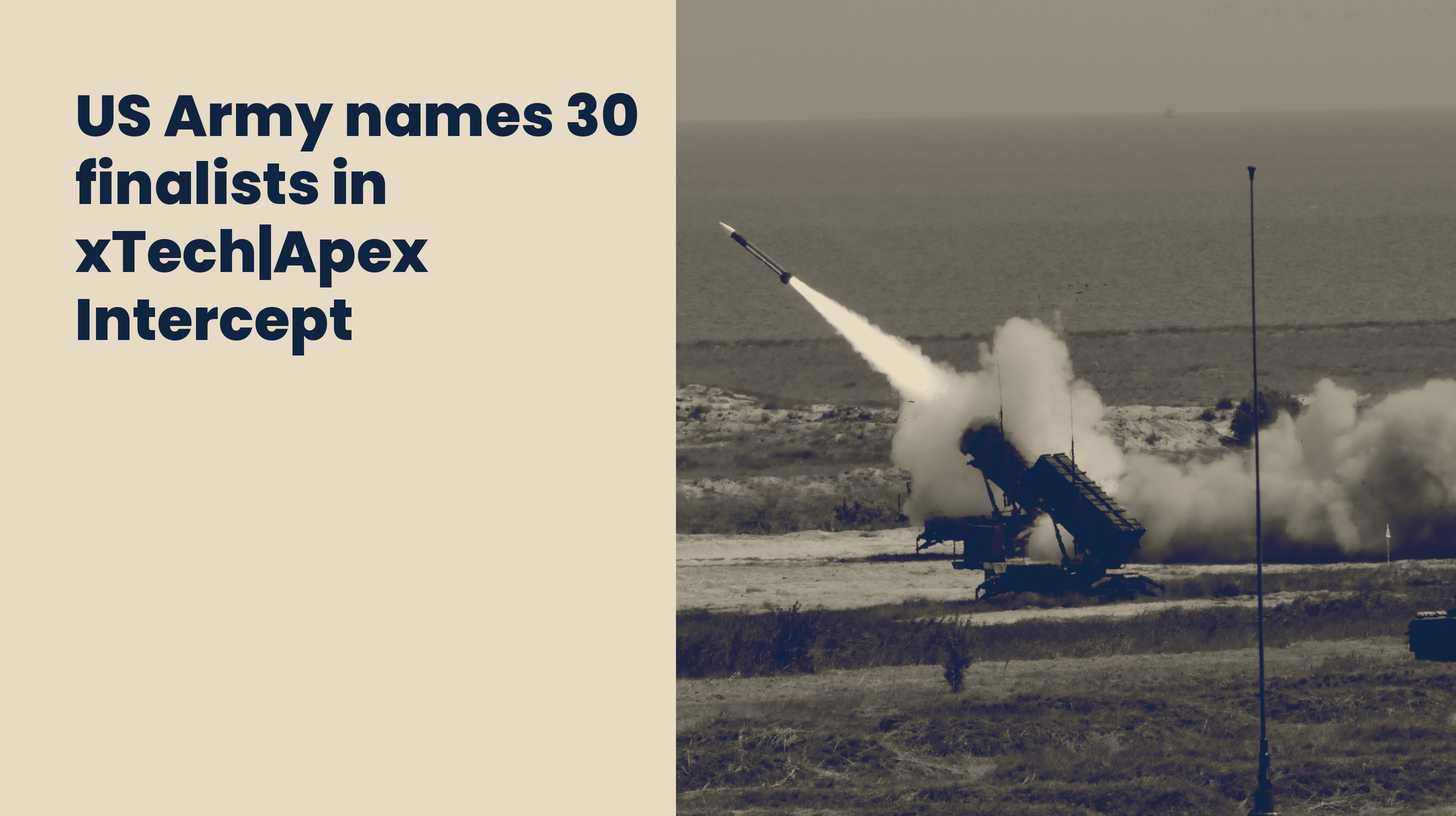
The U.S. Army has named 30 finalists in its xTech|Apex Intercept prize competition, seeking low-cost interceptors to fly alongside the Patriot air defense system. Finalists will compete for up to $8 million in prizes across four technology topics.
What's happening
- The Army selected 30 finalists split across four topics: 10 for complete interceptors, 7 for solid rocket motors, 6 for seekers, and 7 for fire control and flight guidance.
- Each finalist receives $25,000 and will demonstrate its technology to Army and Department of War experts between Oct. 1 and Nov. 30.
- The Army plans to name up to 18 winners by Dec. 31.
- Finalists range from RTX and Northrop Grumman to startups in Australia and the United Kingdom.
Why it matters
- The competition seeks to add lower-cost interceptors to Patriot's mission against aircraft, drones, cruise missiles and short-range ballistic missiles.
- Pairing prime contractors like RTX with startups tests whether newer entrants can deliver viable low-cost designs for a program dominated by legacy suppliers.
- Including firms from Australia and the United Kingdom signals the Army's push to widen its industrial base for air defense components beyond U.S.-only suppliers.
Going deeper
- The complete-interceptor topic, called all-up rounds with fire control, drew 10 finalists including RTX, Anduril, AeroVironment and QinetiQ.
- Seven companies are competing on low-cost solid rocket motors, including Northrop Grumman, L3Harris, General Dynamics Ordnance and Tactical Systems, Ursa Major and X-Bow Systems.
- Six firms are working on low-cost seekers, including Leonardo DRS, Toyon and Technology Service Corporation, with one RF seeker entry carrying the Israel Aerospace Industries logo.
- Seven finalists are developing fire control and flight guidance, including Advanced Navigation's GPS-independent proposal and Persistent Systems.
Financial impact
- Each of the 30 finalists receives $25,000 now, a minor cash inflow with timing not disclosed beyond this week's announcement.
- Winners of the complete-interceptor topic can earn up to $1 million each, and winners in the other three topics up to $750,000 each, from a total prize pool of up to $8 million.
- The Army has set aside $7.25 million for the final round, tied to the selection of up to 18 winners by Dec. 31.
- Any follow-on prototype agreements or contracts for winners are unquantified, so future revenue recognition and obligated funding remain undetermined.
The intrigue
- The Army has not published a target price per interceptor, leaving unclear how much cost reduction the program actually expects.
- An RF seeker entry is listed under Cherrill Consulting Group but displays the Israel Aerospace Industries logo, raising questions about which company owns the underlying technology.
The fine print
- The prize pool caps at $8 million, but the Army has not detailed the criteria for narrowing 30 finalists to 18 winners.
- Winners may be considered for follow-on prototype agreements or contracts, though no value or timeline has been set for those.
- Companies submitted five-page white papers between July 7 and July 24, with an optional five-minute video, ahead of the finalist selection.
Source: defence-blog.com · Sep 26, 2026 · Drafted with Claude, reviewed by Industrial Base Alpha.