Mentioned:BA BAE Systems
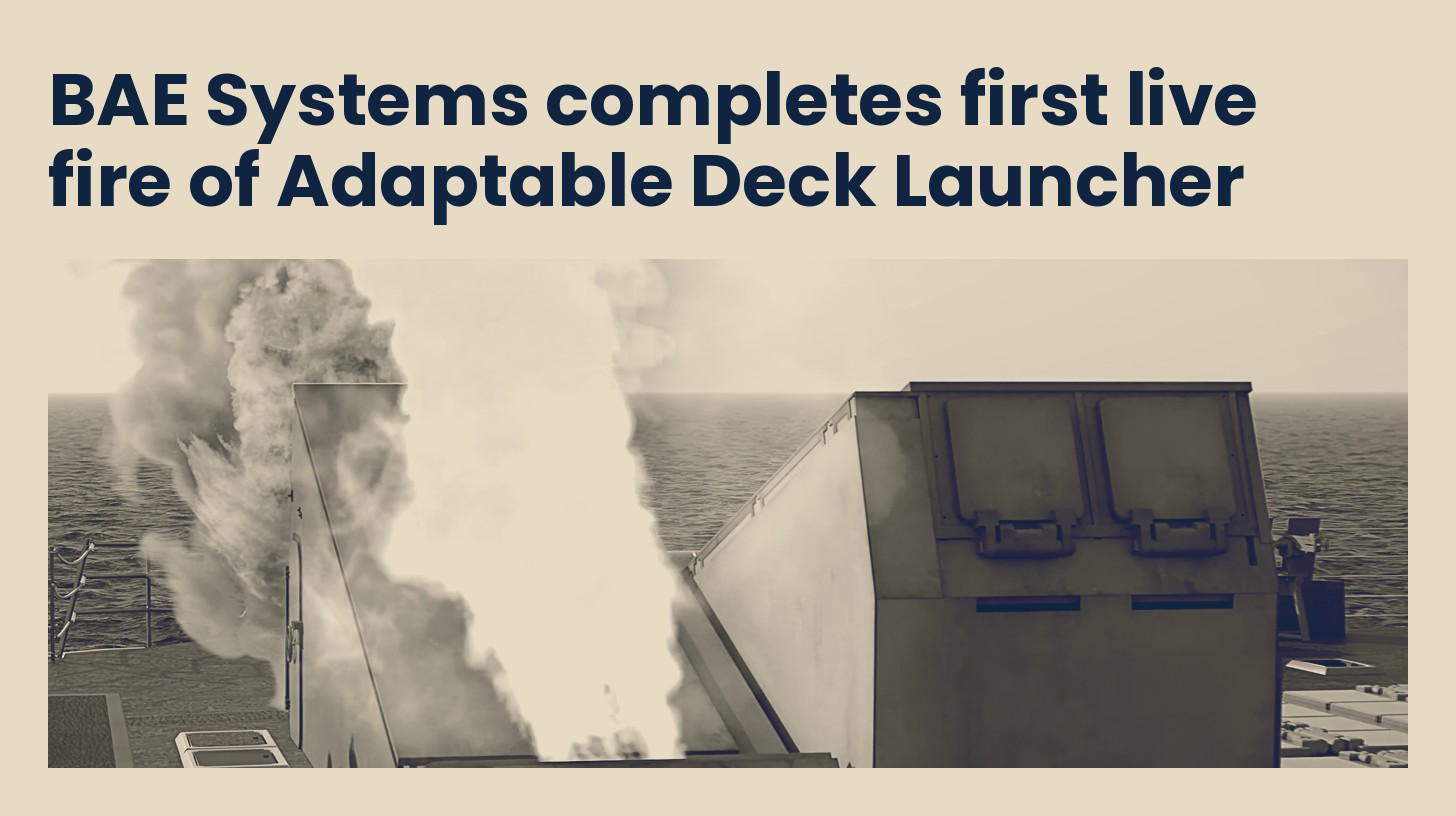
BAE Systems completed the first live-fire test of the Adaptable Deck Launcher (ADL) on October 27, 2026, demonstrating a modular deck-mounted system intended to expand missile capacity aboard U.S. Navy carriers and amphibious assault ships. The system addresses naval endurance by enabling at-sea missile reloading and reducing dependence on port facilities.
What's happening
- BAE Systems completed the first live-fire test of the ADL on October 27, 2026, under a NATO Seasparrow Project Office contract.
- The ADL is a modular deck-mounted launcher using fixed-angle installation above ship structure, compatible with Mk 25 Quad-Pack canisters carrying 4 RIM-162 Evolved SeaSparrow missiles each.
- The system draws on existing Mk 41 VLS logistics and electronics architecture, reducing integration costs and simplifying maintenance across allied fleets.
- The ADL enables at-sea missile reloading through accessible deck-mounted canisters and standard shipboard equipment, eliminating reliance on port facilities for replenishment.
Why it matters
- Naval air defense magazines are consumed faster than ships can replenish them in high-intensity combat, creating operational vulnerability during sustained engagements.
- Amphibious ships and some carriers cannot accommodate conventional below-deck vertical launching systems, limiting defensive firepower on a growing portion of the fleet.
- Distributed missile capacity across carriers and amphibious assault ships reduces pressure on escort vessels, allowing task forces to sustain defensive coverage longer.
- Compatibility with existing Mk 41 VLS procedures lowers training burden and supply chain complexity for American and allied navies operating related platforms.
Going deeper
- The ESSM Block 2 variant uses active and semi-active radar guidance, reducing dependence on continuous shipboard target illumination during terminal engagement.
- The ADL architecture is designed to support different missile configurations depending on host vessel requirements, though broader operational qualification would require additional integration and testing.
- Potential integration aboard unmanned surface vessels could allow smaller platforms to contribute to fleet air defense without requiring manned crew accommodations.
The fine print
- BAE Systems disclosed no exact firing date, missile variant employed, or number of rounds launched during the live-fire demonstration.
- Compatibility with additional missile types beyond the ESSM should not be confused with completed operational qualification, which requires further integration and testing.
Source: armyrecognition.com · Oct 27, 2026 · Drafted with Claude, reviewed by Industrial Base Alpha.