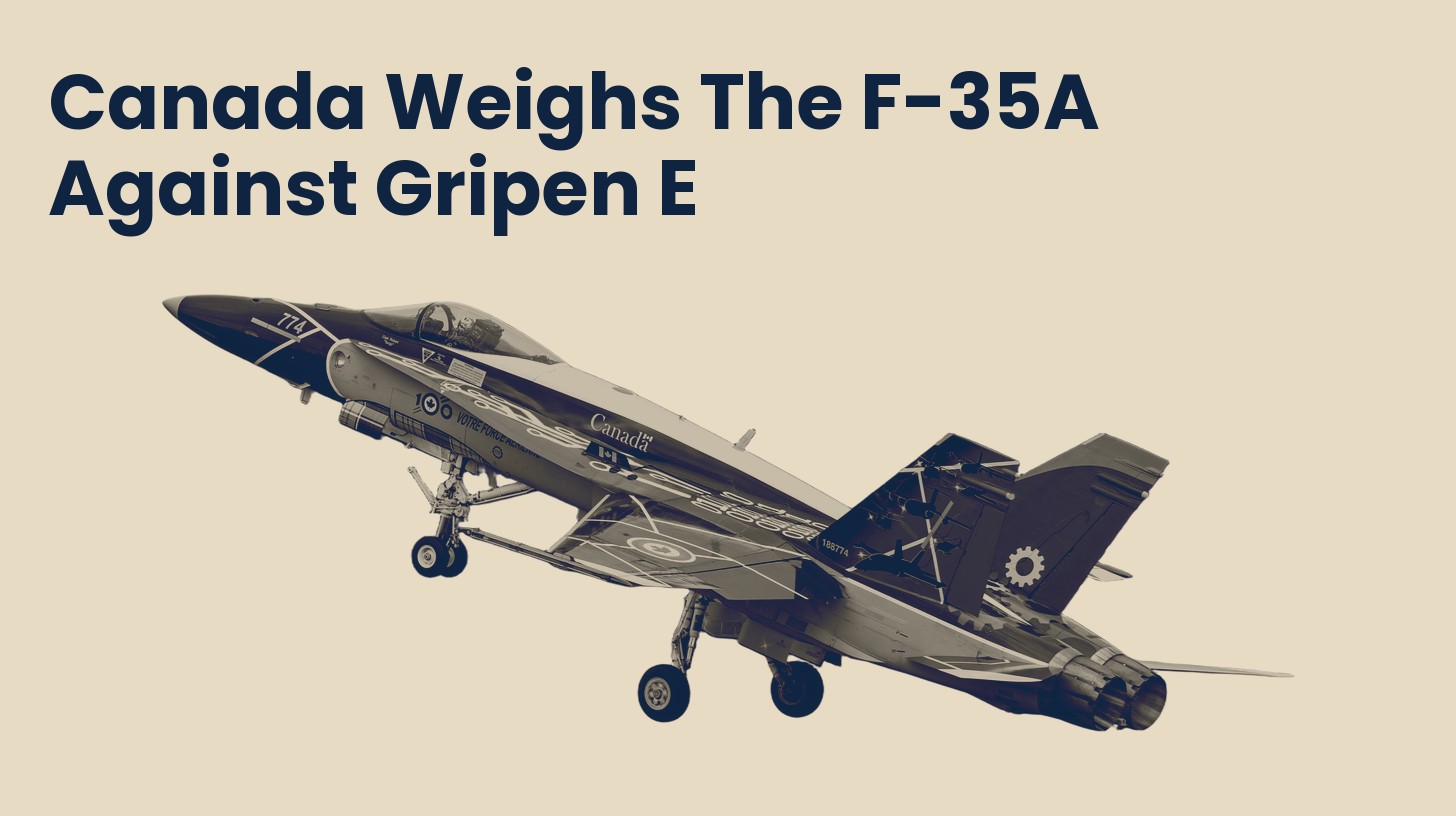
Canada is reviewing competing bids from Lockheed Martin and Saab for 72 of its 88 planned fighter aircraft, with the full acquisition program now valued at C$27.7 billion after cost escalation. The decision will determine whether the Royal Canadian Air Force fields a single F-35A fleet or introduces a second aircraft type alongside existing inventory.
What's happening
- Canada's defense review narrows the final competition to the F-35A and Saab Gripen E for 72 of 88 planned fighters after earlier eliminating the Rafale, Typhoon, and Super Hornet.
- The original C$19 billion acquisition program has grown to C$27.7 billion by 2024, citing exchange-rate movements and higher facility costs, with an auditor general's report identifying C$5.5 billion in additional infrastructure and weapons requirements outside that estimate.
- Canada has committed to 16 F-35As through the Joint Strike Fighter program, with first two aircraft accepted October 22, 2026 at Luke Air Force Base and scheduled to reach Cold Lake in late 2028.
- Saab proposed CAE, IMP, and Magellan Aerospace as production and sustainment partners for the Gripen E if selected, offering Canadian assembly and manufacturing participation.
Why it matters
- Operating two fighter types would deepen Canada's pilot and technician shortage by requiring aircraft-specific conversion training and separate spare parts logistics while maintaining CF-18 operations through 2032.
- The Royal Canadian Air Force already operates F-35As through training at Luke and maintains interoperability with U.S. Air Force squadrons in Alaska, lowering transition risk for a single-platform decision.
- A Gripen E selection would generate U.S. engine and sustainment revenue through the GE Aerospace F414 engine while adding Canadian airframe assembly work, whereas an F-35A decision reinforces the existing supply chain.
- Infrastructure delays and pilot shortages identified by Canada's auditor general create schedule risk regardless of aircraft selection, potentially pushing the 2032 CF-18 retirement date.
Going deeper
- Canada pre-funded components for 14 additional aircraft beyond the initial 16-unit commitment to preserve its production slot in the F-35 build sequence, locking in cost escalation exposure for the full 88-aircraft plan.
- Saab's Gripen E has established production capacity, with competing nations' Typhoon commitments extending into the 2030s and Dassault reporting a 220-unit Rafale backlog, leaving uncertain delivery timelines for alternative platforms.
- Royal Canadian Air Force Commander Lt. Gen. Jamie Speiser-Blanchet publicly endorsed the F-35A in January 2026 and October 2026 interviews, calling it the only fifth-generation fighter available and citing integrated air defense benefits.
Financial impact
- An F-35A decision commits Lockheed Martin to revenue recognition over the full acquisition and sustainment period through the 2030s, with obligated funds covering 16 aircraft and options for 72 additional jets pending formal cabinet approval.
- A Gripen E selection would redirect Canadian defense spending to Saab and partner firms, reducing Lockheed Martin's total contract value by an estimated 72-aircraft production stream worth billions in airframe, integration, and sustainment revenue.
- The cost escalation from C$19 billion to C$27.7 billion reduces Canadian fiscal capacity for other defense programs and extends program funding requirements through fiscal years 2028 to 2032 based on published delivery schedules.
The intrigue
- Canada's auditor general identified C$5.5 billion in unbudgeted infrastructure and weapons requirements, yet the cabinet has not disclosed whether these costs are included in the C$27.7 billion figure or remain unfunded contingencies that could force a third budget revision.
- Saab's production partnership proposal names three Canadian firms but provides no delivery schedule or pricing, leaving Canada unable to compare true total cost of ownership against the F-35A's established supply chain and Luke Air Force Base training pipeline.
The fine print
- Canada's formal commitment covers 16 F-35As; acquisition of the remaining 72 aircraft requires separate cabinet approval and formal contract amendment with Lockheed Martin and the U.S. government.
- The F-35A's ceiling value and obligated funds are undisclosed; Canada's published schedule calls for first aircraft delivery to Cold Lake in late 2028 and CF-18 fleet retirement in 2032, but infrastructure delays documented by the auditor general may extend both timelines.
- Saab's Gripen E delivery slot and Canadian production timeline remain pending; neither timeline has been published for cost comparison or risk assessment against the F-35A's established program baseline.
Source: armyrecognition.com · Nov 24, 2026 · Drafted with Claude, reviewed by Industrial Base Alpha.