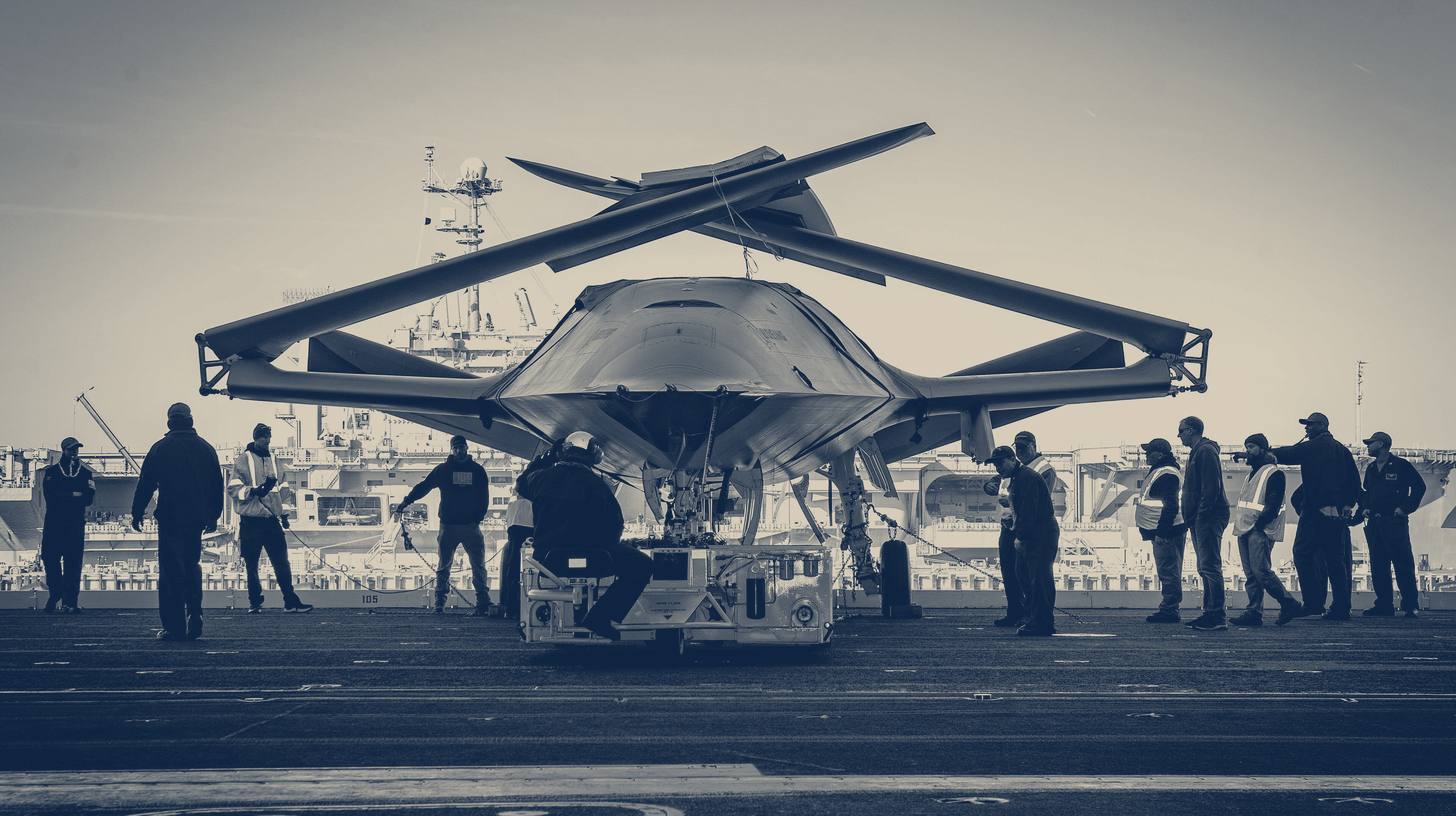
The Navy's MQ-25A Stingray unmanned refueling aircraft was controlled for the first time through a Ground Control Station aboard USS Ronald Reagan, a major milestone for integrating unmanned aircraft into carrier operations. The test validated the MD-5C GCS hardware and software needed for sustained carrier-based unmanned operations.
What's happening
- MQ-25A Stingray was controlled via MD-5C Ground Control Station aboard USS Ronald Reagan while the carrier operated in the Pacific Ocean on October 19, 2026.
- The test leveraged a Proliferated Low Earth Orbit satellite network to connect the drone to the shipboard Unmanned Air Warfare Center, validating procedures, networks and interfaces.
- In September 2026, the Navy awarded Boeing a $562 million contract for Lot 1 Low-Rate Initial Production, bringing total Stingrays under contract to 14 aircraft.
- Boeing separately tested Manned-Unmanned Teaming software in October 2026 during Emerald Flag exercises, demonstrating command and control via Link 16 between crewed and unmanned aircraft.
Why it matters
- The test proves the MD-5C GCS can reliably control carrier-based unmanned aircraft at sea, removing a major technical risk for integrating unmanned refueling into fleet operations.
- Unmanned refueling enables existing F/A-18 Super Hornets to fly farther and longer by freeing them from the buddy refueling role, expanding tactical range and endurance across the carrier air wing.
- The GCS infrastructure is designed to control not only the MQ-25A but also the Navy's future unmanned carrier aircraft, establishing the foundation for the Carrier Air Wing of tomorrow.
- Achieving 2026 carrier integration on schedule demonstrates program maturity and reduces operational deployment risk for the first unmanned system in naval carrier aviation.
Going deeper
- The MD-5C GCS integrates the Navy's C4I network with Lockheed Martin's Multi-Domain Combat System hardware and software to provide unified command and control.
- USS George H.W. Bush became the first carrier to receive an Unmanned Air Warfare Center with MD-5E GCS in 2024, establishing the shipboard infrastructure template for MQ-25A operations.
- MUM-T software tested at Eglin AFB in October 2026 will eventually integrate the MQ-25A with F/A-18 Super Hornets, enabling coordinated manned-unmanned flight operations within the carrier air wing.
Financial impact
- The $562 million Lot 1 LRIP contract awarded in September 2026 covers production of aircraft and represents obligated funding for the current fiscal year.
- Total MQ-25A procurement now stands at 14 aircraft under contract, with revenue recognition beginning as production deliveries occur over the performance period.
- Boeing's backlog extends through the multi-year LRIP phase, establishing predictable production revenue through the carrier integration and early fleet deployment cycle.
The intrigue
- The Navy did not disclose which Stingray airframe was used in the at-sea test, though the first production-representative aircraft conducting flights from MidAmerica is the likely candidate.
- The extent to which the pLEO satellite network will serve as the primary link for carrier operations versus shore-based control remains undefined in the test readout.
The fine print
- The test was part of planned build-up exercises rather than formal operational certification, meaning additional trials and validation remain before full fleet deployment.
- MUM-T software integration with the MQ-25A and F/A-18 Super Hornet depends on further testing and evaluation beyond the October 2026 Emerald Flag demonstration.
Source: theaviationist.com · Oct 19, 2026 · Drafted with Claude, reviewed by Industrial Base Alpha.