Mentioned:Naval Group
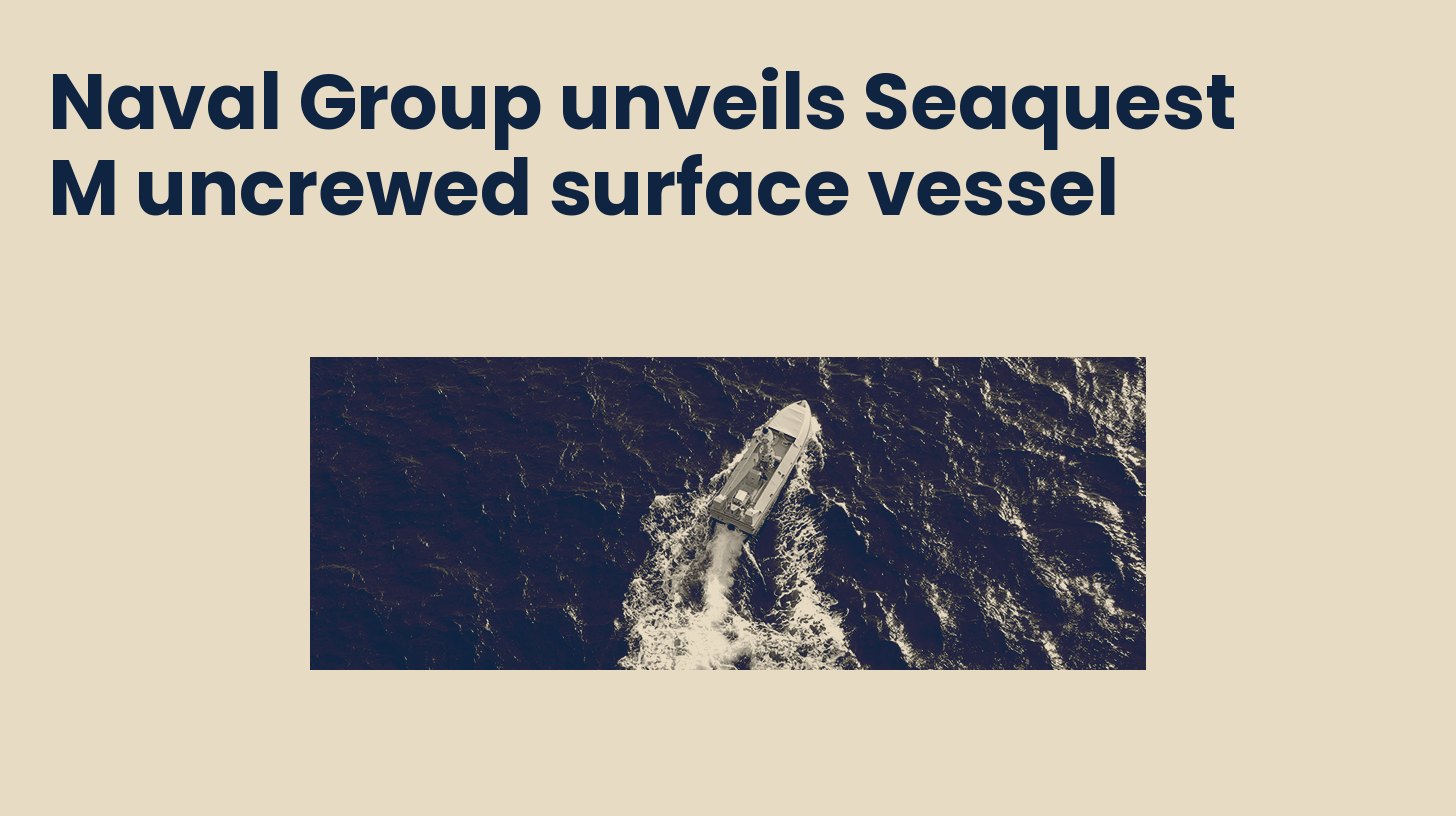
Naval Group unveiled the Seaquest M, a 37-meter Medium Unmanned Surface Vessel designed for autonomous operations as a standalone platform or loyal wingman. The French Navy confirmed armed variants are planned as later increments while prioritizing smaller drone capabilities and the accelerated DANAE armed autonomous surface vessel program.
What's happening
- Naval Group revealed the Seaquest M, a 37-meter autonomous platform with fully containerized combat systems and modular mission configurations.
- The vessel features Steeris mission management software enabling 10-day autonomous operation increments without human intervention.
- French Navy confirmed armed MUSVs remain on roadmap as later increments while focusing near-term efforts on endurance, secure connectivity, and hull durability.
- Naval Group plans to begin sea trials of initial capabilities within weeks using a minimum viable product approach.
Why it matters
- France is building organic autonomous surface warfare capability to complement existing naval assets and fill gaps in small-scale precision strike.
- The modular containerized design and dual-use civilian hull enable rapid scalability across multiple shipyards, reducing production bottlenecks.
- Mission autonomy of 10-day increments reduces reliance on continuous satellite or radio link communications, a critical vulnerability in contested waters.
- Accelerated DANAE program signals France is prioritizing armed drone fielding ahead of medium-sized MUSV variants, compressing the development timeline.
Going deeper
- Seaquest M derives from civilian design to enable rapid production scaling, a model Naval Group has matured on Gowind and FDI frigate programs.
- Integrated sensor mast (SPIM) consolidates multiple sensor and compute functions into one module, proven through frigate programs.
- Steeris drone-agnostic mission management integrates with existing combat systems and can manage payloads autonomously via high-level command intentions.
- Vessel designed fully unmanned but Naval Group is exploring optionally manned configurations in response to market interest and operational preferences.
The intrigue
- French Navy's near-term focus on small drones and DANAE over armed MUSVs suggests operational urgency for nimble, expendable strike assets outpaces appetite for large autonomous platforms.
- Containerized combat systems and modular payloads create potential interoperability challenges and integration risk as payloads proliferate across allied navies.
The fine print
- Armed MUSV variants classified as later increments with no timeline or funding commitment disclosed.
- Larger Seaquest L LUSV variant is not in active development; Naval Group is focused entirely on Seaquest M to market.
- Sea trials on minimum viable product begin within weeks, indicating early-stage operational validation rather than production readiness.
Source: navalnews.com · Nov 2, 2026 · Drafted with Claude, reviewed by Industrial Base Alpha.