Mentioned:No public companies identified
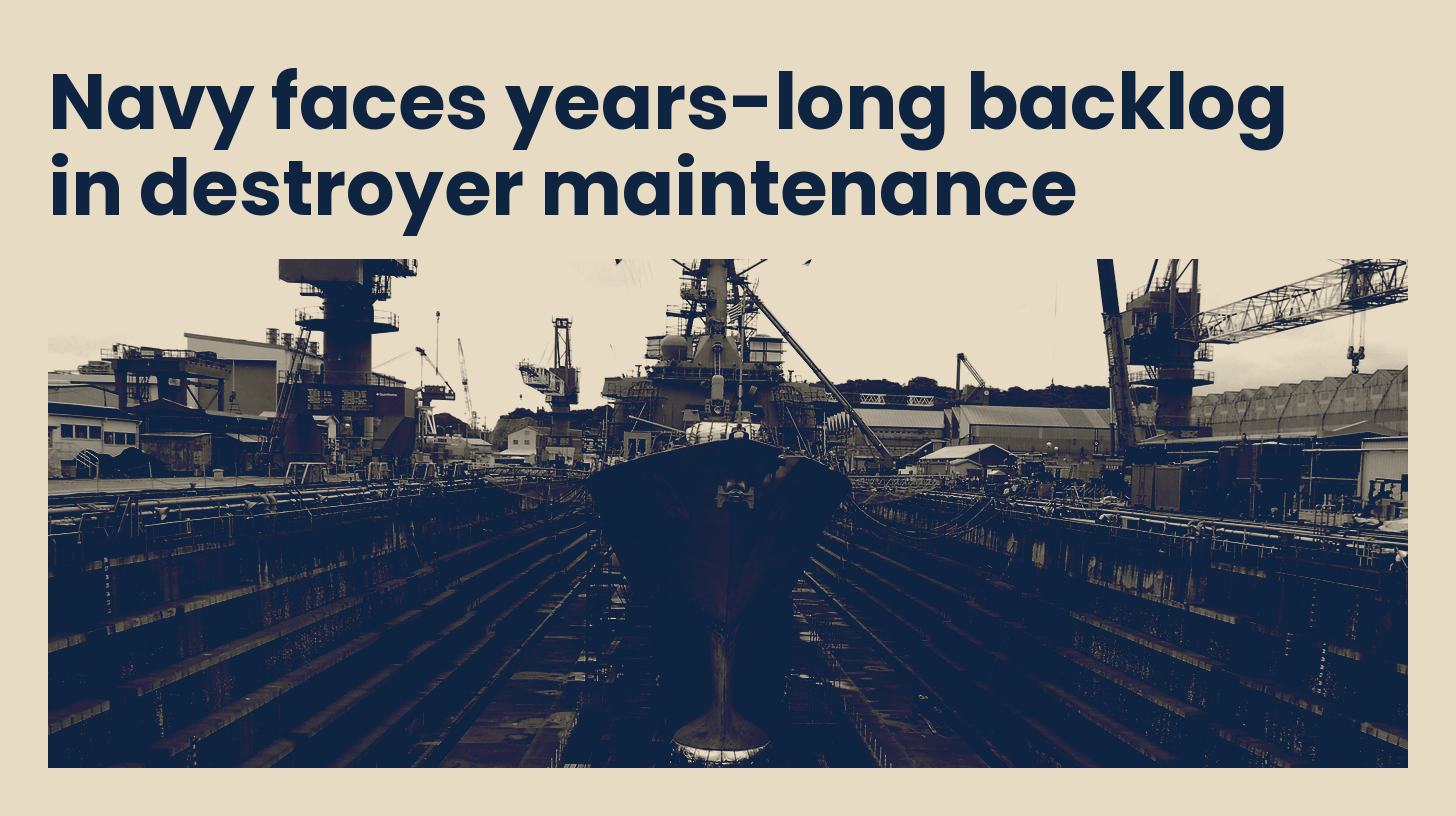
The U.S. Navy faces a years-long maintenance recovery as ships return from extended deployments exceeding 300 days at sea. Chief of Naval Operations Adm. Daryl Caudle said hundreds of millions of dollars will be required to address the mounting maintenance availabilities, particularly for destroyers.
What's happening
- Aircraft carrier Gerald R. Ford completed a 326-day deployment in May 2026, exceeding the previous carrier record of 294 days set by Abraham Lincoln in 2019-2020.
- Destroyer USS McFaul returned in October 2026 after a 332-day deployment, with destroyer USS Spruance surpassing 339 days underway, the longest destroyer deployment since World War II.
- The Navy operates 75 destroyers, with more than a dozen actively deployed in the Red Sea and Arabian Sea as of October 2026.
- Public shipyards handle maintenance for nuclear submarines and carriers, while private yards manage repairs for surface combatants including destroyers and cruisers.
Why it matters
- Maintenance backlogs will force trade-offs between fleet repairs and modernization efforts, delaying modernization projects to prioritize essential maintenance.
- Destroyer maintenance typically requires dry dock time with capacity constraints limiting the number of ships that can be serviced simultaneously in available facilities.
- Congressional Budget Office found destroyers spend roughly nine years or 25 percent of planned service life in maintenance, with maintenance delays ranging 20-100 percent beyond Navy planning estimates.
- Shipyard capacity cannot accommodate the influx of returning vessels, requiring the Navy to sequence maintenance over multiple years and defer non-critical modernization work.
Going deeper
- Norfolk Naval Shipyard Commander Rear Adm. Kavon Hakimzadeh described the situation as a 'pig through the snake' scenario, with all returning destroyers requiring access to the same dry dock facilities.
- Public shipyards completed only 11 percent of submarine maintenance periods on schedule as of August 2026, indicating systemic capacity challenges across the maintenance enterprise.
- Vice Chief of Naval Operations Adm. James Kilby stated the industrial base cannot absorb the simultaneous return of deployed vessels and called for sequencing maintenance over time.
- Congressional Budget Office analyst Eric Labs noted the Navy historically requires at least several years to catch up on maintenance following surge operations.
The intrigue
- Uncertainty remains whether operations in the Middle East will continue long enough to further delay ship returns, which would extend the recovery timeline and complicate Navy fleet readiness targets.
- The Navy may defer maintenance below recommended levels to preserve modernization capacity, creating potential long-term reliability and operational risks not yet quantified.
The fine print
- The exact dollar amount required was not disclosed; CNO Caudle referenced 'hundreds of millions of dollars' but provided no specific budget authority or appropriations timeline.
- Recovery timeline is described as 'years-long' with no defined endpoint or completion date provided by Navy leadership.
Source: Breaking Defense · Oct 28, 2026 · Drafted with Claude, reviewed by Industrial Base Alpha.