Mentioned:RTX Raytheon
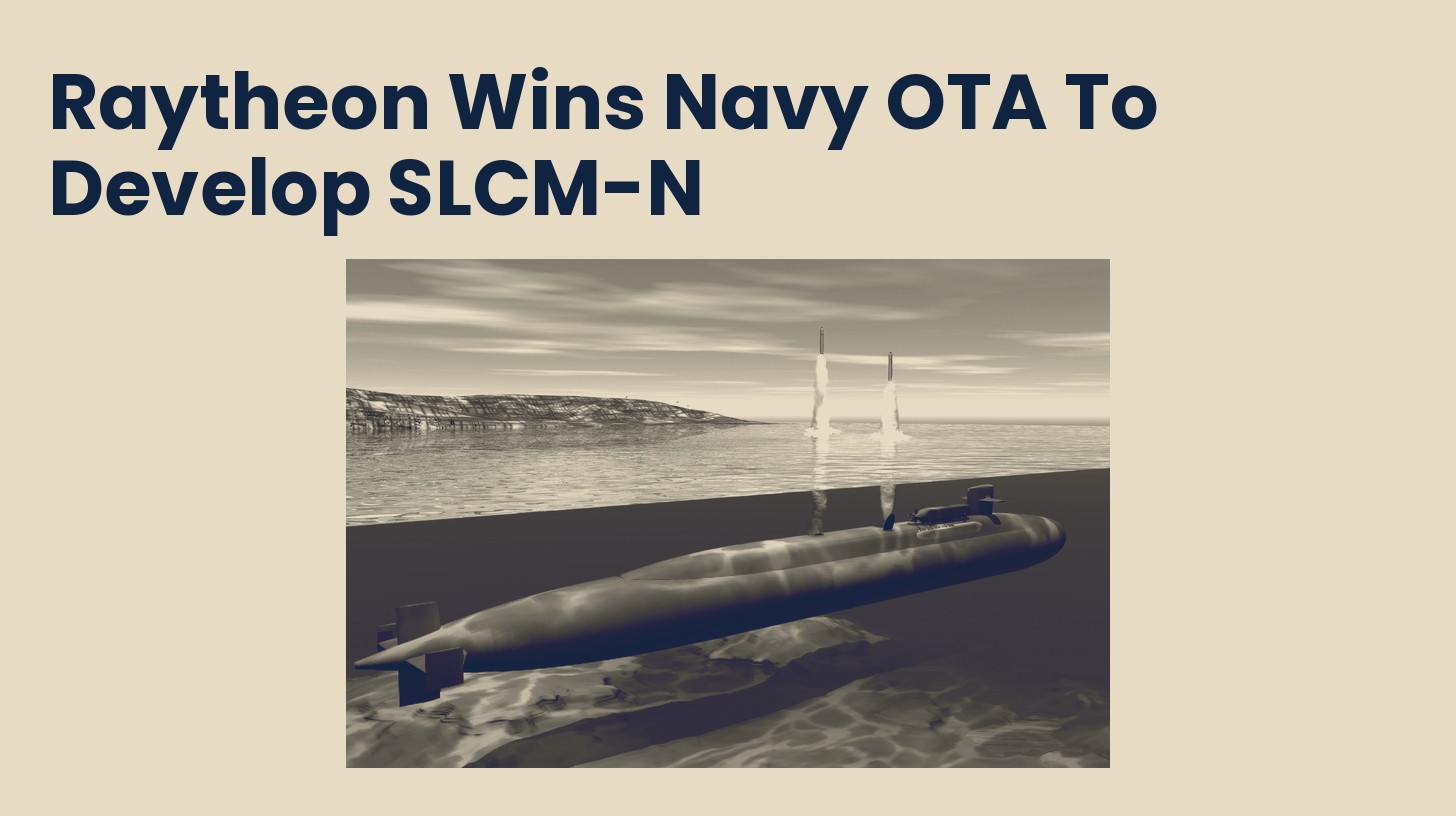
Raytheon has been awarded a Navy Other Transaction Authority agreement to mature design, integrate subsystems and prepare for prototype demonstrations of the SLCM-N nuclear cruise missile. The company will employ a modular composable weapons approach to accelerate development.
What's happening
- Raytheon received an OTA agreement from the U.S. Navy for SLCM-N development work.
- Development effort focuses on design maturation, subsystem integration and prototype preparation for Virginia-class submarines.
- Raytheon plans to use a composable weapons approach built on mature, modular technologies to accelerate cycle time.
Why it matters
- SLCM-N is a critical element of the Navy's undersea nuclear deterrent modernization aboard the latest Virginia-class attack submarines.
- OTA agreements enable faster development cycles and reduced bureaucratic constraints compared to traditional fixed-price contracts.
- Modular design approach reduces technical risk by integrating proven subsystems rather than developing integrated solutions from scratch.
Going deeper
- USS Massachusetts, the latest Virginia-class submarine commissioned in March, represents the platform intended to carry SLCM-N at sea.
- Composable weapons architecture allows Raytheon to swap mature components, shortening time to operational capability.
The fine print
- Agreement value is undisclosed; timing of prototype demonstrations and production milestones not stated.
- OTA structure typically includes cost-plus development phases with options for follow-on production, but specific terms not disclosed.
Source: Defense Daily · Nov 24, 2026 · Drafted with Claude, reviewed by Industrial Base Alpha.