Mentioned:SkydioNerosXTENDFirestorm Labs$3.8B · Fund Raise
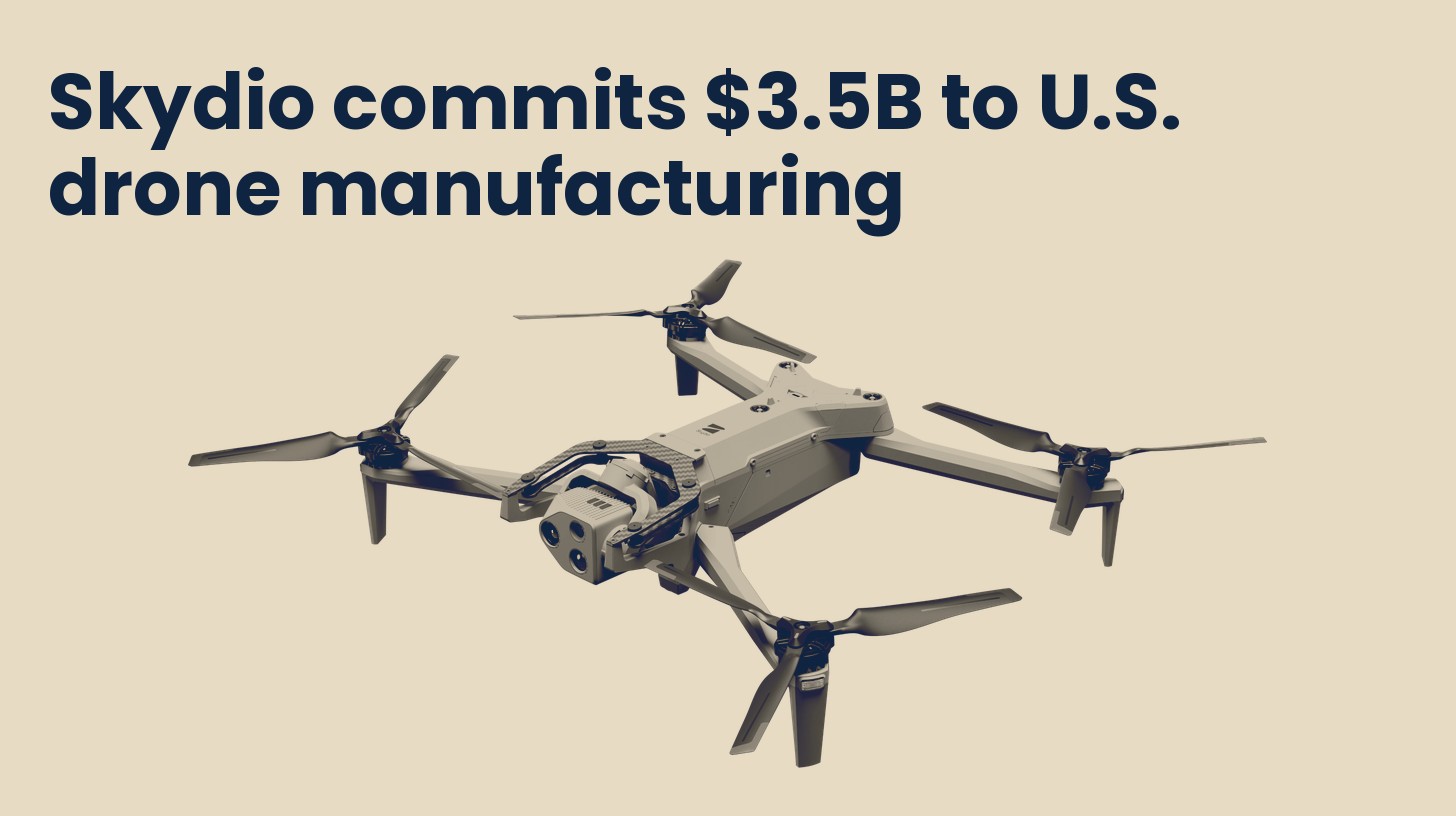
Skydio committed $3.5 billion over five years to expand U.S. manufacturing, research, and domestic supply chains. The company plans to build a new manufacturing facility and direct more than $1 billion to U.S. suppliers, part of a larger effort to establish lasting domestic drone production capacity.
What's happening
- Skydio announced $3.5 billion investment over five years for U.S. manufacturing expansion and supply chain development.
- The company plans to establish a new manufacturing facility and allocate more than $1 billion to domestic suppliers.
- Neros raised $250 million in August for military drone and counter-drone development with a stated goal of one million drones annually.
- Pentagon Drone Dominance orders include Neros $100 million contract for 14,000 drones and XTEND $40.5 million order for 6,000 systems.
Why it matters
- Investment commitments target supply chain vulnerabilities in motors, batteries, electronics and critical components currently sourced overseas.
- Pentagon procurement provides sustained demand visibility and gives manufacturers production scale targets needed to justify capital expenditure.
- Actual delivery performance shows execution risk: only 12,720 of 22,320 drones from first competition were accepted as of September, indicating production scaling challenges.
- Foreign manufacturers are establishing U.S. operations under FCC conditional exemptions, creating competitive pressure on domestic suppliers to achieve cost and quality targets.
Going deeper
- Firestorm Labs raised $82 million in April for container-based mobile manufacturing systems positioned to produce drones closer to military operations.
- The Trump administration policy combines foreign drone import restrictions with Pentagon incentives to drive both domestic investment and foreign companies willing to establish U.S. production.
- Military low-cost drone demand may accelerate domestic supply chain development but does not guarantee U.S. competitiveness in commercial markets such as agriculture, inspection and delivery.
Financial impact
- Skydio's $3.5 billion commitment represents future capital expenditure on manufacturing and supply chain infrastructure over a five-year period ending 2031.
- Neros $250 million raise in August provides cash for development and production scaling toward one million annual units, with timing and cash burn dependent on Pentagon order deliveries.
- Pentagon orders represent obligated funds with revenue recognition tied to delivery and acceptance: Neros $100 million for 14,000 units and XTEND $40.5 million for 6,000 systems with delivery timelines not disclosed.
The intrigue
- Whether announced investment commitments translate into actual production capacity remains open: companies must demonstrate ability to deliver thousands of units on schedule to justify further capital allocation.
- Domestic supply chain expansion requires component suppliers to simultaneously achieve cost parity with overseas competitors and meet U.S. security certification requirements, creating a timing mismatch with drone assembly schedules.
The fine print
- Skydio's $3.5 billion represents a five-year commitment; timing and actual spend rate are not disclosed.
- Neros $250 million raise occurred in August with stated annual production goal of one million drones, but no timeline for achieving that capacity is specified.
- Pentagon Drone Dominance orders are obligated funds; total program value and delivery schedules are not disclosed in the record.
- Foreign FCC approvals include conditional exemptions requiring continued security reviews and approved U.S. production or operations plans.
Source: DroneLife · Nov 2, 2026 · Drafted with Claude, reviewed by Industrial Base Alpha.