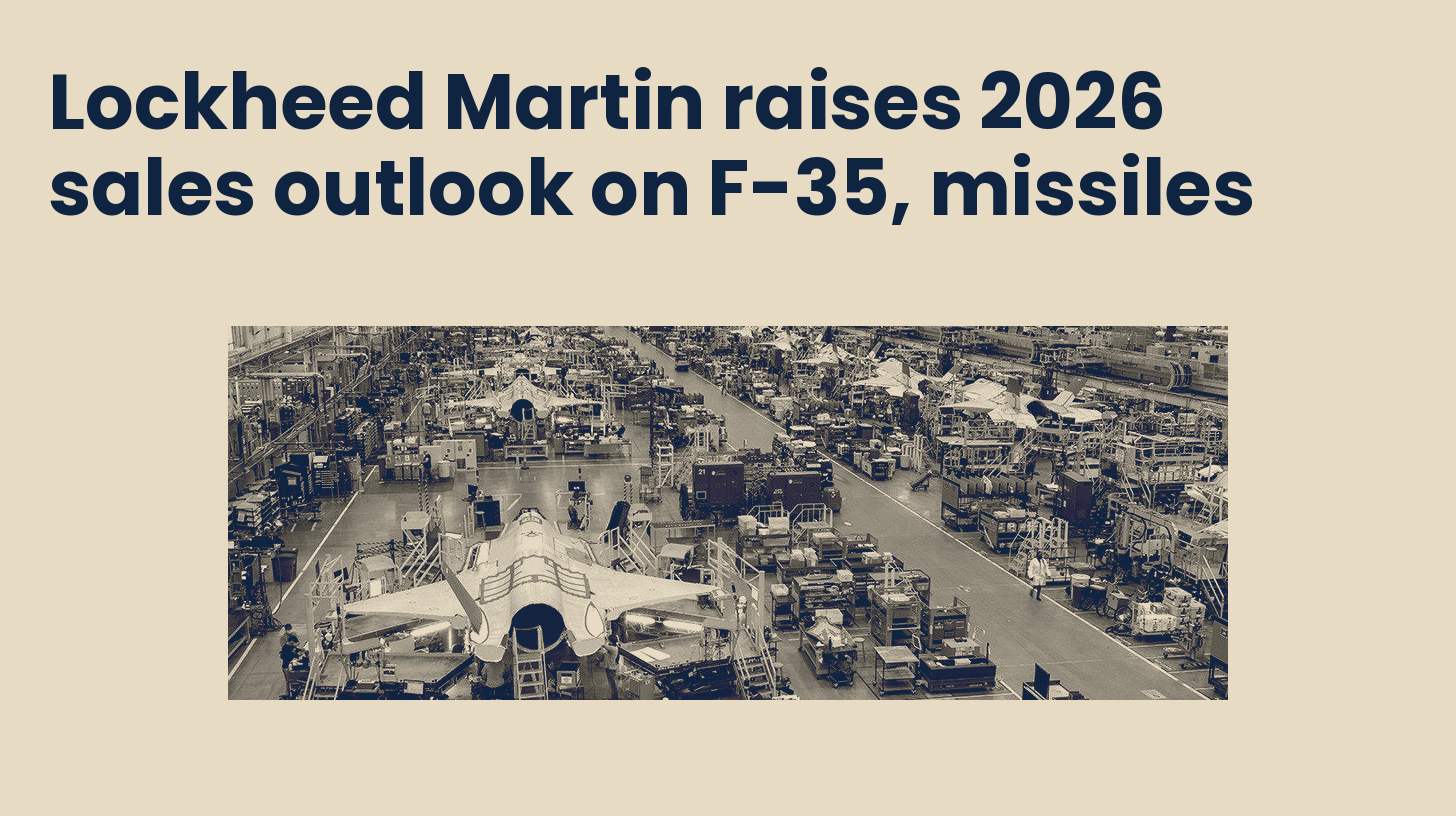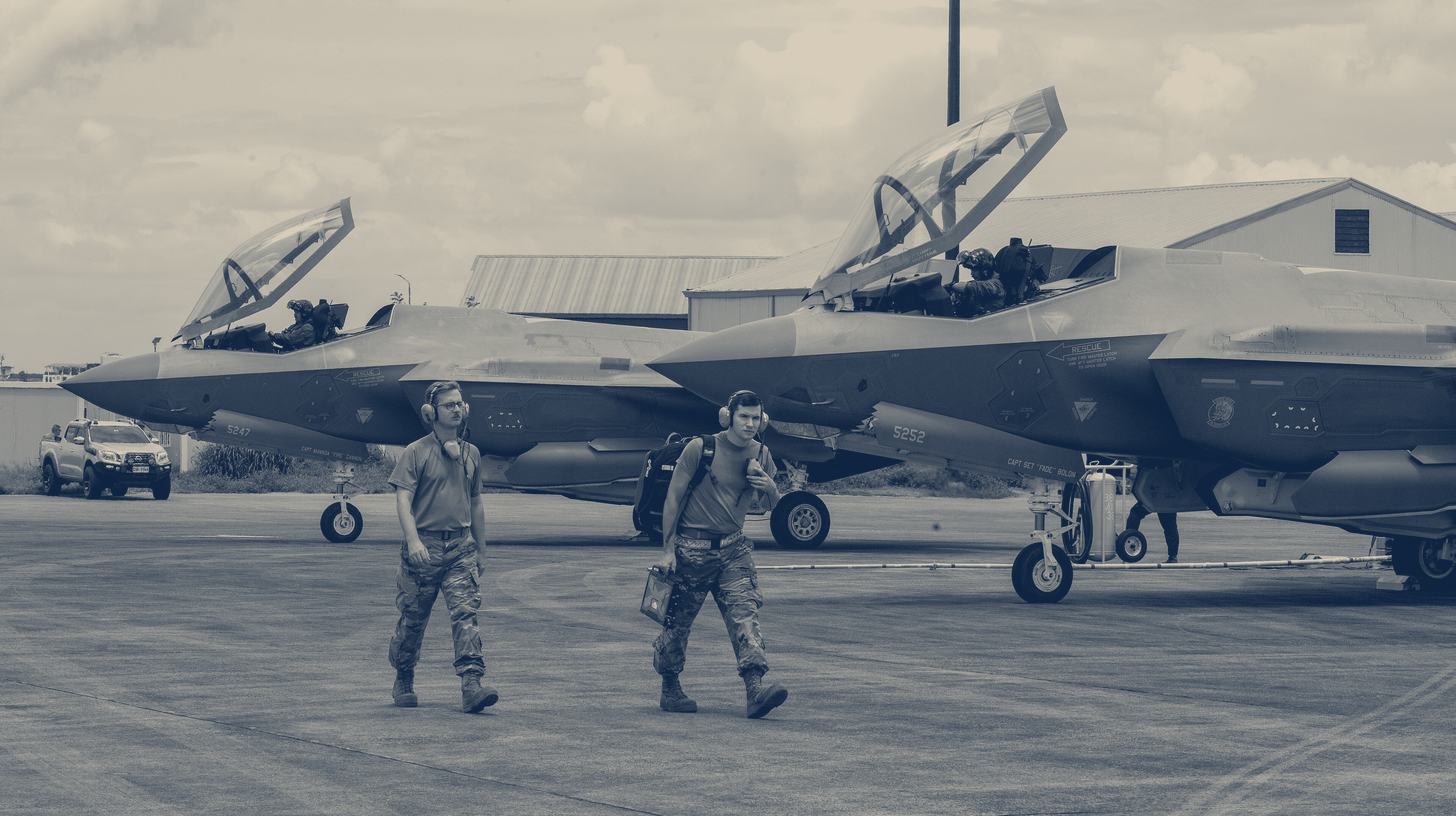
The U.S. Air Force projects its combat-coded fighter fleet will expand to 1,509 aircraft by 2035, up from an estimated 1,271 today. The FY27 budget request includes $2.34B through reconciliation to fund 14 F-35s as part of a 62-aircraft fighter purchase package.
What's happening
- Air Force seeks 1,509 combat-coded fighters by 2035, representing a 238-aircraft increase over the 2026 estimate of 1,271 aircraft.
- F-35s projected to grow from 30% to 40% of the fighter fleet by 2035, with the FY27 budget requesting 38 F-35s total, of which 14 depend on $2.34B reconciliation funding.
- FY27 request includes 62 total fighter purchases (38 F-35s and 24 F-15EXs), short of the 72 aircraft annually required to replace retiring jets and modernize the fleet.
- Air Force pursuing congressional approval for multiyear F-35 and F-15EX procurement agreements to give manufacturers financial stability for production expansion.
Why it matters
- Fleet expansion requires sustained production rates from Lockheed Martin and Boeing to deliver 72 fighters annually; current FY27 request falls 10 aircraft short of that rate.
- Multiyear procurement commitments directly enable manufacturer capacity expansion, reducing risk that production bottlenecks will delay fleet modernization.
- Without reconciliation funding, the Air Force will either redirect $2.34B from other defense priorities or defer 14 F-35 purchases to 2028, both outcomes delay force structure goals.
Going deeper
- Projected 2035 mix allocates roughly 20% each to F-22s and F-47s (combined replacement), 20% each to F-15 variants and F-16s, and 40% to F-35s.
- Analysis began before 2026 combat operations against Iran and does not reflect demand signals from recent conflict.
- Air Force goal of 500 Collaborative Combat Aircraft by 2032 has not yet reduced manned fighter requirements; autonomous aircraft capabilities expected to influence future force structure reports.
Financial impact
- FY27 budget request allocates $2.34B through reconciliation specifically for 14 F-35 aircraft; without this, Air Force must reprogram funds from other programs or delay purchases into FY28.
- Multiyear procurement agreements, if approved, provide Lockheed Martin and Boeing forward visibility on order volume and cash flow, enabling capital expenditure planning for production line expansion.
- Total FY27 fighter purchase of 62 aircraft recognizes 38 F-35s and 24 F-15EXs; revenue recognition timing and obligated versus ceiling values dependent on contract award structure not disclosed in this record.
The intrigue
- Air Force leadership stated it needs manufacturers to prove they can deliver at required production rates; whether Lockheed Martin and Boeing can sustain 72-aircraft annual deliveries at acceptable cost remains unresolved.
- Multiyear procurement approval is contingent on Congressional action; without it, production incentives and manufacturer investment capacity remain limited to single-year appropriations cycles.
The fine print
- The $2.34B reconciliation request for 14 F-35s is not guaranteed; Air Force has not disclosed a fallback plan if reconciliation fails beyond redirecting existing program funds.
- Projected 2035 force structure is subject to change based on updated combatant commander requirements and may be influenced by ongoing autonomous aircraft capability development.
- Multiyear procurement agreements remain under congressional review; approval timeline and final terms not disclosed.
Source: defence-industry.eu · Oct 21, 2026 · Drafted with Claude, reviewed by Industrial Base Alpha.