Mentioned:No public companies identified
The U.S. Army released 'How The Army Fights', a 46-page operational doctrine guide that pivots from two decades of counterinsurgency warfare to multidomain operations centered on big-unit maneuver. The doctrine signals a fundamental shift in how the Army will fight and what its industrial base must produce.
What's happening
- The Army issued HTAF doctrine emphasizing four operational pillars: Convergence, Strike, Close Battle and Endurance, moving away from small-unit counterinsurgency tactics.
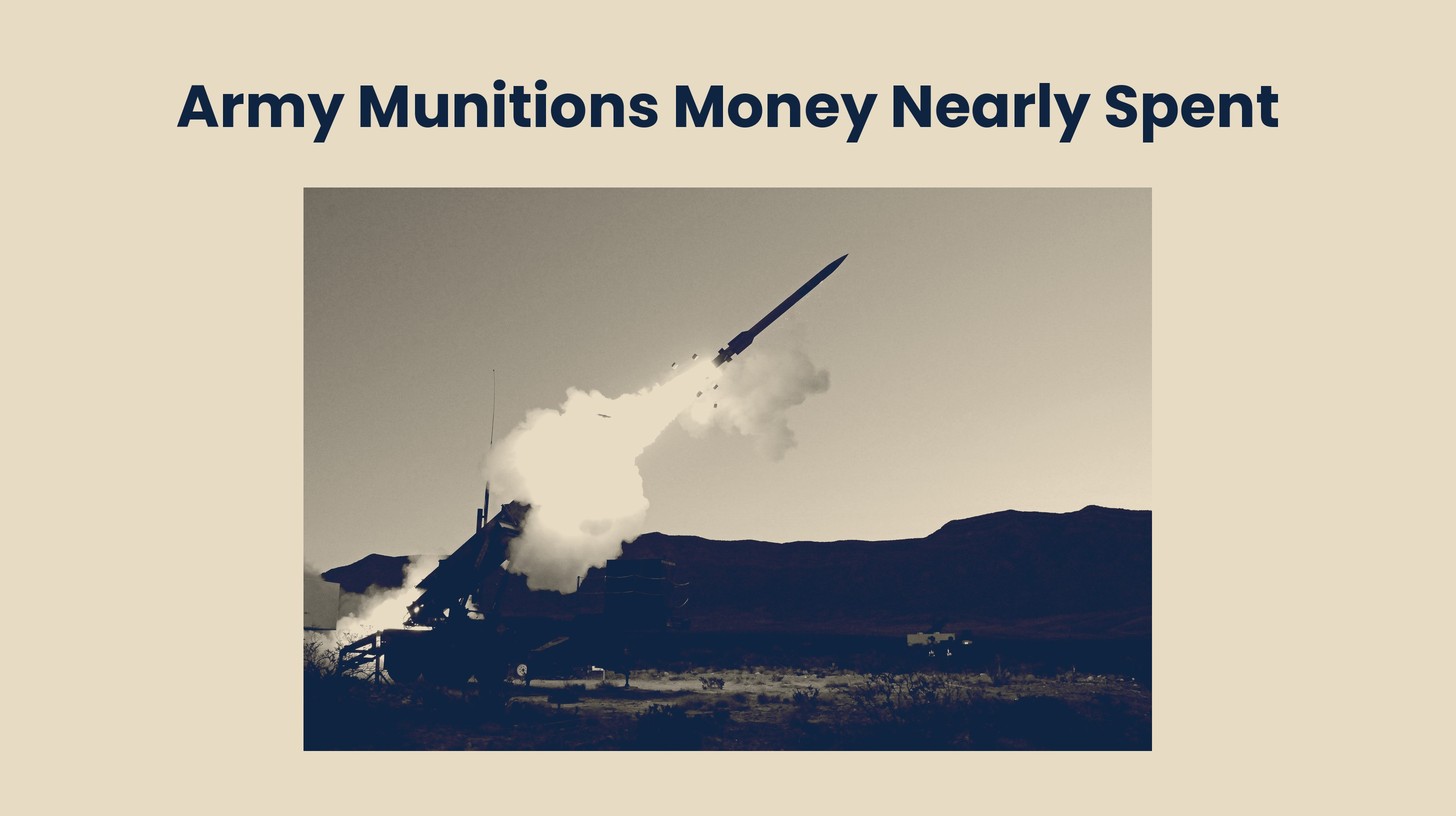
- The doctrine calls for forward deployment of munitions, including artillery, rockets, missiles, one-way attack drones and loitering munitions near potential combat zones.
- HTAF mandates expansion and modernization of the Army's organic industrial base across 23 government depots, arsenals and ammunition plants to enable diverse production beyond historical single-output models.
- The doctrine requires contractors to develop rapid replenishment and surge production capabilities rather than relying on peacetime procurement schedules.
Why it matters
- The shift to multidomain operations and forward munitions deployment increases demand for production capacity across the organic and contractor industrial base.
- Expansion of 23 government depots and arsenals creates competition for private defense contractors and signals the Army's intent to reduce reliance on single-source suppliers.
- The doctrine's emphasis on autonomous distribution platforms and additive manufacturing at the forward edge requires new capabilities from both government facilities and defense primes.
- Surge production requirements pressure the defense industrial base to maintain excess capacity and flexible manufacturing rather than lean, just-in-time production models.
Going deeper
- The doctrine explicitly rejects the logistics model that enabled 20 years of counterinsurgency, requiring troops to function without contractor support and maintain independent supply lines.
- HTAF's emphasis on camouflage, deception and defensive weapons against drones reflects lessons from Ukraine, where long-range fires and unmanned systems have dominated the battlefield.
- The 'agile facilitation construct' for government depots and arsenals represents a departure from Cold War-era single-product specialization, requiring cross-trained workforces and flexible tooling.
- Forward additive manufacturing and 'right-to-repair' authorities signal the Army's intent to reduce transportation bottlenecks and enable troops to fabricate and repair equipment at the tactical edge.
Financial impact
- Expansion and modernization of 23 government depots and arsenals will drive capital expenditures through Army appropriations, timing not disclosed.
- Defense contractors supporting surge production capabilities and autonomous distribution platforms will recognize revenue tied to contingency-based sustainment contracts rather than traditional peacetime procurement.
- The shift toward forward-deployed munitions storage and enduring command-and-control infrastructure creates demand for construction and facility upgrades, likely reflected in Army military construction and operations and maintenance budgets.
The intrigue
- The doctrine emphasizes organic government production capacity at a time when defense contractors have consolidated munitions manufacturing; unclear whether the Army has sufficient capacity or workforce to execute the expansion plan.
- The push for additive manufacturing and right-to-repair at the forward edge conflicts with intellectual property and supply chain control traditionally guarded by defense contractors.
The fine print
- HTAF is operational and strategic guidance; actual procurement, budgets and workforce hiring for the 23 depots and arsenals remain subject to congressional appropriations and Five-Year Defense Plan allocation.
- The doctrine does not specify timelines for expanding organic industrial base capacity or the dollar amounts to be invested in government depots and arsenals.
Source: militarytimes.com · Oct 14, 2026 · Drafted with Claude, reviewed by Industrial Base Alpha.