Mentioned:RTX Raytheon Technologies
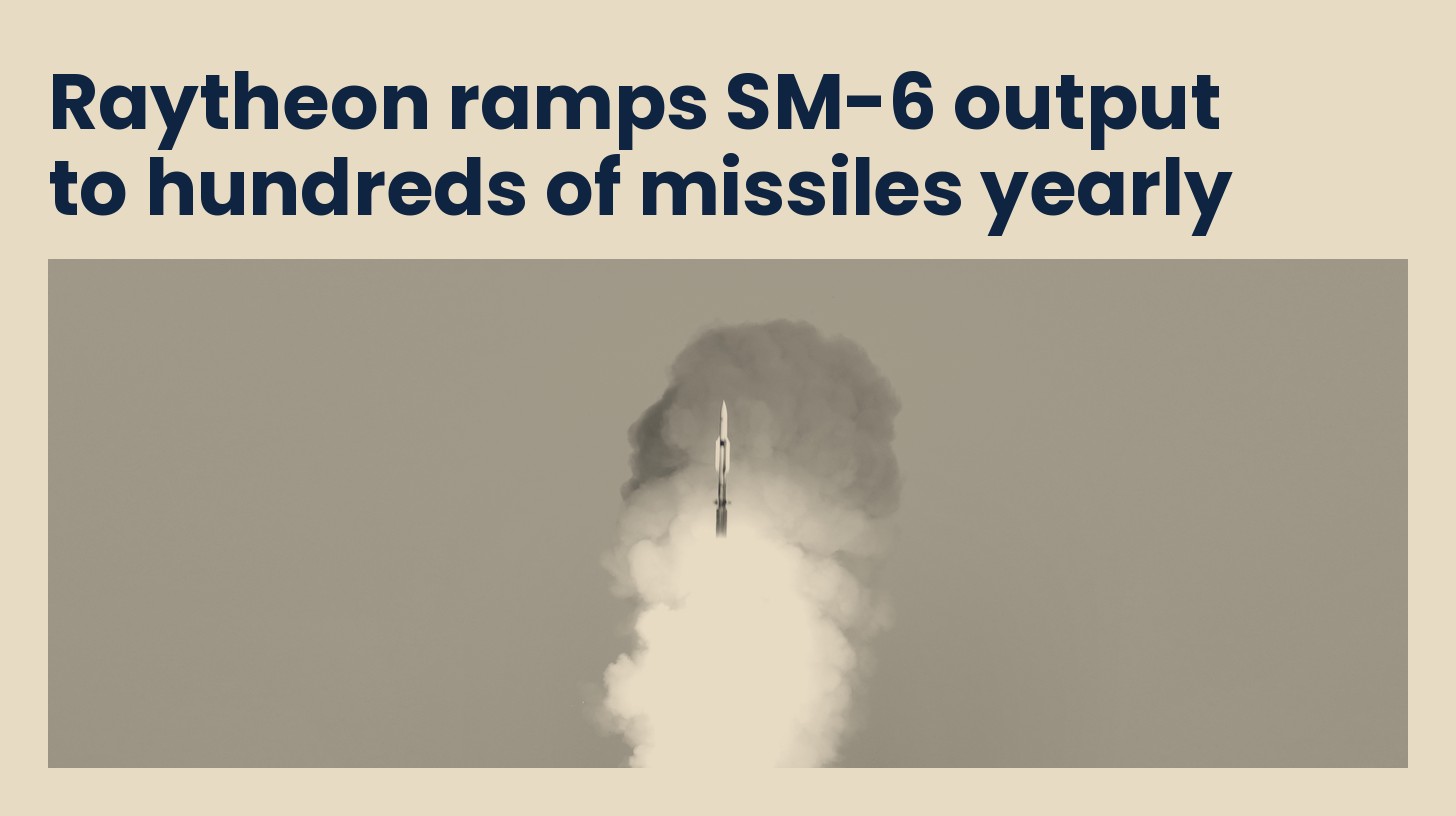
Raytheon exceeded its target in a 90-day Navy-backed manufacturing sprint for SM-6 missiles, demonstrating the Huntsville facility can produce hundreds annually. The company is now strengthening supply chain resilience to sustain accelerated production through 2030.
What's happening
- Raytheon completed a 90-day manufacturing sprint on SM-6 production in Huntsville, Alabama, exceeding the Navy-set target by one additional missile.
- The sprint ran the missile integration site on three daily shifts including weekends, with quality assurance and test teams adding staff and extending hours.
- Operations teams tracked production down to individual parts, using daily morning meetings with color-coded progress boards to identify and resolve bottlenecks same-day.
- Raytheon is continuing accelerated production efforts since the sprint ended, strengthening component flow, reviewing manufacturing processes, and building supplier resilience.
Why it matters
- The SM-6 is a dual-use air defense and offensive munition for Navy ships, ground platforms and F/A-18E/F aircraft, making production surge critical to multiple warfighting domains.
- Validated production capacity of hundreds annually addresses DoD requirements for munition inventories under multiple ongoing contracts, reducing program risk from supply constraints.
- Supply chain stress-testing during the sprint identified component availability as the binding constraint on production rate, directly informing Raytheon's supplier resilience investments.
- Sustained acceleration through 2030 indicates multi-year demand signals from the Navy that justify capital investment in manufacturing automation and facility expansion.
Going deeper
- The sprint required coordination across operations, engineering, supply chain and quality specialists, plus daily coordination with external suppliers and other Raytheon facilities.
- Production reached a complete missile in the first month and increased further in the second, suggesting learning curve gains or component supply breakthrough during the 90-day period.
- All parts must arrive together to build a missile; the team identified this as the critical path and prioritized component synchronization over absolute quantity.
- The SM-6 can integrate with land, naval and air platforms, making production rate relevant to multiple force structure plans across the Navy and joint operations.
The fine print
- Raytheon did not disclose the Navy's production target or the total missile count achieved during the sprint.
- The sprint used special short-term measures to accelerate component delivery; sustaining hundreds annually requires permanent changes to supplier capacity and lead times.
- The company's ability to maintain three-shift operations, weekend work and extended testing staffing depends on labor availability and cost structures in Huntsville.
Source: defence-industry.eu · Oct 28, 2026 · Drafted with Claude, reviewed by Industrial Base Alpha.